
Why Is Arkansas Pronounced The Way It Is

Ever caught yourself saying “Arkansas” and then immediately wondering, “Wait, why isn’t that pronounced like Kansas?” You’re not alone! It’s one of those delightful little linguistic quirks that makes you pause, scratch your head, and maybe even feel a tiny bit rebellious for daring to question established pronunciation. But guess what? There’s a fascinating story behind it, and digging into it is like uncovering a mini-mystery that brings history, culture, and a whole lot of fun right to your doorstep. So, buckle up, language explorers, because we’re about to dive into the wonderful world of why Arkansas sounds the way it does!
The Great "S" Conundrum: A Tale of Two States
Let’s start with the obvious. You have Kansas, which ends with an "s" sound. And then you have Arkansas, also ending with an "s," but we pronounce it with an "aw" sound, as if that final "s" decided to take a permanent vacation. What gives? Is it a secret code? A linguistic prank? Not quite, but the real story is arguably even better, full of twists and turns that span centuries and continents. It’s a testament to how language is a living, breathing thing, always evolving and picking up souvenirs from every journey.
Bonjour, Explorers! The French Connection
To truly understand Arkansas, we need to travel back in time, way before state lines were drawn or even imagined, to a period when French explorers were paddling their way down the Mississippi River. They encountered a group of Native American people who lived along the river. These people were known as the Quapaw.
Must Read
The Quapaw referred to themselves by a name that sounded something like "Ugakhpah" or "O-gah-pah", meaning "downstream people." But other tribes, particularly the Algonquian-speaking peoples to the north, had their own names for the Quapaw, often calling them something like "Akansa" or "Akamsea", which roughly translates to "people of the south wind."
Now, imagine you’re a 17th-century French explorer. You’ve just heard this interesting word, "Akansa." What do you do? You write it down, of course! And how do you spell it in French, using French phonetic rules? You’d likely add a silent "s" at the end, just like in many French words (think Paris, lilas, temps). So, "Akansa" became "Arkansas" (or various similar spellings like "Akancas" or "Arcansas"). The "s" was there, but it was purely for spelling – not for sounding out!

When English Met French (and Got Confused)
Fast forward a bit. English speakers start to arrive in the region. They see this word, "Arkansas," written out. And what do English speakers typically do with an "s" at the end of a word? They pronounce it! This led to a period of wonderful linguistic chaos. Some people pronounced it the French way, "Ar-kan-saw." Others, seeing that tempting "s" at the end, pronounced it "Ar-kan-sas." Can you imagine the arguments at the dinner table? "No, dear, it's Ar-kan-SAW!" "But it SAYS Ar-kan-SAS!" It was a real pronunciation showdown!
This went on for quite some time, causing no end of confusion, especially as Arkansas moved towards statehood and beyond. A consistent name was needed, not just for pride, but for practical reasons too!
The Big Decision: Making History Official
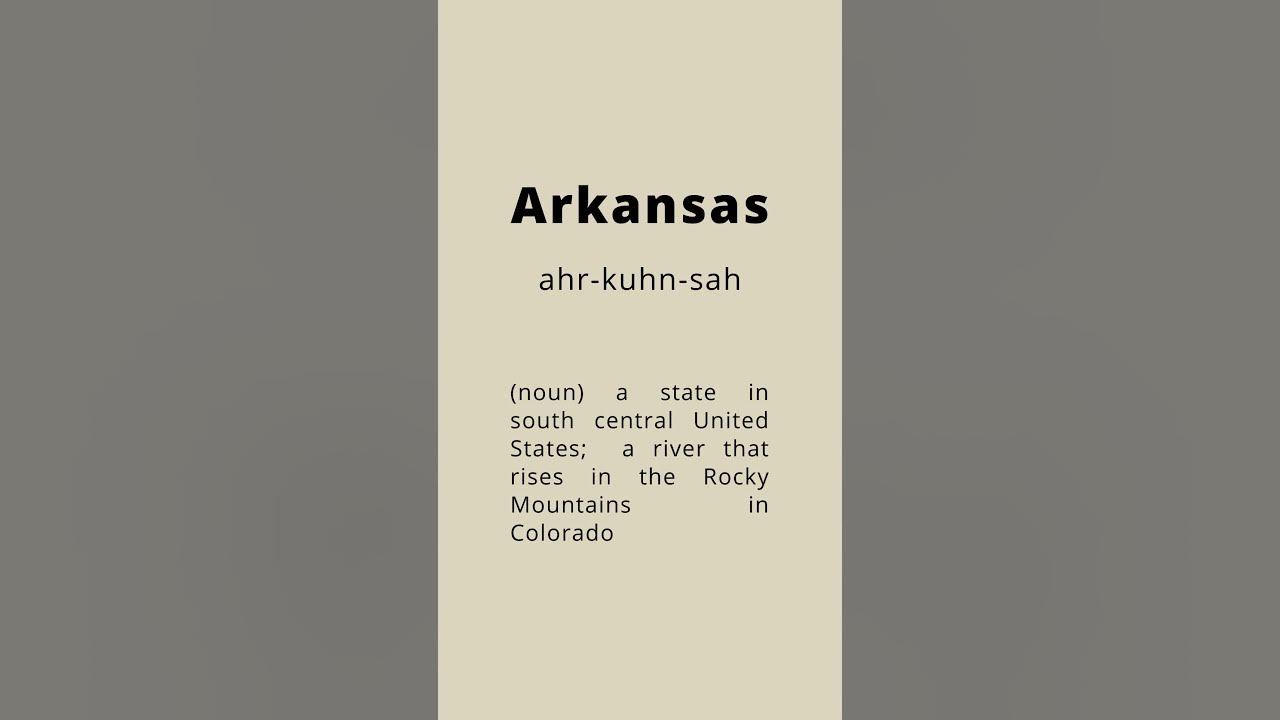
The matter finally came to a head in the 1880s. The Arkansas General Assembly decided enough was enough. They needed to settle this pronunciation once and for all. After much debate and perhaps a few impassioned speeches (one can only imagine!), they voted. The winning pronunciation? "Ar-kan-saw."
Why did they choose to keep the silent "s"? It was a decision rooted in respect for history and the original inhabitants. By sticking to the "Ar-kan-saw" pronunciation, they honored the linguistic legacy passed down from the Quapaw people, through the French explorers, and into the very fabric of the state’s identity. It was a conscious choice to preserve a piece of their unique cultural tapestry.

So, while Kansas (which got its name from the Kansa tribe, also through various linguistic influences but without the same French intervention) pronounces its "s," Arkansas retains its distinct, historical, and wonderfully silent "s." It’s a legislative act of linguistic preservation!
Why This Little Detail Makes Life More Fun
Isn't that just delightful? What seems like a trivial pronunciation oddity is actually a rich narrative of Native American history, European exploration, and linguistic evolution. It’s a mini-lesson in how cultures intertwine, how languages adapt, and how even small decisions can cement a legacy for centuries.

Understanding this isn't just about sounding smart (though you totally will!). It’s about appreciating the layers of story hidden in everyday words. It makes you realize that every place name, every quirky idiom, has its own unique journey. It encourages a deeper curiosity about the world around us.
The next time you hear "Arkansas," you won't just hear a state name; you'll hear echoes of Quapaw voices, French navigators, and spirited legislative debates. You'll hear the whisper of history, a reminder that even the simplest sounds can carry profound meanings.
Keep Exploring!
So, go forth and embrace these delightful linguistic quirks! The world is packed with them, waiting to be discovered. From the "o" in Worcestershire to the seemingly random letter in colonel, every word is a potential adventure. Let this little tale of Arkansas inspire you to look deeper, listen closer, and enjoy the incredible, vibrant story that language has to tell. You might just find that learning about why things are the way they are is one of life's most unexpected and enriching pleasures!