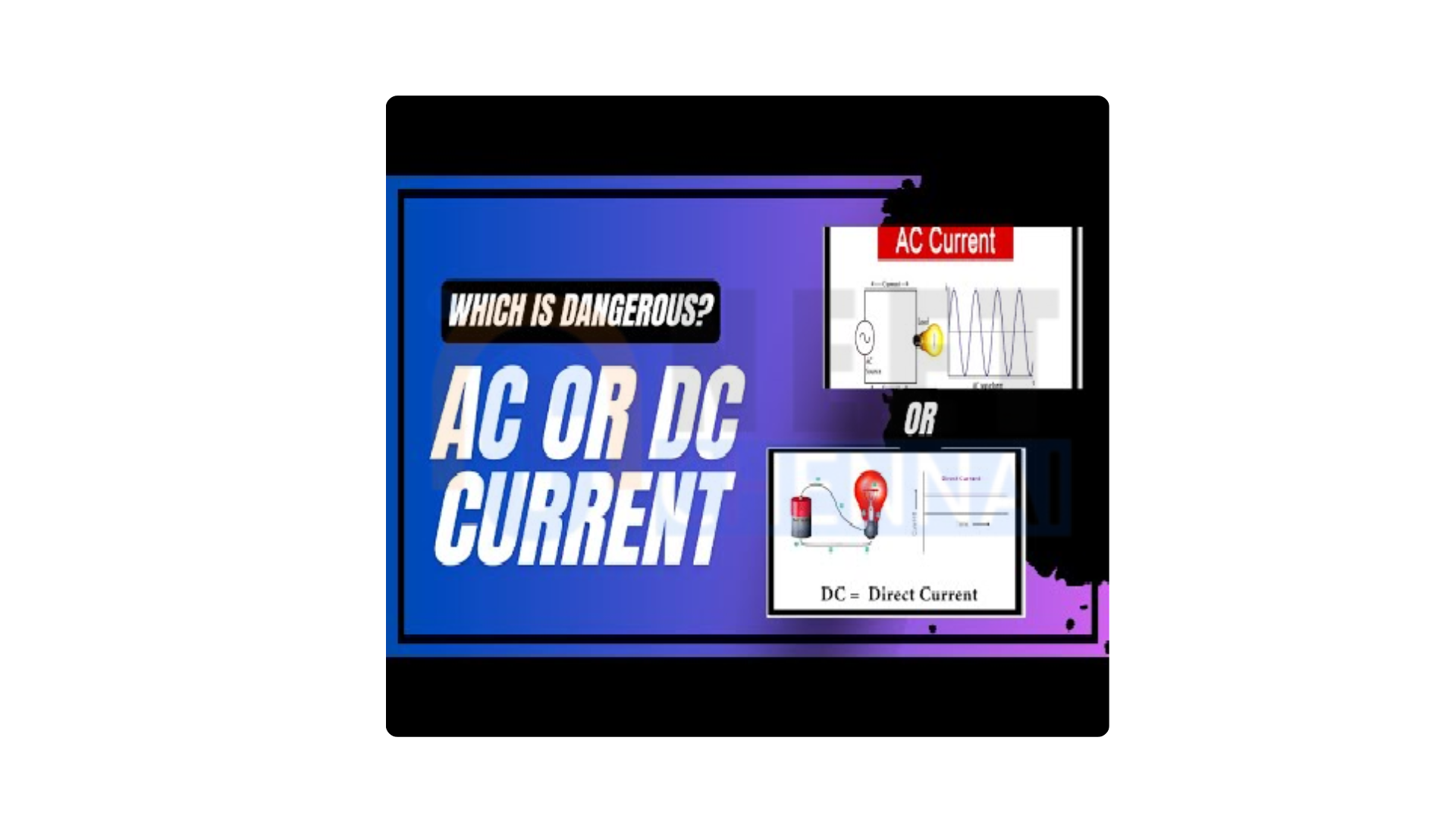
Ever peeked at a battery and then looked at a wall socket and thought, "Huh, electricity is electricity, right?" Well, my friend, prepare to have your mind playfully zapped, because not all electricity is created equal! Today, we're diving into a sparky little mystery: why is AC, the current humming in your home, generally considered way more of a drama queen (and thus, more dangerous) than its steady cousin, DC?
First, let's meet our electrifying contenders, shall we? In one corner, we have DC, or Direct Current. Think of DC as the reliable, straight-arrow friend. It flows in one consistent direction, like a river steadily making its way to the sea. Your phone battery? DC. Car battery? DC. Most modern electronics running on batteries? You guessed it, DC. It’s a bit like a polite, firm push. If it zaps you, it's generally one big shove, and then it's over.
In the other corner, sashaying in with a whole lot of pizzazz, is AC, or Alternating Current. AC is the dramatic superstar. It doesn't just flow in one direction; oh no, it loves to switch things up! It flows one way, then rapidly reverses and flows the other way, over and over again, many times per second (usually 50 or 60 times, depending on where you live!). Imagine a tiny, invisible bouncer constantly shoving you then yanking you back, then shoving you again. Talk about indecisive!
The Great Muscle Meltdown: Why AC Wins (at Being Nasty!)
Now, for the big reveal! Why does AC get the dangerous rap? It mostly comes down to what happens when this push-and-pull party invades your body. Your muscles, bless their hardworking little hearts, operate on electrical signals. They contract when they get a signal and relax when it stops.
When DC hits you, it's like a single, strong command: "CONTRACT!" You'll feel a jolt, a spasm, and it can certainly hurt, but often, that single, steady push allows your muscles to eventually relax or be thrown clear of the source. It’s a bit like a sturdy punch – painful, but usually, you recoil.
Is Ac More Dangerous Than Dc at John Gemmill blog
But AC? Oh, AC is a whole different beast. Remember that rapid push-pull? When AC electricity courses through you, it essentially bombards your muscles with conflicting commands, sixty times a second! It's like your muscles are stuck in a hyperactive dance-off, unable to decide whether to flex or relax. And what happens when a muscle receives constant, rapid commands to contract?
It seizes up! It cramps! It refuses to let go!
Is Ac More Dangerous Than Dc at John Gemmill blog
This, my friends, is the terrifying "can't let go" phenomenon. If you grab an AC-powered wire, the current can literally clench your hand around it, making it impossible to pull away. You become a living, breathing, unwilling part of the circuit. Yikes! That steady DC, while still dangerous at high voltages, is less likely to lock you in such a cruel embrace.
The Heartbreaking Truth: AC and Your Ticker
And then there's your heart. The most important muscle of all! Your heart has its own delicate, natural electrical rhythm, keeping it beating smoothly. When AC electricity barges in, especially at that tricky 50-60 Hz frequency, it can absolutely wreak havoc on that rhythm. It's like trying to conduct an orchestra with a heavy metal band playing at full volume in the background – everything gets chaotic.
Is Ac More Dangerous Than Dc at John Gemmill blog
This disruption can lead to something called ventricular fibrillation, where your heart's chambers just quiver uselessly instead of pumping blood effectively. It’s incredibly dangerous and a major reason why AC is considered such a high-risk character.
So, while DC is like a grumpy, but generally predictable, bull in a china shop (still dangerous, mind you!), AC is the hyperactive, unpredictable, breakdancing bull on roller skates – far more likely to leave you utterly tangled and in a pickle.
In conclusion, both types of electricity demand respect, and both can be incredibly dangerous. But AC, with its rapid, oscillating nature and its uncanny ability to make your muscles forget how to relax, holds a special (and scary!) place in the annals of electrical hazards. So next time you plug in your phone or flip a light switch, give a little nod to the invisible forces at play, and always, always remember to play it safe!