
Why Freshwater Is Considered A Limited Resource
Hey everyone! Ever stop to think about where your water comes from? We turn on the tap and bam – instant refreshment. But have you ever wondered why we hear people talking about freshwater like it's some kind of limited-edition collectible, like a rare Pokemon card? What's the deal? Let's dive in!
So, What's the Fuss About?
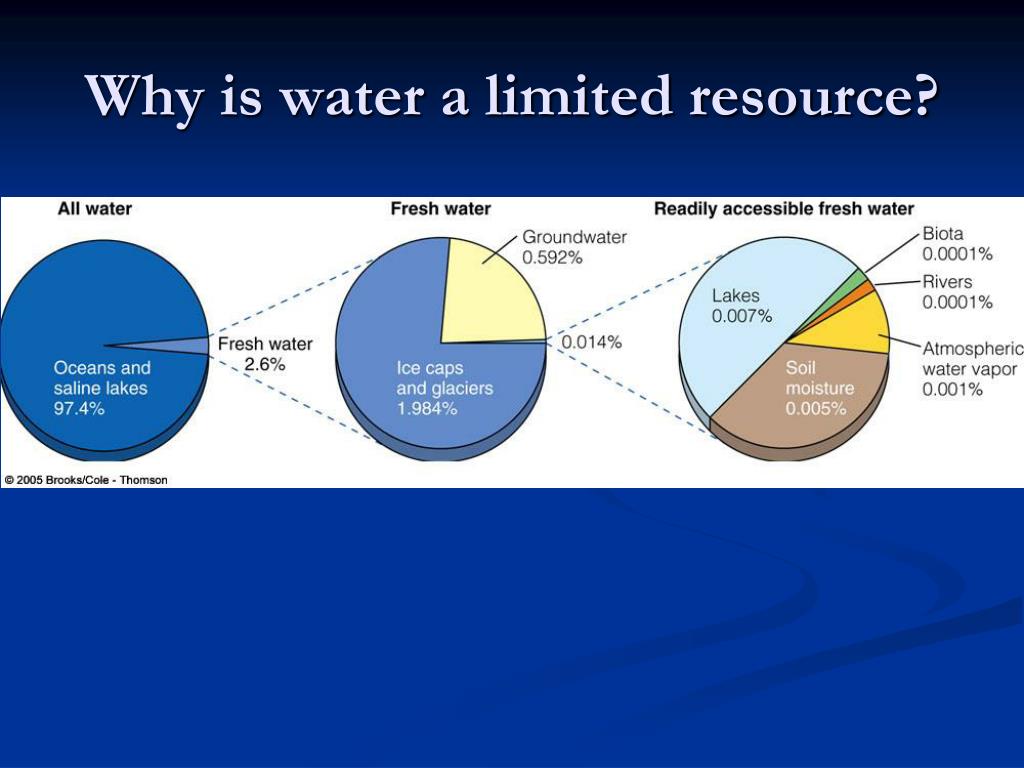
Okay, so Earth is a big, beautiful blue marble, right? Seems like water everywhere. And it is... kind of. But here's the kicker: about 97% of that water is saltwater. Oceans, seas... places you wouldn't exactly want to fill your water bottle from unless you're craving a seriously salty experience! That leaves us with only around 3% of the world's water being freshwater. Only 3%! Feeling a little thirsty now?
Think of it this way: imagine a giant pizza. That pizza represents all the water on Earth. Now, cut out a tiny sliver – like, really tiny. That sliver? That's all the freshwater we have to work with. Pretty shocking, huh?
Must Read
The Freshwater Hide-and-Seek Champions
But wait, it gets trickier! That 3% isn't all readily available in glistening lakes and rivers. A whopping 68.7% of it is locked up in glaciers, ice caps, and permanent snow. Basically, it's chilling in the freezer, inaccessible unless you're a polar bear with a straw. Seriously inconvenient for your daily hydration needs.
Another 30.1% is lurking underground, as groundwater. It's like playing hide-and-seek, except instead of hiding behind the sofa, it's hidden beneath layers of rock and soil. We can access it (think wells and aquifers), but it takes effort and sometimes it's not as clean as we'd like. It's like finding a twenty dollar bill under the couch, but it's a little dusty.

That leaves us with a tiny fraction - about 1.2% – as surface freshwater. This includes lakes, rivers, swamps, and soil moisture. This is the stuff we generally think about when we picture freshwater sources, but it's such a small percentage of the total. Think about that!
Demand is Through the Roof
So, we have this limited supply, right? Now imagine everyone wants a piece of the pie. Not just for drinking water, but for everything! Agriculture uses a ton of water to grow our food. Industry uses it for manufacturing processes. We use it for showering, washing dishes, watering our lawns... the list goes on and on. Suddenly, that tiny sliver of freshwater pizza is looking even smaller, isn't it?
Think of it as your favorite concert. There are only so many tickets available, and everyone wants to go! The higher the demand, the more precious those tickets become. Same with freshwater. Rising populations and increased consumption mean that demand is constantly increasing, putting a strain on our limited resources.

Climate Change: The Plot Thickens
And as if things weren't complicated enough, enter climate change! Rising temperatures are causing glaciers to melt at an alarming rate. Sounds good in theory – more water, right? But it's not that simple. Melting glaciers contribute to rising sea levels (remember that saltwater we can't drink!), and they can disrupt weather patterns, leading to droughts in some areas and floods in others. Climate change is like shaking up a snow globe - beautiful at first, but eventually everything settles in a messy, unpredictable way.
Droughts, especially, put a huge strain on freshwater resources. If you're used to turning on the tap and getting water, imagine that tap running dry. Suddenly, you realize how much you took that water for granted. Water scarcity is becoming a reality in many parts of the world, and it's only going to get worse if we don't take action.

So, What Can We Do?
Okay, so the situation sounds a bit bleak, but don't despair! The cool thing is, we can make a difference. Conserving water in our daily lives is a great start. Simple things like taking shorter showers, fixing leaky faucets, and watering our lawns efficiently can add up. Think of it as saving drops to fill a bucket. Each drop matters!
We can also support policies that promote water conservation and sustainable water management. This means encouraging responsible agriculture practices, investing in water-efficient technologies, and protecting our watersheds. It's like voting for the candidate who promises to keep your pizza safe and delicious!
Ultimately, understanding why freshwater is a limited resource is the first step towards protecting it. By being mindful of our water usage and supporting sustainable practices, we can help ensure that this precious resource is available for generations to come. Let's keep the blue marble blue!
