Why Does Water Have Such A High Heat Capacity
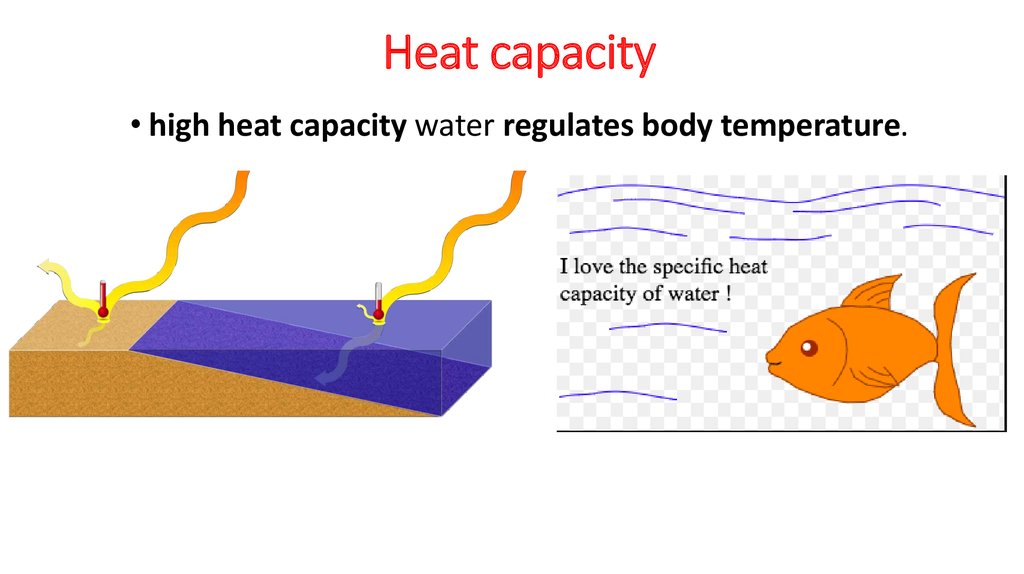
Okay, picture this: you're at the beach, right? Sun's blazing, sand's practically molten lava under your feet. But you rush into the ocean, and... whoa, it's actually kinda chilly! Even though the sun's been beating down on it all day. What gives? I mean, shouldn't the water be, like, boiling by now? Well, that, my friends, is all thanks to water's crazy high heat capacity. And trust me, it's way more interesting than it sounds.
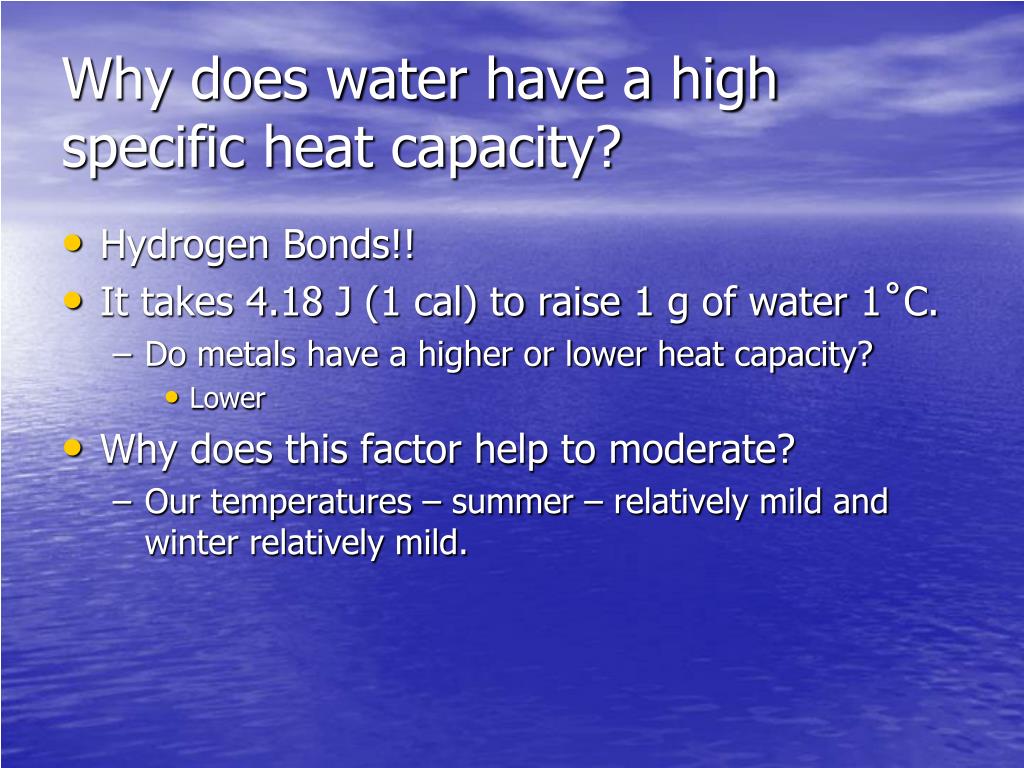
So, what is heat capacity anyway? Think of it as how much "oomph" it takes to get something hot. Specifically, it's the amount of energy (usually measured in Joules or calories) needed to raise the temperature of 1 gram of a substance by 1 degree Celsius. Now, different materials react differently. Metal heats up super fast (ouch, hot spoon!). Air heats up pretty quickly too. But water? Water's a bit of a drama queen about it. It needs a LOT of energy to change its temperature.
Hydrogen Bonds: The Secret Sauce
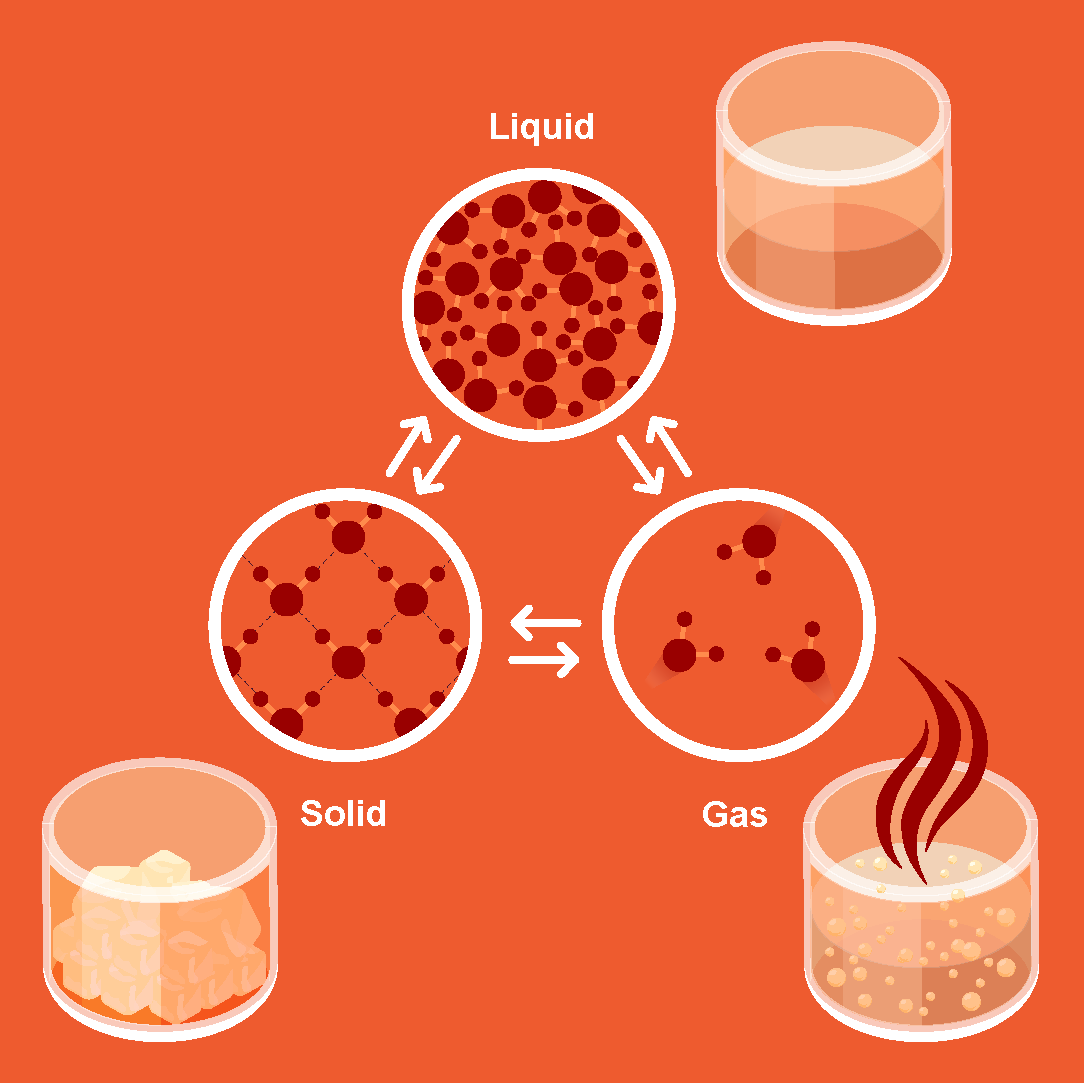
Here's where the chemistry comes in – don't worry, I'll keep it painless! Water molecules are shaped like little Mickey Mouse heads (oxygen is the big head, hydrogen are the ears). Because of how the electrons are distributed, oxygen is slightly negative and the hydrogens are slightly positive. This creates a polar molecule, meaning it has a slightly positive end and a slightly negative end. These polar molecules get attracted to each other, forming weak connections called hydrogen bonds.
Must Read
And these hydrogen bonds are the key! Think of it like this: imagine trying to get a room full of people to start dancing. If they're all standing stiffly apart, you can probably get them moving pretty quickly. But if they're all holding hands? It's going to take a lot more effort to get them to break apart and start dancing, right? (Side note: that sounds like a terrible party. Let's not plan one like that, okay?). That’s essentially what’s happening in water.
To increase the temperature of water, you're not just making the water molecules move faster (that’s what temperature is, after all!). You're also having to break those hydrogen bonds. That takes a HUGE amount of energy. That's why water is so resistant to temperature changes. It's like a stubborn mule determined to stay at its current temperature. Okay, maybe not that stubborn… but you get the idea.
Why It Matters (More Than You Think!)
So, water has a high heat capacity. Big deal, right? Actually, it's a massive deal! It's fundamental to life as we know it. Let's circle back to that beach example.
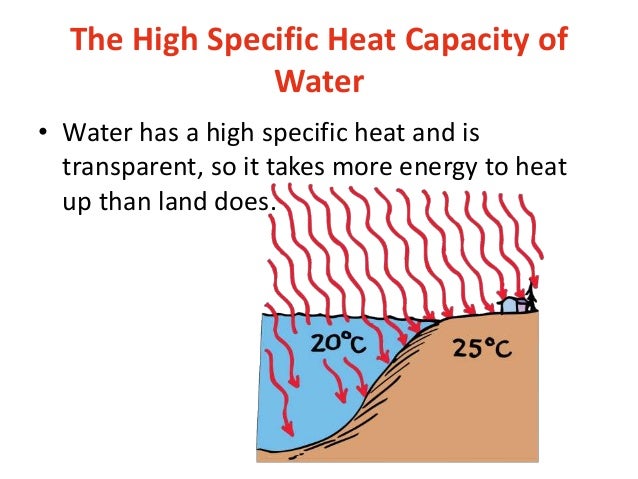
Because water can absorb so much heat without drastically changing temperature, it acts as a temperature regulator. It keeps our oceans (and therefore our planet) from experiencing wild temperature swings. Imagine if the ocean heated up as quickly as, say, the sand on the beach. Everything in the ocean would cook! (No thanks, I prefer my seafood prepared properly, thank you very much.)
And it's not just the ocean. Our own bodies are mostly water! This helps us maintain a stable internal temperature, even when it's hot or cold outside. It's the reason we can sweat to cool down: the water in our sweat absorbs heat from our body as it evaporates. Pretty neat, huh?
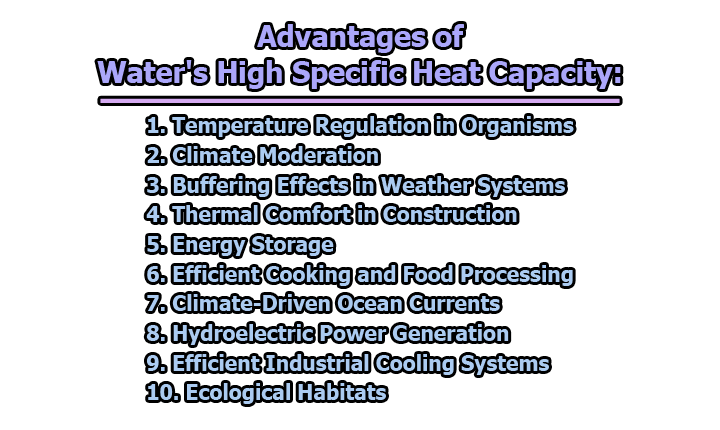
Think about places near the coast, too. They tend to have more moderate climates than inland areas. That's because the ocean absorbs heat during the day and releases it at night, keeping temperatures relatively stable. Coastal California is famous for its mild weather, thanks in no small part to the Pacific Ocean. In contrast, desert areas have huge temperature swings because there's not enough water to buffer the heat.
So, next time you're enjoying a cool glass of water on a hot day, or marveling at the ocean, take a moment to appreciate the amazing properties of water. Its high heat capacity, all thanks to those quirky little hydrogen bonds, is crucial to life on Earth. It's a small thing that makes a world (literally!) of difference. Now, if you'll excuse me, I'm going to go appreciate a nice, temperature-stable beverage. Cheers!