
Why Are Lithium Batteries Dangerous On Planes

Okay, let’s talk about something that might seem a little…intense: lithium batteries on airplanes. Hold on, hold on! Don't click away just yet! I promise we'll keep it light and even a little fun. Because, hey, understanding the world around us is fun, right? Think of it as unlocking a secret level in the game of life!
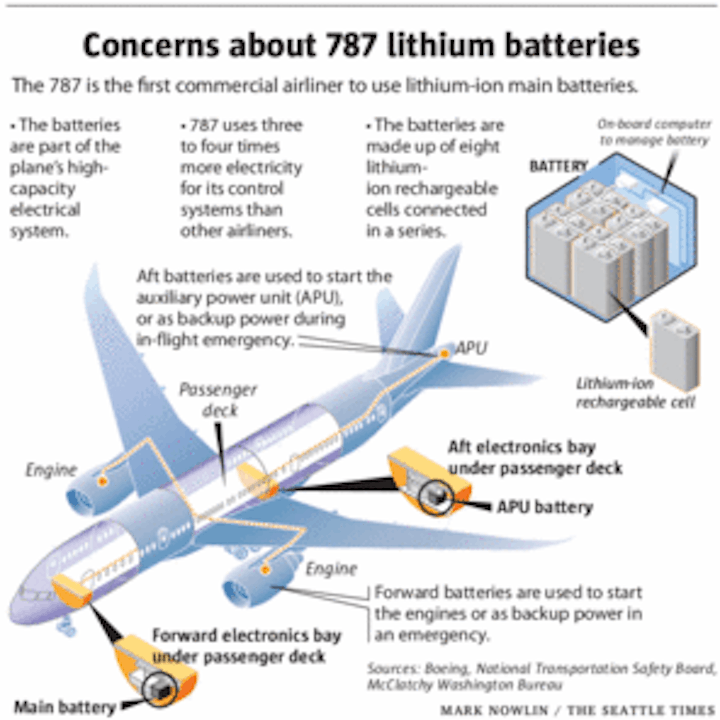
So, why all the fuss about these little powerhouses on our flights? You see them everywhere: in your phone, your laptop, your tablet, even some of your fancy noise-canceling headphones. They're essential to modern life. But up in the air, things get a little…different.
The Chemistry Connection: A Spark of Trouble?
First, a tiny bit of science. (Don't worry, I promise to keep it painless!). Lithium batteries store a whole lot of energy in a small space. That's what makes them so great! But that also means that if something goes wrong – say, damage or a short circuit – all that stored energy can be released very, very quickly. And when that happens, we're talking about heat. Significant heat.
Must Read
And heat, as you might guess, is the root of the problem. If a lithium battery overheats, it can go into something called thermal runaway. Sounds dramatic, doesn't it? It is! Thermal runaway is a chain reaction where the heat causes the battery to further overheat, which causes even more heat, and…well, you get the picture. It's a fiery feedback loop. It's not like your average AA battery getting a little warm in your remote. This is more like a tiny, contained bonfire.
Why is this worse on a plane? Well, several reasons. First, think about the air pressure. At cruising altitude, the air pressure is lower than what we're used to on the ground. This can actually make a fire burn more intensely.

Second, consider the confined space. A plane cabin isn't exactly known for its spaciousness, is it? If a fire starts, it can spread quickly, and it’s much harder to contain than it would be in, say, your backyard.
Third, think about the materials around you. Airplane interiors are built to be as lightweight as possible, and some of those materials can be flammable. Definitely not something you want to discover mid-flight!
Damage Control: How to Keep Things Safe
Okay, so what can you do to help? The good news is, there are plenty of simple steps! The key is to protect your batteries from damage and prevent short circuits.
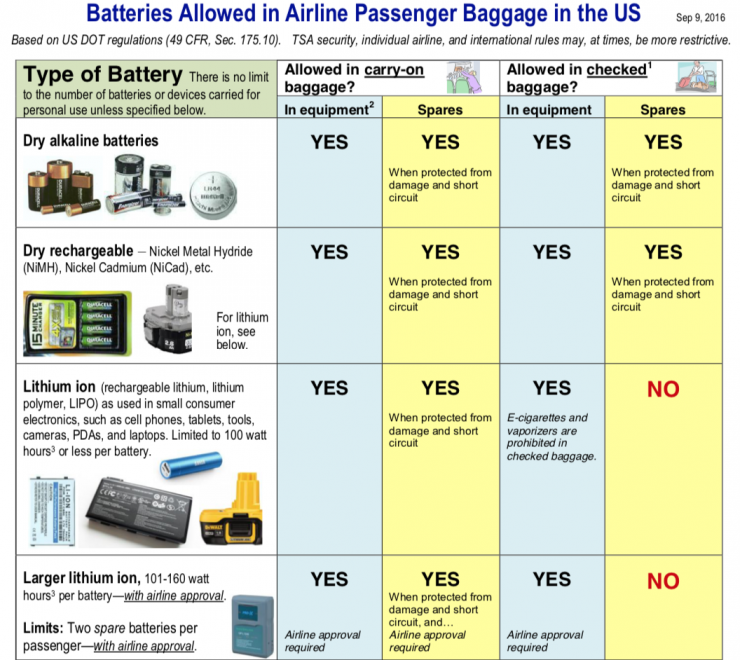
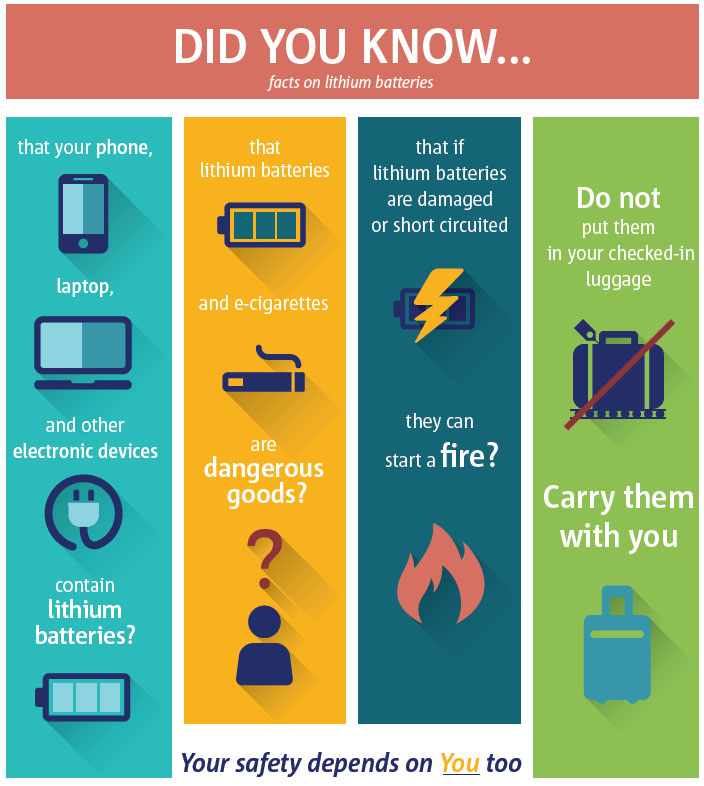
Carry-on vs. Checked Baggage: This is a big one. Airlines typically require you to carry spare lithium batteries (like those for your camera) in your carry-on luggage. Why? Because if a battery does overheat, it's much easier for the crew to deal with it in the cabin than buried deep in the cargo hold. Imagine trying to locate a burning suitcase filled with everyone's stuff mid-flight! Nightmare fuel!
Proper Packaging: If you're carrying spare batteries, make sure they're properly protected. Ideally, keep them in their original packaging or use a battery case. You can also cover the terminals with tape to prevent them from short-circuiting against other metal objects in your bag. Think of it like giving your batteries a little spa day…a very safe spa day.
Avoid Overcharging: Overcharging your devices can also increase the risk of battery failure. Once your phone or laptop is fully charged, unplug it. Don't leave it plugged in overnight unless you have a smart charger that prevents overcharging. It's like feeding your pet – too much isn't a good thing!
Be Aware: Pay attention to any signs that your device might be overheating. If it feels unusually hot to the touch, or if you notice any swelling or bulging, stop using it immediately and alert a flight attendant if you're on a plane. Your instincts are usually right!
From Fear to Fascination: Embrace the Knowledge!
See? It's not so scary after all! Understanding the risks associated with lithium batteries on planes is all about being informed and taking simple precautions. By doing your part, you're helping to keep everyone safe and comfortable on their journeys. And that, my friend, is a pretty empowering feeling.
Think about it: every time you learn something new about how the world works, you're adding another tool to your mental toolbox. And the more tools you have, the more interesting and fulfilling life becomes. So, go forth, be curious, and keep exploring! Maybe next you can learn about the aerodynamics of flight, or the fascinating world of air traffic control. The sky's the limit (literally!). Isn’t it amazing to be surrounded by so much that we have a chance to learn?
Now go out there and have a safe and informed journey! You’ve got this!