
Which Way To Spin Ceiling Fan
Alright, gather 'round, folks, because we're about to tackle one of life's truly baffling mysteries. No, not the Bermuda Triangle, nor how socks disappear in the dryer. We're talking about something far more insidious, far more impactful on your daily comfort: which way should your ceiling fan spin?
It’s the kind of question that pops into your head on a sweltering summer day, or a chilly winter evening, usually just as you’re about to pull your hair out. You stare up at that whirring vortex of air, wondering, "Is it helping? Or is it secretly trying to make me spontaneously combust?" Fear not, my friends. Today, we unravel this enigma with a good dose of humor and some surprising facts that might just blow your hair back (pun absolutely intended).
The Great Fan Debate: Summer Edition
Let's start with the obvious: summer. It’s hot. You’re melting. You want that fan to rescue you from becoming a human puddle. So, what’s the magic direction?
Must Read
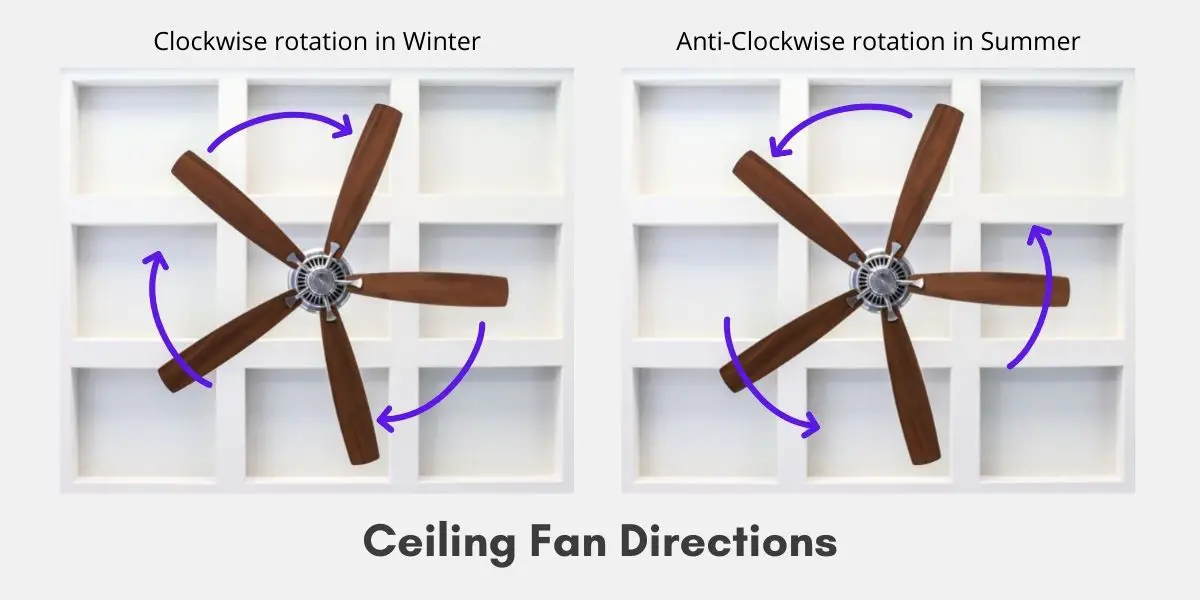
For summer, you want your fan to spin counter-clockwise. Imagine looking up at it from your couch. The blades should be moving from left to right. Why? Because this motion pushes air downward.
Think of it like this: your fan isn't actually cooling the room itself (we'll get to that surprising truth later). What it’s doing is creating a blissful breeze that hits your skin. That breeze helps evaporate sweat, which, as any scientist (or anyone who’s ever been really hot) will tell you, is how your body cools down. It’s the personal wind-chill factor, right in your living room!
If your fan is spinning counter-clockwise, you should feel a distinct, glorious downdraft directly beneath it. If you don't, grab a step stool and prepare for operation "Spin Doctor."

Winter's Warm Hug: The Other Spin
Now, let's flip the calendar. It’s winter. The thermostat is waging war with your energy bill. Your ceiling fan, often neglected in the colder months, actually has a secret weapon up its... well, up its motor housing.
In winter, you want your fan to spin clockwise. Yes, the exact opposite! This time, the blades should be moving from right to left as you look up at them. But here’s the kicker: you want it on a low speed.
When spinning clockwise on a low speed, the fan pulls air upward. "Wait, what?" you ask, "Why would I want air pulled upwards?" Ah, my astute friend, this is where a little bit of physics, and a lot of warmth, comes into play.
Hot air rises. It’s not just a polite suggestion; it’s a law of nature. So, all that lovely warm air from your heater is probably pooling uselessly at your ceiling, mocking you as you shiver below. A clockwise-spinning fan gently pulls that warm air up and then pushes it down along the walls, effectively circulating it throughout the room.
It's like giving your hot air a gentle, upward nudge, saying "Go on now, circulate! Don't be shy!" You won’t feel a direct breeze, which is good because nobody wants a chilly draft in winter. Instead, you'll just feel the room become noticeably cozier and more evenly heated. This can actually help you lower your thermostat a degree or two, saving you some precious pennies!
The "How-To" of Fan Flipping
So, you’ve identified the direction, and realized your fan is currently staging a rebellion against your comfort. Time to change it!
First and foremost, and I cannot stress this enough: turn the fan OFF! Seriously. Unless you enjoy a spontaneous game of "finger roulette" with spinning blades, hit that switch. Wait for it to come to a complete, glorious stop.
:max_bytes(150000):strip_icc()/ceiling-fan-rotate-direction-1907533-v4-5ba94e6346e0fb002576cebf.png)
Now, look at the body of the fan motor housing, usually just above the blades. You’re looking for a small, often unassuming little switch. It's usually a tiny black or brass slider. This is your magical seasonal switch!
Slide it. You might feel a satisfying little click. That’s it! You've successfully changed your fan's direction. Now, turn it back on, stand beneath it (at a safe distance, of course!), and revel in your newfound mastery of atmospheric control.
Surprising Fan Facts (and Myths Busted!)
Here’s the big one: A ceiling fan does not actually cool the air in a room. Read that again. It merely creates a breeze that cools you. This means leaving a fan on in an empty room is about as useful as asking your goldfish for investment advice: it just wastes electricity.

Also, don't crank your fan to "hurricane" speed in winter. Remember, we want a gentle circulation, not a mini-tornado. A low speed is perfect for redistributing warmth without creating an unwanted draft.
And here's a playful exaggeration for you: your fan isn't judging you for having it on the wrong setting for years. It's just patiently waiting for you to learn its secrets. Now you know!
The Spin Cycle Conclusion
So there you have it: a simple, yet profound, answer to one of life's most frequently Googled household dilemmas. Summer: counter-clockwise, fast speed, direct breeze. Winter: clockwise, slow speed, gentle circulation.
Go forth, my friends, and adjust your fans with confidence! Impress your dinner guests, enlighten your bewildered family, and most importantly, enjoy a perfectly comfortable home, all year round. Who knew a little flip of a switch could be so profoundly satisfying?