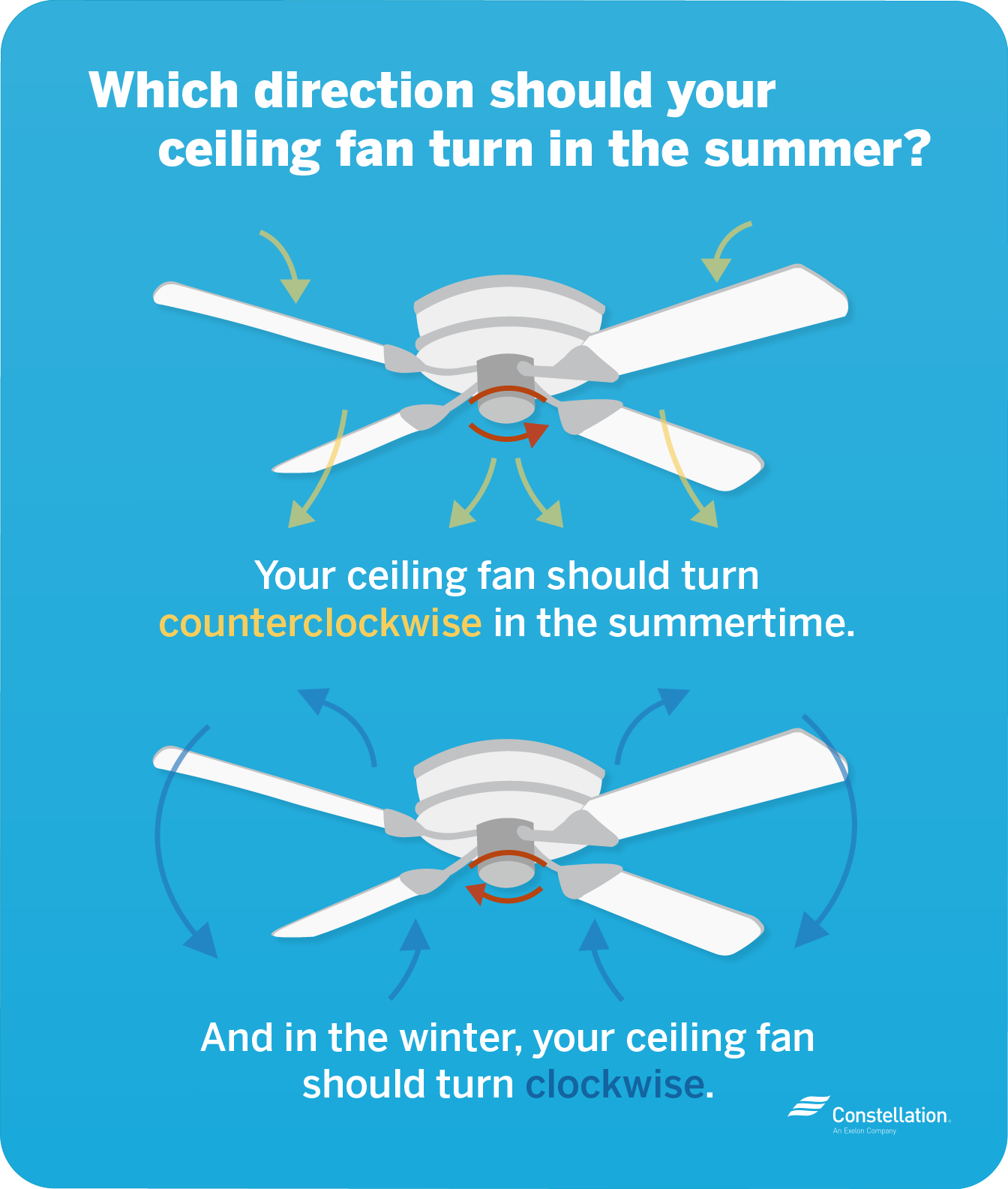
Which Way Should Your Fan Rotate In The Summer

Ever stood beneath a ceiling fan, beads of sweat clinging to your brow, and wondered if it's really doing its job? We all know fans circulate air, but have you ever considered that the direction of that circulation actually matters, especially during those scorching summer months? It's a simple thing, easily overlooked, but understanding which way your fan should rotate can make a surprisingly big difference in your comfort and your energy bill! So, let's dive into the fascinating world of fan rotation and unlock its cooling potential.
The purpose of fan rotation, in the summer specifically, is to create a downdraft. Think of it like a gentle, personal breeze. As the fan blades spin, they push air downwards, creating a cooling effect on your skin through convection. This forced airflow helps evaporate sweat, which, in turn, lowers your body temperature. It’s not actually cooling the air itself, but rather making you feel cooler. And feeling cooler means you're less likely to crank up the air conditioning, saving energy and money!
But how do you know which way it should be spinning? Generally, in the summer, you want your fan to rotate counter-clockwise (when looking up at it). Most ceiling fans have a small switch on the motor housing that allows you to change the direction. Experimenting is key! Stand directly under the fan and observe the airflow. If you feel a noticeable breeze, you're on the right track. If not, flip the switch! It’s that simple.
Must Read
This knowledge is useful in a variety of contexts. In schools, for example, understanding convection and heat transfer is a core science concept. Explaining the role of fan rotation in summer cooling is a relatable and practical way to illustrate these principles. Think of it as a mini-lesson on physics in action! In daily life, knowing how to optimize your fan can improve comfort in your home, office, or even a covered patio. It’s a small adjustment that can lead to a significant improvement in your environment.
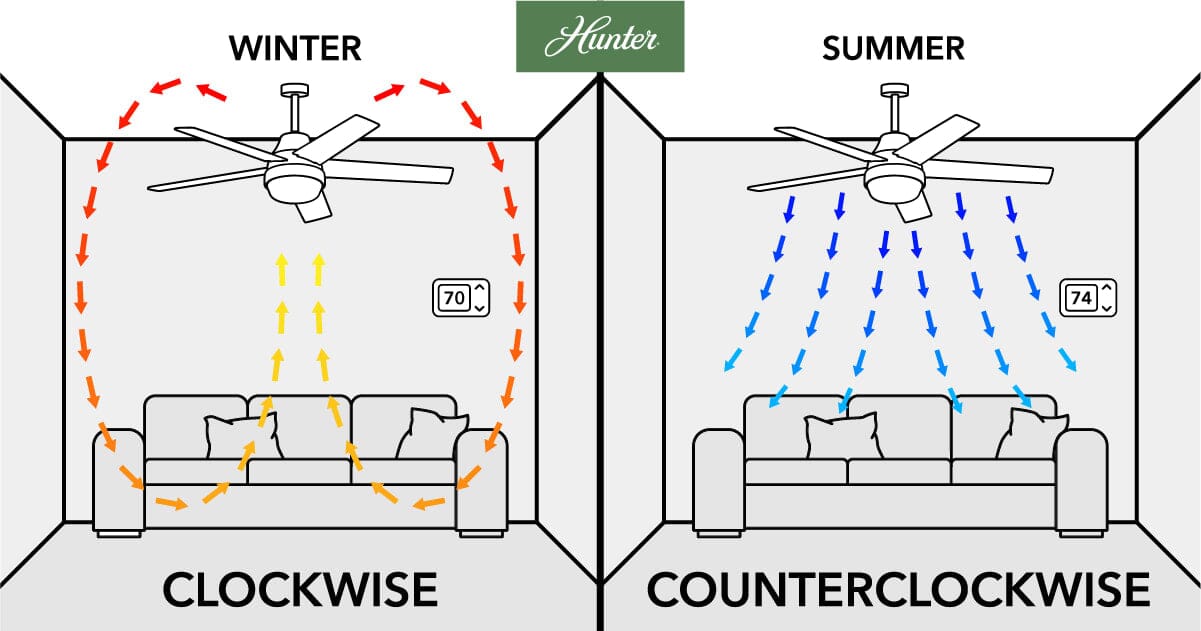
Here are some simple tips to explore this further. First, identify the reverse switch on your fan. This is usually located on the motor housing, though some newer models may have remote control options. Second, experiment! Spend a few minutes under the fan in both directions and consciously note the difference in airflow. Third, consider your room's layout. A larger room might benefit from a higher fan speed to maximize the downdraft. Finally, remember that fan rotation is just one piece of the puzzle. Using fans in conjunction with air conditioning can be a very effective way to lower your energy consumption. You can also use fans to circulate air from open windows to promote passive cooling.
So, next time you're feeling the heat, take a moment to check the direction of your ceiling fan. A simple flip of a switch could be the key to a cooler, more comfortable summer and a lighter energy bill! Don't underestimate the power of a well-rotated fan. It's a small change with surprisingly significant benefits.