
Which Way Should The Fans Turn In The Summer
Alright, gather 'round, friends, because we're about to tackle a question that has plagued humankind, right up there with "Is pineapple on pizza a crime against humanity?" and "Why do socks always disappear in the laundry?". We're talking about ceiling fans, my friends. Specifically, which way they should spin during the sweltering summer months. It's more important than you think, trust me. It could be the key to avoiding a heat-induced existential crisis!
Now, I know what you’re thinking: "It's a fan! It spins! What's the big deal?" Well, my friend, the direction of that spin can be the difference between feeling like you're being gently caressed by a cool summer breeze and feeling like you're trapped in a stuffy, sweaty, overpriced sauna.
The Summer Spin: Counter-Clockwise is King (or Queen!)
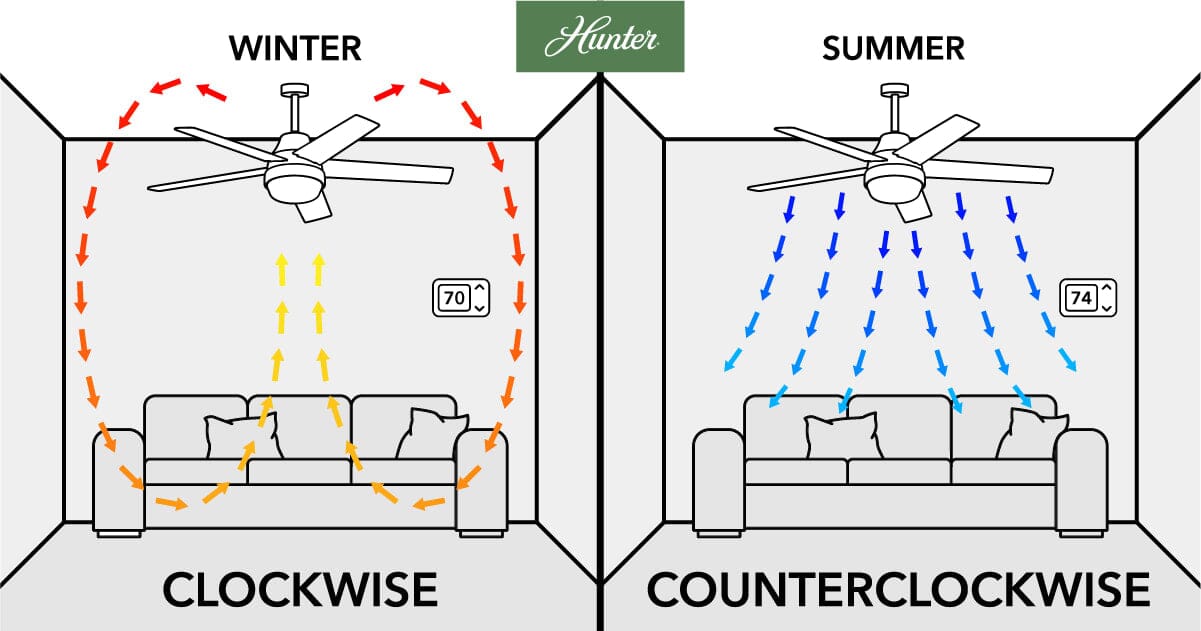
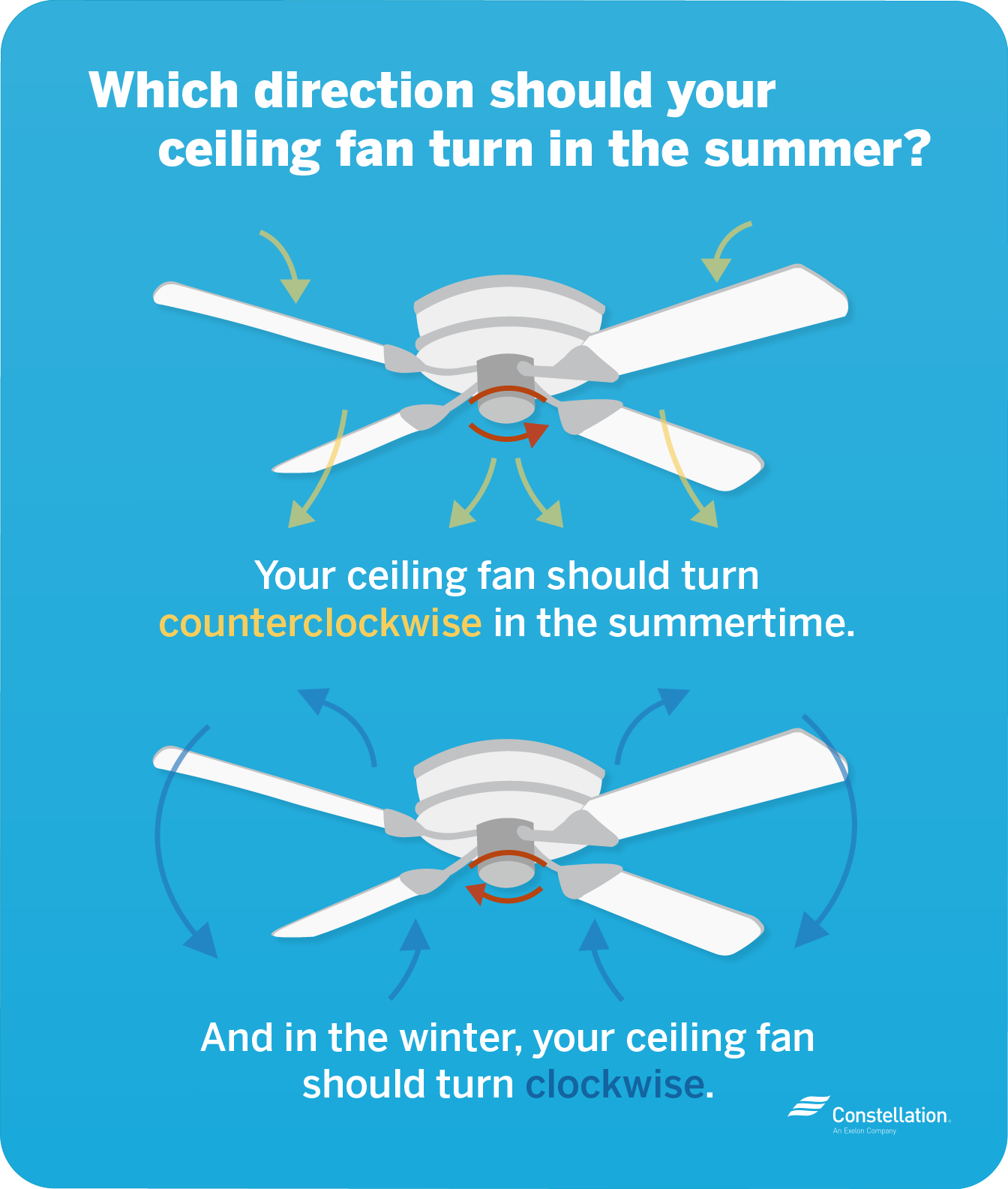
Here's the lowdown, the skinny, the inside scoop: In the summer, you want your ceiling fan to spin counter-clockwise when you're looking up at it. I know, I know, it sounds counterintuitive (pun intended!). But stick with me. Think of it this way: your fan is like a tiny, domesticated weather god, and you are its humble supplicant, begging for sweet, sweet relief.
Must Read
When spinning counter-clockwise, the fan blades push air downward. This creates a delightful, invigorating breeze that makes you feel cooler. It’s like the fan is personally blowing a refreshing gust of air right onto your skin. Feels good, right?
This downward airflow helps to evaporate sweat from your skin, which, as any sixth-grade science textbook (or sweaty gym rat) will tell you, is the body's natural cooling mechanism. So, you're not just feeling cooler, you're actually cooler. Science! It’s a beautiful thing.

But wait, there's more! This downward breeze also helps to distribute the cool air from your air conditioner more effectively. Meaning, you can crank up the AC a little less, save some energy (and some money!), and still feel like you're chilling in an igloo. It's a win-win-win situation! Except for the electric company, maybe. But hey, they'll survive.
How to Tell if Your Fan is Doing its Job (or Shirking its Responsibilities)
Okay, so you've changed the direction of your fan (we'll get to how to do that in a minute, don't worry), but how do you know if it's actually working? Simple! Stand directly under the fan. If you feel a gentle, consistent breeze, congratulations! Your fan is doing its job and earning its keep. Give it a little pat on the motor housing. It deserves it.
If, however, you feel nothing but stagnant air and the lingering scent of disappointment, then something is amiss. Double-check that you've got it spinning in the right direction. Maybe even try jumping up and down a few times. I don't know why that would help, but hey, sometimes you just gotta try weird things.
The Nitty-Gritty: Changing the Fan's Direction
Alright, time for the technical stuff. Don't worry, it's not rocket science (unless you're using a ceiling fan in a rocket ship, in which case, you probably already know all this). Most ceiling fans have a little switch located on the motor housing, usually near the light fixture. This switch controls the direction of the fan.
Important safety tip! Make sure the fan is completely stopped before you flip the switch. Seriously. You don't want to end up on YouTube as the star of a viral video titled "Idiot vs. Ceiling Fan: Fan Wins." Nobody wants that.
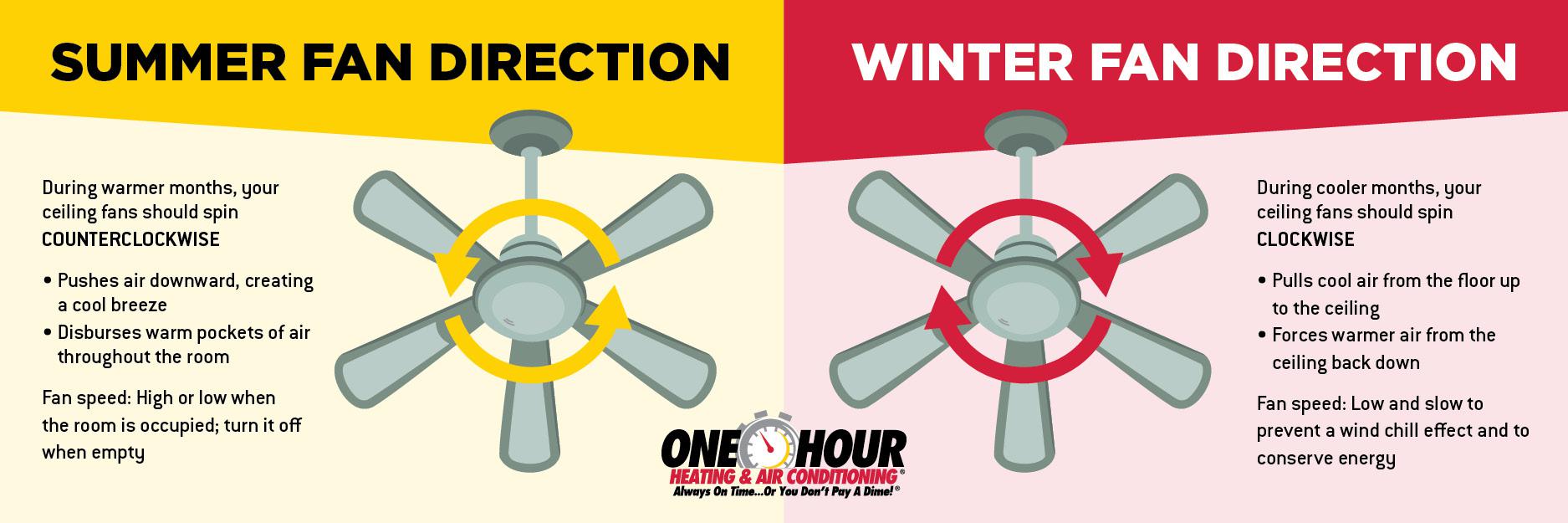
Once the fan is stopped, flip the switch to the opposite position. Then, turn the fan back on and observe its direction. If it's spinning counter-clockwise (when viewed from below), then you're golden! If not, flip the switch again. Repeat until you achieve the desired direction. It's like a tiny, air-conditioning-related quest!
The Exception That Proves the Rule (and Confuses Everyone)
Now, before you go off and start flipping switches willy-nilly, I have to mention a slight complication. Some modern ceiling fans are equipped with fancy-schmancy remote controls that also control the fan's direction. In this case, the switch on the motor housing might be irrelevant. You'll have to consult your owner's manual (I know, the horror!) or, you know, just start pressing buttons on the remote until something happens. That's usually how I approach these things, anyway.

Beyond the Basics: Fan Maintenance for Maximum Cooling Power
Once you've mastered the art of fan direction, don't forget the basics of fan maintenance. Dust those blades regularly! A layer of dust can significantly reduce the fan's effectiveness. Plus, nobody wants to live under a swirling cloud of dust bunnies. That's just…sad.
Also, check the screws that hold the blades in place. Over time, they can loosen, causing the fan to wobble and make annoying noises. Tightening them up can make a world of difference. And if your fan is still making noise after that, maybe it's possessed. In that case, call a priest, not a handyman.
So there you have it! Everything you ever wanted to know (and probably more) about which way your ceiling fan should spin in the summer. Now go forth and conquer the heat, armed with your newfound knowledge and a properly-spinning fan! And remember, if all else fails, just stand in front of an open refrigerator. Just kidding! (Mostly.)