
Which Way Should My Fan Rotate In The Summer

Alright folks, summer's here! That glorious, sweaty, sunshine-filled time of year. And if you're anything like me, you're probably locked in a daily battle with the thermostat, trying to find that sweet spot between "arctic tundra" and "tropical rainforest" in your humble abode. One weapon in your arsenal that you might be overlooking? Your ceiling fan!
But wait! Before you just hit that power button and hope for the best, there's a crucial question to ask: Which way should that bad boy be spinning in the summer? Don't worry, it's not some complicated physics equation involving the Coriolis effect and the migratory patterns of monarch butterflies. It's actually pretty simple, but getting it right can make a world of difference.
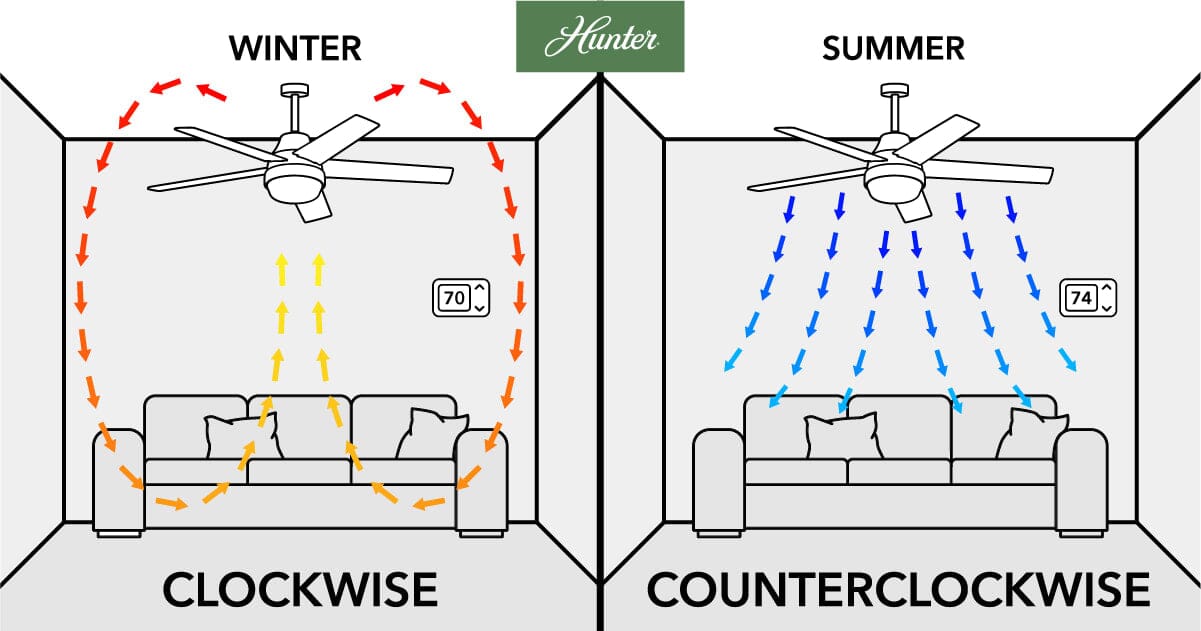
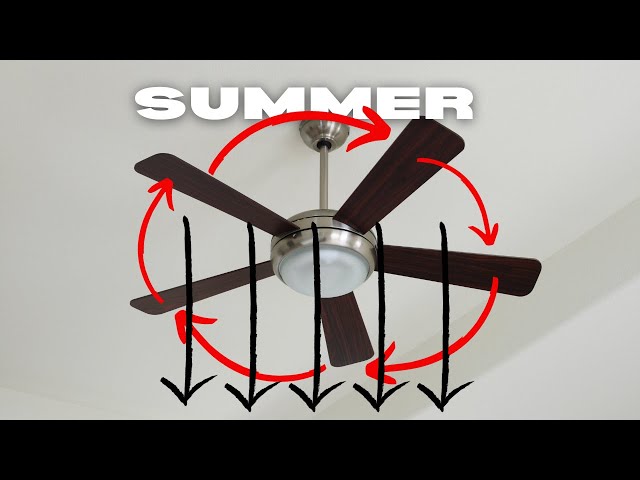
Summer Spin: Counter-Clockwise is Your Coolest Friend
The answer, my friends, is counter-clockwise (as you look up at it, of course). Think of it like this: you want your fan to push the air down, creating a nice, gentle breeze that caresses your skin like a cool summer cloud. When your fan spins counter-clockwise, it's basically saying, "Hey, hot air! Get out of here! I'm bringing the cool!"
Must Read
Imagine you're at a swanky beach party (because why not?). The sun is blazing, but then... whoosh... a refreshing gust of wind sweeps through, carrying the scent of saltwater and sunscreen. That's what your counter-clockwise spinning fan is trying to replicate! Okay, maybe without the saltwater and sunscreen, unless you're into that sort of thing. No judgment here.
Why does this even work?
Now, I know what you're thinking. "But why counter-clockwise? What's the magic?" Well, it all comes down to the angle of the blades. When the fan spins counter-clockwise, the angled blades are designed to grab the air above and push it downwards, creating that glorious breeze we talked about. It's like the fan is giving you a high-five... a cool, refreshing high-five.
:max_bytes(150000):strip_icc()/ceiling-fan-rotate-direction-1907533-v4-5ba94e6346e0fb002576cebf.png)
Think of it like this: Picture a tiny, adorable air traffic controller inside your fan, directing the air molecules to do his bidding. He's wearing a tiny headset and waving his tiny little batons, shouting, "Down, down, everybody down! We need some cool air on deck!" Okay, maybe that's a bit of an exaggeration, but you get the idea.
Test Time: Feel the Breeze!
Still not convinced? No problem! Here's a super scientific (not really) experiment you can conduct. Stand directly beneath your fan while it's running. If you feel a noticeable breeze, then congratulations! Your fan is doing its job. If you don't feel much of anything, or worse, if you feel a slight upward draft (shudder!), then it's time to switch directions.
Most modern ceiling fans have a handy-dandy switch on the motor housing that allows you to change the direction of the blades. It might be a little button, a slide switch, or even a remote control function (ooh, fancy!). Just flip the switch, give it a minute to get up to speed, and then feel the difference.
Don't Forget Winter! (Yes, I Said Winter!)
Okay, okay, let's not get ahead of ourselves. We're still in the throes of summer! But just for future reference (mark your calendars!), when the temperature starts to drop, you'll want to reverse that fan direction to clockwise. This gently pulls the warm air that rises to the ceiling back down, helping to keep your room warmer. It's like having a personal temperature regulator! You are going to save lots on energy bills if you do this consistently. Trust me.
"The key to comfortable living isn't just air conditioning; it's strategic fan usage!" - Your Friendly Neighborhood Home Comfort Guru
So there you have it! The secret to summer bliss, revealed. Crank up that counter-clockwise action, and enjoy the sweet, sweet relief of a gentle, cooling breeze. You've earned it! Now go forth and conquer that summer heat, one perfectly spun fan blade at a time.
And remember, always consult your fan's user manual for specific instructions. I'm just a friendly voice on the internet, not a certified fan mechanic (though maybe I should consider a career change...).
Stay cool, my friends!
