Which Way Should A Fan Rotate In The Summertime

Ah, summer! The season of sunshine, beaches, and… sweltering heat. Let's be honest, most of us rely on our trusty fans to make those scorching summer days a little more bearable. But have you ever stopped to wonder if your fan is actually working with you, or just spinning around in circles providing nothing more than a placebo effect? Today, we're tackling a crucial question: which way should a fan rotate in the summertime?
Fans, in their simplest form, are amazing devices. They don't actually cool the air; instead, they work by creating a breeze. This breeze helps evaporate sweat from your skin, and as that sweat evaporates, it cools you down. Think of it like nature's air conditioning! Whether it's a ceiling fan humming overhead, a box fan strategically placed in a window, or even a tiny desk fan providing targeted relief, the principle remains the same: air movement equals a more comfortable you.
You'll see fans used everywhere: in homes, offices, gyms, and even outdoor patios. They're a relatively inexpensive and energy-efficient way to combat the heat compared to air conditioning. Beyond just personal comfort, fans can also help circulate air and prevent stale environments, potentially reducing mold and mildew growth. They're also great for drying clothes quickly, a little life hack for laundry day!
Must Read
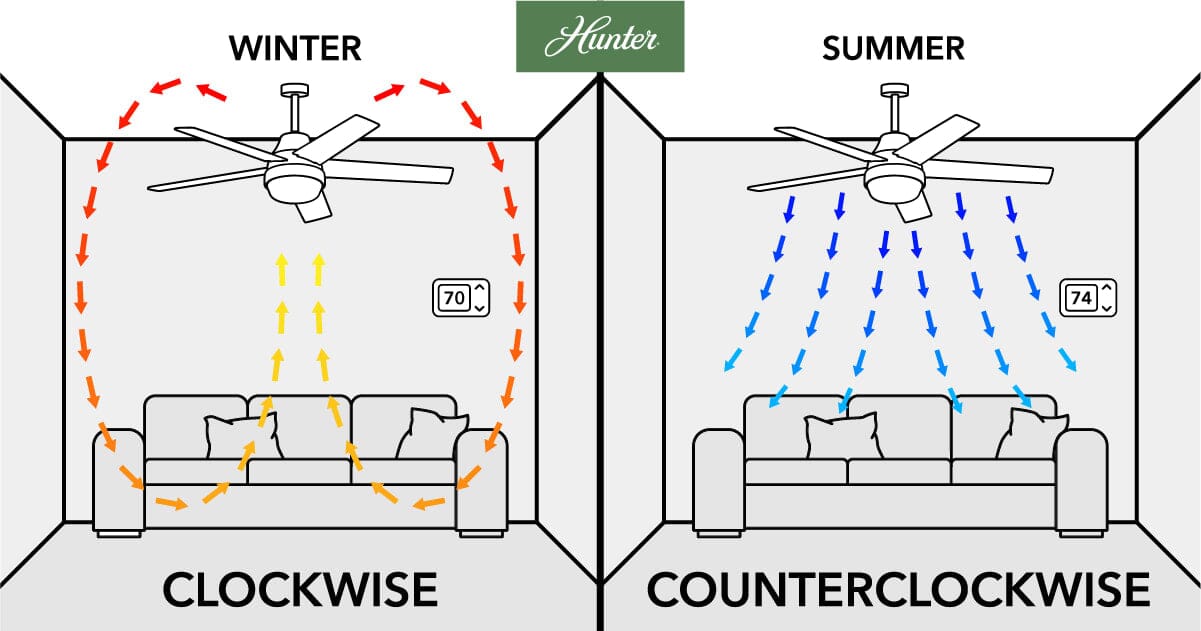
Now, for the million-dollar question: summertime fan direction. The general rule of thumb (and one you should absolutely commit to memory!) is that during the summer, your ceiling fan should rotate counter-clockwise when you're looking up at it. This creates a downdraft, pushing the air straight down and creating that refreshing breeze we talked about. Think of it like a gentle waterfall of cool air washing over you.
But how can you be sure your fan is rotating the right way? Most ceiling fans have a small switch located on the motor housing. This switch controls the direction of the fan. Simply flip the switch to change the direction. Listen closely to the air movement. Can you feel a distinct downdraft? If not, flip the switch back! Experiment to find the direction that provides the most comfortable airflow for your specific space.
:max_bytes(150000):strip_icc()/ceiling-fan-rotate-direction-1907533-v4-5ba94e6346e0fb002576cebf.png)
To maximize your fan's effectiveness, consider these tips. First, make sure your fan blades are clean. Dust and grime can significantly reduce its efficiency. Second, use your fan in conjunction with your air conditioning. A fan can help circulate the cool air, allowing you to set your thermostat a few degrees higher and save energy. Third, experiment with fan speed. Sometimes a lower speed is sufficient, while other times you might need to crank it up for maximum relief. Finally, consider the placement of other fans. Box fans in windows can help exhaust hot air, while strategically placed floor fans can target specific areas of a room.
So, the next time you're reaching for the fan to beat the summer heat, remember to check the direction and make sure it's spinning counter-clockwise! With a little know-how, you can transform your fan from a simple appliance into a powerful weapon in your fight against summer's sweltering heat. Stay cool out there!