
Which Way Should A Ceiling Turn In The Winter
Hey friend! So, the holidays are creeping in, the weather's turning frightful (but hopefully the fire's delightful!), and you're probably wondering about...ceiling fans? Yep, let's talk ceiling fans in winter. Because who wants to be shivering while their fan’s just churning the cold air around?
It's one of those things you know you should know, like which fork to use for salad (still haven't figured that one out, honestly). But don’t worry, I’m here to demystify the swirling enigma that is winter fan direction!
The Great Fan Debate: Clockwise or Counter-Clockwise?
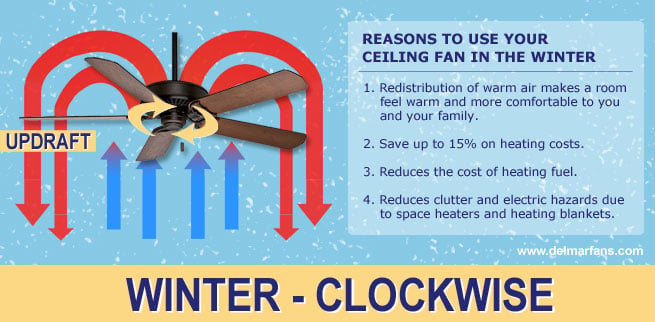
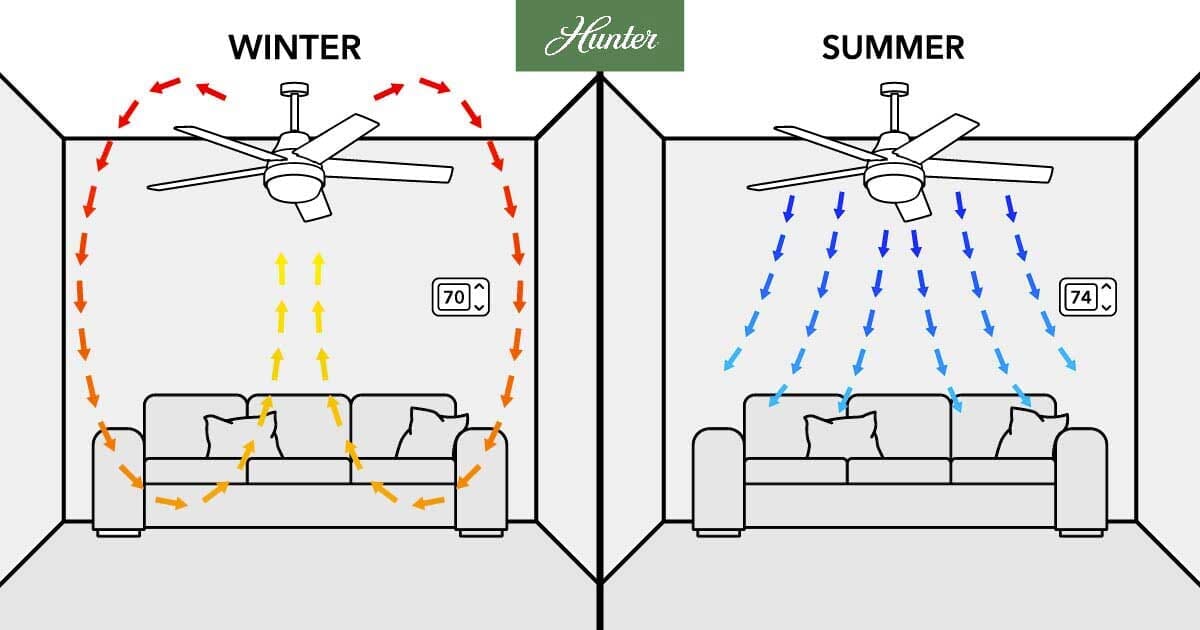
Okay, so here's the deal. In the winter, you want your ceiling fan to turn clockwise. I know, I know, mind-blowing, right? Think of it as reversing your brain’s default fan setting. It's like when you accidentally put your shoes on the wrong feet. Just... different.
Must Read
But why clockwise, you ask? Good question! You're clearly a deep thinker. It's not just some random direction the fan gods chose one day. There's actual science (sort of) behind it.
See, warm air rises. We all learned that in grade school, probably right before the teacher told us about the birds and the bees. So, all that cozy, heated air from your furnace or fireplace is hanging out near the ceiling, having a party. Your fan, turning clockwise at a low speed, gently pushes that warm air down the walls and back into the room. It's like a warm air hug!

Think of it like this: your fan is now a warm air re-distributor. No more cold spots! No more battling over the prime spot near the radiator! (Although, a little friendly competition never hurt anyone... except maybe your cat.)
Speed Matters! (More Than You Think)
Now, here's the crucial part: low speed is key. I can't stress this enough. You don't want a wind tunnel in your living room. You're not trying to recreate a hurricane indoors (unless you really hate dusting). A gentle, almost imperceptible breeze is what we're aiming for. Think spa day, not roller coaster ride.
If you crank it up too high, you'll just create a chilly draft and defeat the whole purpose. Trust me, I've been there. It's not fun.
Seriously, keep it low. Like, “barely moving” low. Lower than your expectations. Lower than a limbo stick at a clown convention.
How to Tell Which Way Your Fan is Turning
This might sound silly, but sometimes it's hard to tell! Especially if your fan is whisper-quiet (which is what you want, remember?). Just stand back, squint a little (like you're judging a talent show), and watch the blades. Are they moving to the right (clockwise) or to the left (counter-clockwise)?

Most fans have a little switch on the motor housing that allows you to reverse the direction. It might be labeled "winter" and "summer" or just have arrows. Consult your fan's manual if you're unsure (or, you know, just Google it. We live in the future!).
And if you still can’t figure it out, grab a friend! Two sets of eyes are better than one. Plus, it's a good excuse to hang out and drink hot cocoa.
The Benefits of a Winter-Friendly Fan
Besides avoiding that polar vortex feeling in your living room, there are other perks to running your fan in reverse during the winter:
- Lower Heating Bills: By distributing warm air more evenly, you might be able to turn down your thermostat a degree or two, saving energy and money. That’s like finding twenty bucks in your old coat pocket – unexpected and delightful!
- Increased Comfort: No more cold feet while your head is sweating! Balanced temperature = happy you.
- Better Air Circulation: Even though it’s cold outside, keeping the air moving is important for preventing stale air and potential mold growth. (Ew!)
So there you have it! A (hopefully) painless explanation of winter fan direction. Now you can confidently adjust your ceiling fan and bask in the cozy warmth of your home. You’re basically a home climate expert now!
Go forth, conquer the cold, and enjoy the winter season. And remember, keep that fan speed low! You got this!