Which Was A Main Benefit Of Industrialization

Okay, picture this: My grandma, bless her heart, used to tell me stories about her childhood. Life was hard. Like, really hard. Everything was made by hand, took forever, and if something broke? Forget about Amazon Prime. You either fixed it yourself (good luck!) or went without. She'd talk about churning butter for hours. Hours! I can't even commit to a 30-minute workout. (And who even churns butter anymore?!)
It really hits you, doesn't it? Thinking about how much harder things used to be. And that's where the Industrial Revolution comes in. We learn about it in school, but sometimes it feels like dusty old history. But it's actually directly connected to why we have, you know, stuff today. So what was the real game-changer, the main reason things changed so drastically?
The Obvious Answer: Increased Production
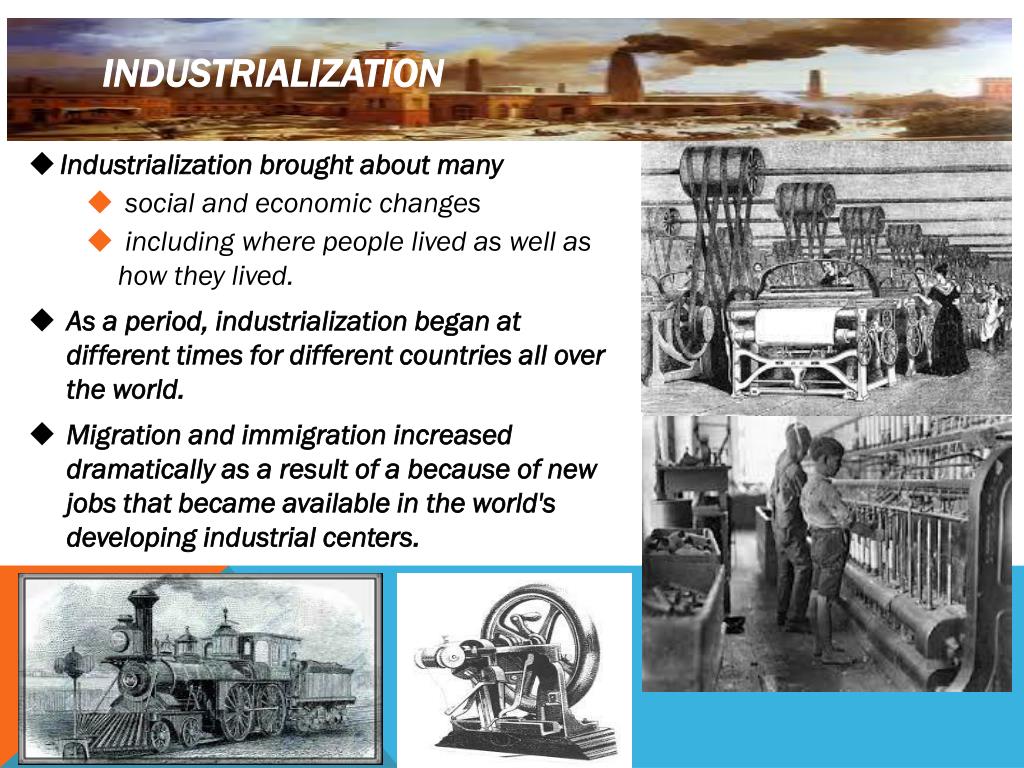
The most obvious answer, and probably the one that jumps to mind, is increased production. Duh, right? But it’s not just "more stuff," it's the sheer volume of stuff. Before industrialization, things were made by hand, slowly, and in limited quantities. Industrialization, with its factories and machines, allowed for mass production. Think about that butter grandma was churning – a factory could churn out a ton of butter in the same time! Suddenly, goods were available to a wider range of people, not just the wealthy.
Must Read
Seriously, imagine trying to make your own clothes from scratch. We're talking growing cotton, spinning it into thread, weaving it into fabric, and then sewing it. Now, you can buy a t-shirt for, like, five bucks. (Okay, maybe ten these days...inflation is a killer!). That’s the power of industrialized production.
Beyond Just 'More Stuff'
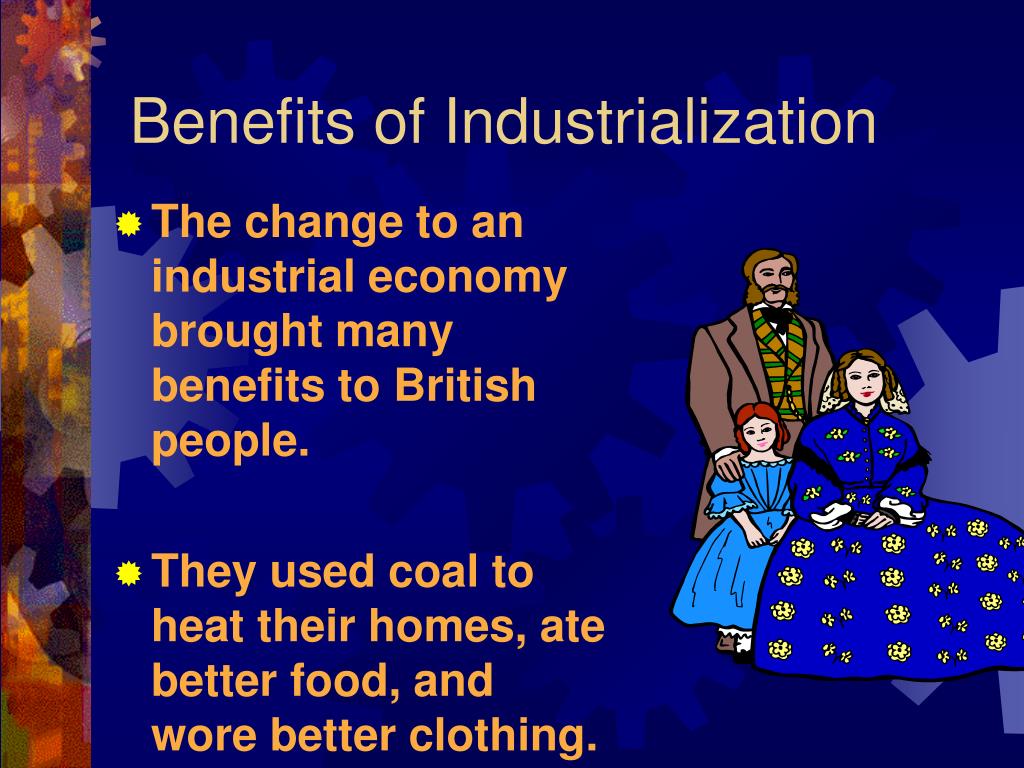
But it's more than just having more things, it also led to an important improvement in standards of living for many – although not immediately and not for everyone. The Industrial Revolution didn't exactly start with rainbows and unicorns (more like smog and child labor, unfortunately). However, eventually, the availability of cheaper goods meant that people could afford more things – better food, clothing, and eventually, even luxuries that were previously unthinkable.
Let’s be real. Even now, the access to these resources is not equitable. It's still a challenge in a lot of parts of the world and in communities that are underserved. But the potential is there in a way that it wasn't before industrialization.
Technology and Innovation: The Gift That Keeps on Giving
Also, don't forget that industrialization fueled rapid technological advancement. Think about it: one invention led to another, which led to another. The steam engine, for example, wasn't just about powering factories. It led to trains and steamboats, which revolutionized transportation. (Think about how much longer it would take to visit grandma without a car or plane!).

This constant cycle of innovation is still happening today. Think about your phone. It's more powerful than the computers they used to send people to the moon! And that progress, in large part, is a direct result of the foundations laid during the Industrial Revolution. It's a constant chain reaction. One problem gets solved and creates two new challenges. But that drives the next leap forward, and the next.
The Downside (Because There's Always a Downside)
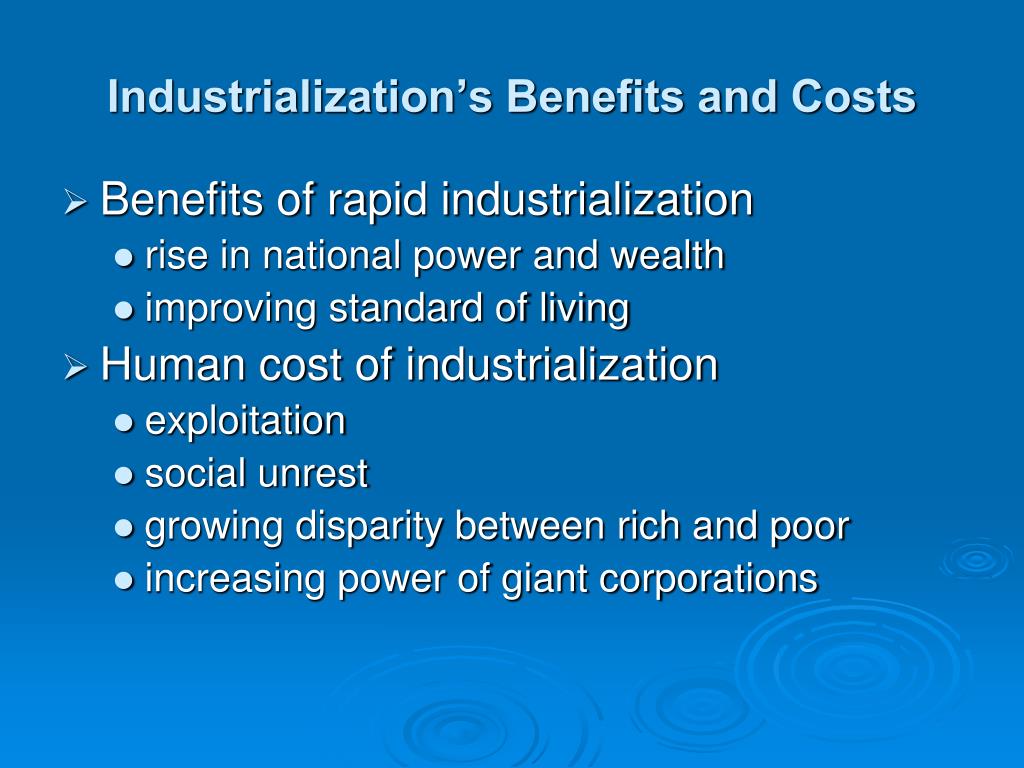
Now, let's not get all starry-eyed about the Industrial Revolution. There were, and are, serious downsides. Think pollution, exploitation of workers, and the widening gap between the rich and poor. These are problems we're still grappling with today. (Seriously, climate change is no joke!). We can’t pretend that those impacts didn't happen, and we have to try to make sure it doesn't happen again.
So, What's the Verdict?
Ultimately, while acknowledging the negative impacts, the main benefit of industrialization was the dramatic increase in the availability of goods and services, leading to improved standards of living for many people. It also fueled technological innovation that continues to shape our world today. It's a complex legacy, for sure, but one that's undeniably shaped the world we live in. It's about realizing the mistakes that were made and working towards ensuring everyone benefits from advancements.
Now, if you’ll excuse me, I’m going to order some butter online. Grandma would be so proud… and probably a little jealous.