Which Surface Most Likely Has The Least Friction
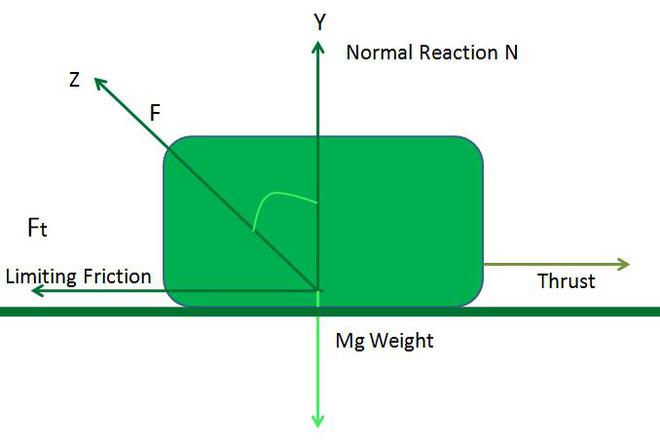
Okay, picture this: I'm trying to move a ridiculously heavy box across my living room floor. Rug? Forget it. Bare wood? Still a struggle. And then, victory! I slide it onto this small section I had covered with… a dust sheet. It glided like it was on ice! It got me thinking, what surface actually offers the least amount of friction?
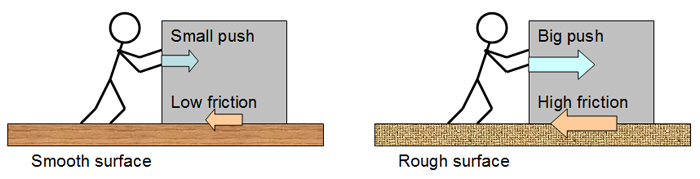
We all know that friction is a force that opposes motion when two surfaces are in contact. The smoother the surface, the less friction, right? Well, it's a little more complicated than that. (Isn't everything always more complicated than we initially think?)
The Obvious Suspects
First, let's talk about the usual suspects when we think of low friction: ice and Teflon. Ice, especially when a thin layer of water forms on it, offers surprisingly little resistance. That's why hockey pucks can zoom across the rink at insane speeds. But, (there's always a but, isn't there?) ice isn't always that slippery. Temperature plays a HUGE role. The colder it gets, the more friction actually increases! Go figure.
Must Read
Teflon, or PTFE (Polytetrafluoroethylene – try saying that five times fast!), is another champion in the low-friction arena. That’s why it's used in non-stick cookware. Ever tried sliding an egg around on a Teflon pan? It practically levitates! But Teflon also has its limitations, mainly, it's a solid so there is some level of friction.
Enter the Liquids
Now, things get interesting. What about liquids? Think about it: floating in water is pretty much friction-free, right? Well, again, not entirely. There's still drag, which is a type of friction. However, liquids, especially when used as a lubricant, can drastically reduce friction between two solid surfaces. Car engines, for example, rely heavily on oil to minimize friction between moving parts, preventing them from grinding each other into oblivion.

But, if we're talking about the absolute least friction, liquids still aren't quite the winner.
A Surprising Contender: Air?
Believe it or not, air can offer incredibly low friction. Air hockey tables work by blowing air through tiny holes, creating a cushion that allows the puck to glide almost effortlessly. But, air resistance (another type of friction!) does come into play, especially at higher speeds. (Think about skydiving – not exactly friction-free!)

The Winner (Maybe?)
So, what really has the least friction? Drumroll, please... It's likely to be superfluid helium-4 at extremely low temperatures. Yeah, I know, it's not exactly something you find lying around the house. (Unless you're a physicist with some seriously cool equipment.)
Superfluid helium is a bizarre state of matter that exhibits zero viscosity. This means it can flow without any resistance whatsoever. It can climb up the sides of containers and even escape them! It's like something out of a sci-fi movie. Seriously, look it up, it’s fascinating!
Of course, this is all theoretical and requires extremely specific conditions (like near absolute zero temperatures – we’re talking -273.15°C or -459.67°F!). So, for everyday purposes, Teflon or a good lubricant will be your best bet. But, if you're ever designing a spaceship or some other ultra-high-tech gadget, keep superfluid helium in mind! (Just remember to bring your cryogenic equipment.)
In conclusion, while my dust sheet trick worked for that one stubborn box, the world of friction is far more nuanced than I ever imagined. And who knew that the least amount of friction could involve something as strange and wonderful as superfluid helium?