Which Of The Following Is A Type Of Alternating Current
Okay, so we're talking AC currents, right? Not the band (though Angus Young IS electrifying!), but alternating current. You know, the stuff that powers pretty much everything in your house... except maybe that quirky, battery-powered lava lamp. Those things are a different breed altogether.
The question on the table: Which of the following is a type of alternating current? Hmm... Sounds like a quiz! Don't worry, it's not graded. Unless you're grading yourself, in which case, be kind!
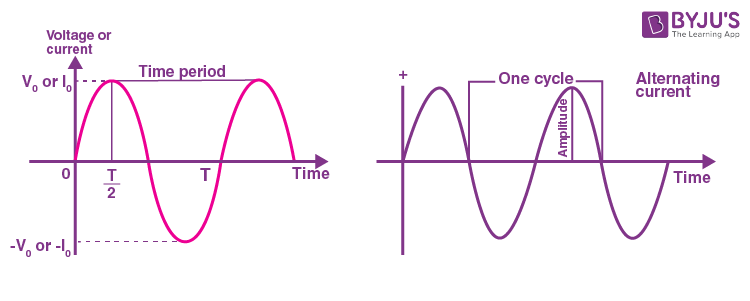
Let's think about what AC actually is. It's electricity that constantly changes direction. Think of it like a tiny electric river flowing one way, then switching gears and flowing the other. Unlike direct current (DC), which is a steady, one-way stream. Like from a battery. Remember those lava lamps? (Sorry, I digress!).
Must Read
So, what could be considered a "type" of AC? Well, technically, it’s all AC if it alternates. But the shape of that alternation, the waveform, is what really sets things apart. Think of it like waves in the ocean: they're all waves, but some are gentle ripples, and some are monstrous tsunamis. Okay, maybe AC isn't THAT dramatic, but you get the picture.
Common AC Waveforms
Let’s explore some typical contenders for the AC crown:

Sine Wave: This is probably the most common and recognizable AC waveform. Imagine a smooth, undulating wave. That's a sine wave. It's like the golden retriever of AC waveforms – friendly, reliable, and generally well-behaved. Most power grids use sine waves. Why? Because they're efficient and relatively easy to generate.
Square Wave: Now we're talking! A square wave is... well, square! It jumps instantly from maximum positive to maximum negative, spends some time there, then jumps back. No gradual curves here. It's more like the grumpy bulldog of AC waveforms – efficient, sure, but a bit rough around the edges. You'll often find these in digital circuits and inverters. Think of them as on/off switches going crazy fast.
Triangle Wave: As the name suggests, a triangle wave looks like, you guessed it, a triangle! It rises linearly to a peak, then falls linearly back down. Picture a gentle slope up a hill, followed by a gentle slope down. Less abrupt than a square wave, but still not as smooth as a sine wave. They are often used in synthesizers and function generators – basically, tools for making cool sounds and testing circuits.

Sawtooth Wave: This one's a bit of a rebel. It rises slowly and linearly, then drops instantly back to its starting point. Imagine climbing a really long, gradual staircase, then suddenly teleporting back to the bottom. Used for things like time-based circuits and generating scanning patterns on old CRT monitors (remember those bulky dinosaurs?).
So, out of these, all are types of alternating current, really. The difference lies in their waveform, their application, and maybe their general attitude (okay, I'm kidding about the attitude part... mostly!).

But to answer the implicit quiz question (which you may or may not have been aware you were taking): Sine waves, square waves, triangle waves, and sawtooth waves can all be considered types of alternating current because they all exhibit that key characteristic: they alternate!
And there you have it! AC currents demystified (hopefully!). Now you can impress your friends at your next coffee klatch with your newfound knowledge of waveforms. Just don’t blame me if they look at you funny!
Now, if you'll excuse me, I think I hear my lava lamp calling...