
Which Of The Following Is A Property Of Metals
Ever looked at a shiny spoon and thought, "Wow, that's…metal"? Of course you have! But what exactly makes something a metal? It's more than just being cold and clanky, that's for sure!
Let's dive into the amazing world of metallic properties, and trust me, it's more exciting than you think! We're not talking about boring chemistry class here; we're talking about why your guitar sounds so awesome and why bridges don't collapse (usually!).
Shine Bright Like a Diamond (or…Metal)
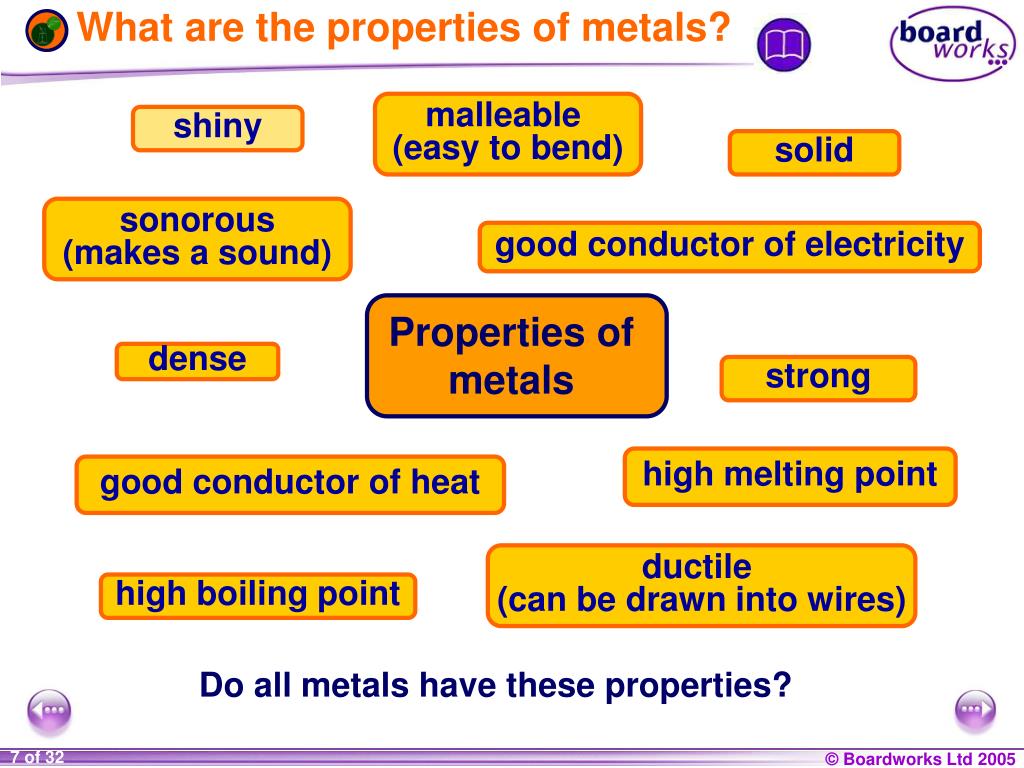
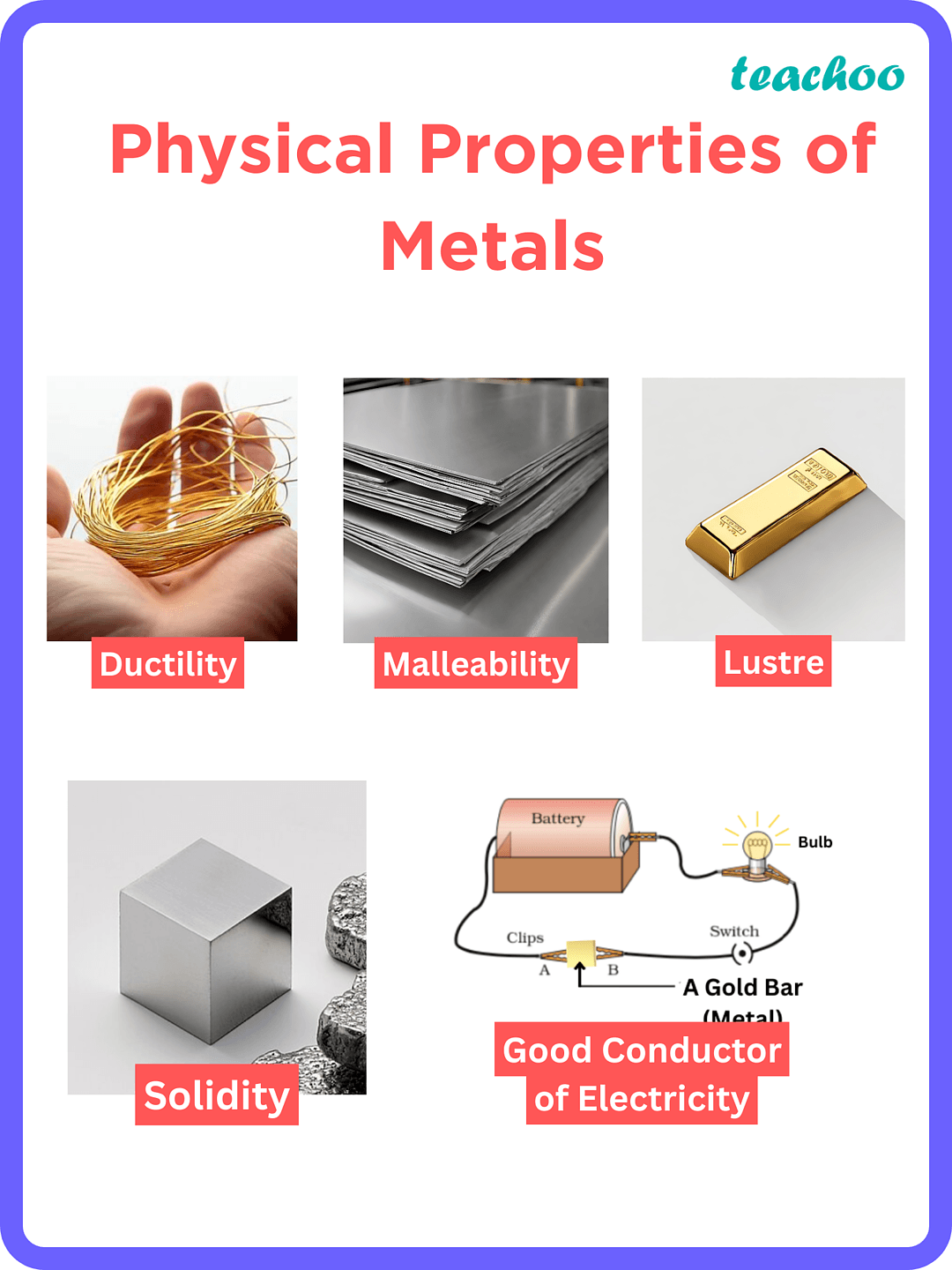
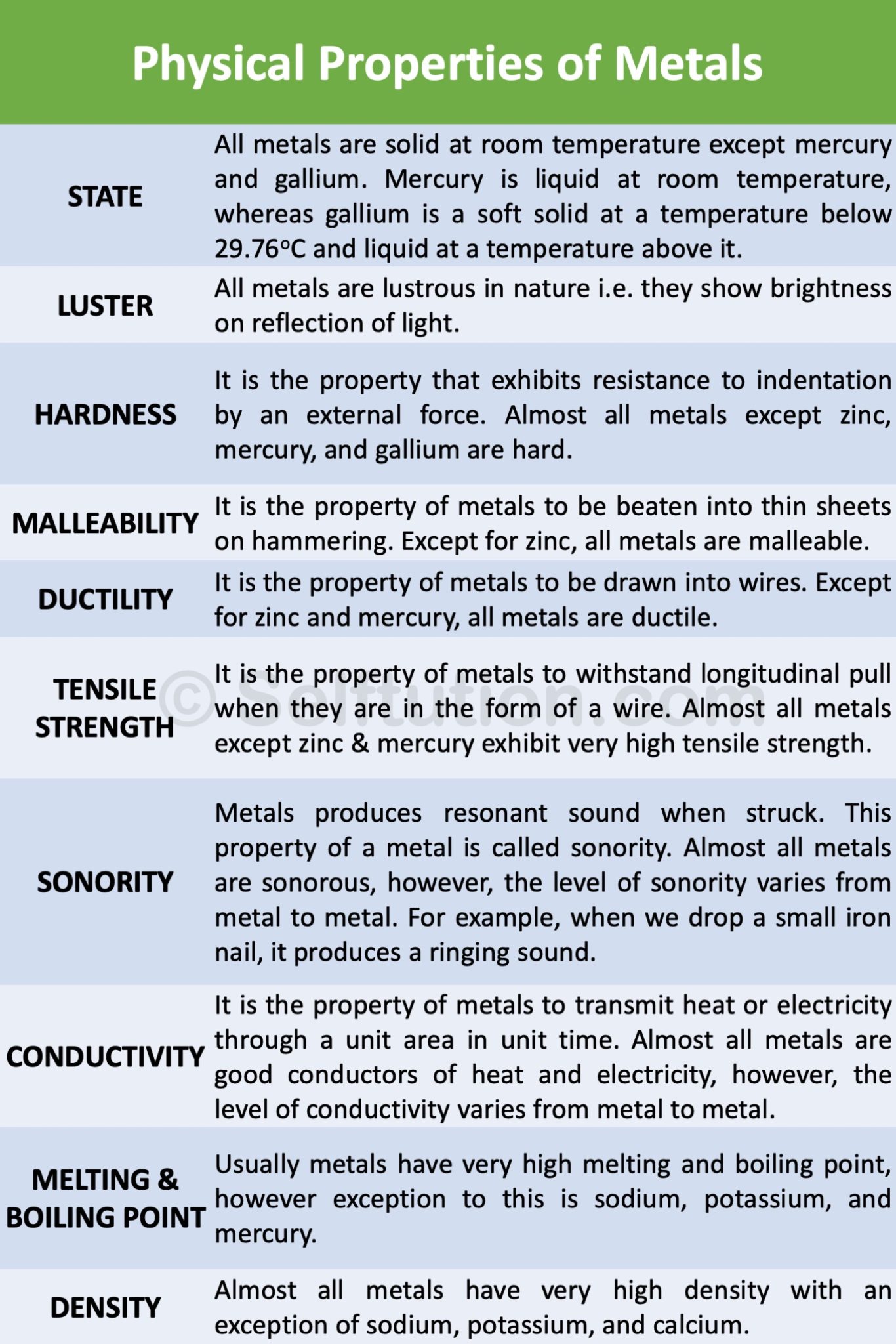
One of the first things you probably notice about most metals is their shine. This is called luster. Ever seen gold jewelry glinting in the sun? That's luster in action!
Must Read
It’s like metals are natural-born showoffs. They're all about reflecting light and looking their absolute best. Think of it as the metallic equivalent of a disco ball!
Unlike dull, non-metallic materials, metals have this superpower thanks to their electrons. These little guys are free to roam around, bouncing light back at you like tiny mirrors.
Conductivity: The Superhighway for Electricity and Heat
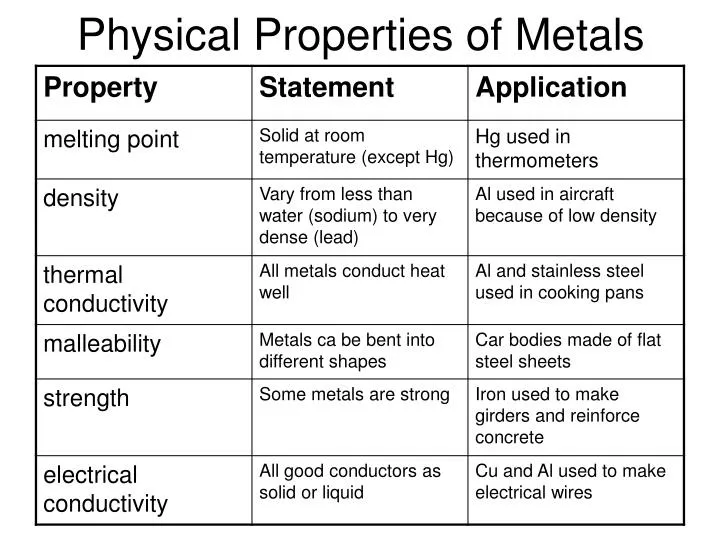
Another key property is conductivity. This basically means metals are great at letting electricity and heat flow through them. That's why your phone charger has copper wires inside!
Imagine electricity as a bunch of tiny, energetic kids trying to get to a playground. A metal is like a super-smooth, well-maintained highway, letting them zoom along with ease.
Non-metals, on the other hand, are like bumpy, pothole-ridden dirt roads. The kids (electricity) can barely make it through! So, thank metals for keeping our devices powered up and our homes warm in the winter.
Malleability: Bending But Not Breaking
Have you ever seen a blacksmith hammering a piece of metal into a horseshoe? That's malleability at work. It refers to a metal's ability to be hammered or pressed into different shapes without breaking.
Think of playdough. You can squish it, roll it, and mold it into almost anything. Metals like gold and aluminum are like the playdough of the element world, super easy to shape.
This is incredibly useful, especially in manufacturing. Imagine trying to build a car if metal shattered every time you tried to bend it! We'd all be driving around in very angular, uncomfortable vehicles.
Ductility: Stretching the Limits
Closely related to malleability is ductility. This is a metal's ability to be drawn into wires. Think of copper wires in your electronics or the steel cables in a suspension bridge.
It's like pulling taffy. You can stretch it out into long, thin strands without it snapping. Some metals are incredibly ductile, allowing us to create incredibly fine wires.
This is vital for everything from our electrical grid to the tiny wires inside our smartphones. Without ductility, our world would be a lot less connected (and a lot darker!).
Strength and Durability: Built to Last
Metals are generally known for their strength and durability. They can withstand a lot of stress and wear and tear without falling apart. Think of the steel beams that support skyscrapers.
Imagine building a house out of cardboard. It wouldn't last very long! Metals provide the structural backbone for so much of what we build, ensuring our creations are safe and long-lasting.
Of course, not all metals are created equal. Some are stronger than others, which is why we use different metals for different applications. You wouldn't build a delicate watch out of the same metal used to construct a tank!
Density: Packing a Punch
Another characteristic is density. Density basically means how much "stuff" is packed into a certain amount of space. Metals tend to be quite dense, meaning they feel heavy for their size.
Pick up a small rock and then pick up a similarly sized piece of metal. The metal will likely feel much heavier. That's because it's denser! It has more atoms packed into the same volume.
This property is important for things like anchors (you want them to be heavy enough to hold a boat in place) and weights (obviously!). Density gives metals a feeling of solidity and substance.
Putting It All Together
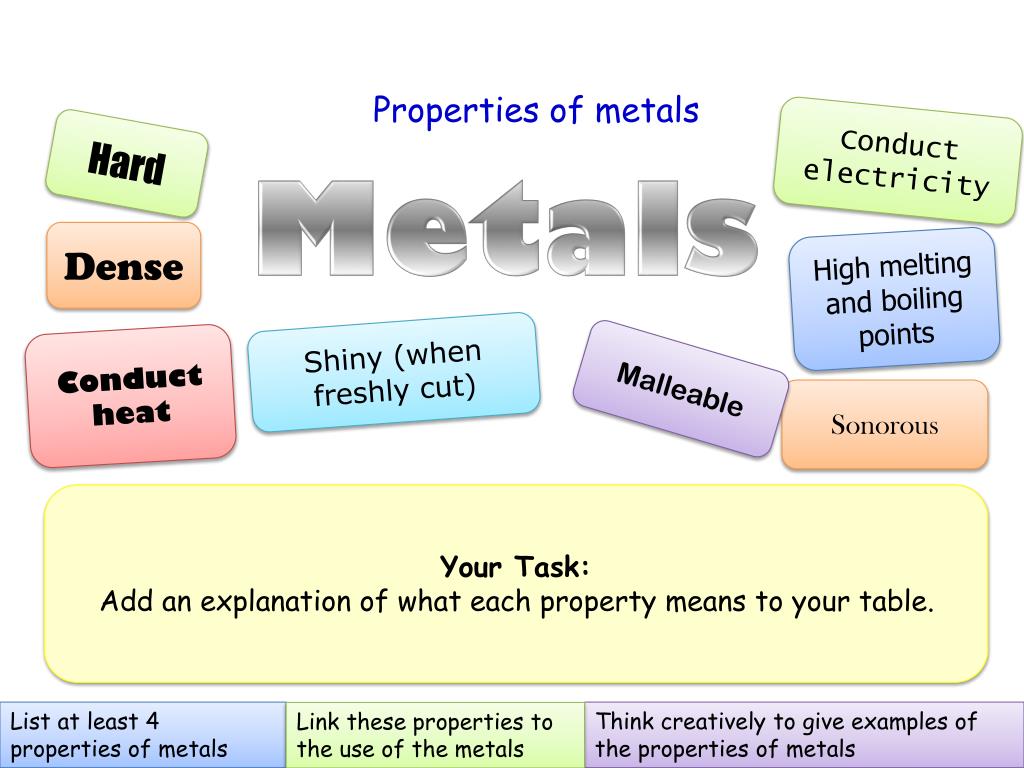
So, which of the following is a property of metals? Well, it could be a lot of things! Luster (shine), conductivity (ability to conduct electricity and heat), malleability (ability to be hammered into shape), ductility (ability to be drawn into wires), strength, durability, and density are all characteristics commonly associated with metals.
Of course, not all metals possess all these properties to the same degree. Some metals are more conductive than others, some are more malleable, and so on. It's this variation that makes metals so versatile and useful.
Next time you see a piece of metal, take a moment to appreciate its amazing properties. It's not just a cold, hard object; it's a material with a unique set of characteristics that make it essential to our modern world. From the skyscrapers we live in to the smartphones we hold in our hands, metals are everywhere, working hard to make our lives easier, safer, and a little bit shinier.
Metals: Not Just for Robots Anymore!
Forget the image of clunky robots and cold, sterile environments. Metals are everywhere, shaping our world in surprising and beautiful ways. Think of the intricate details of a handcrafted silver necklace or the vibrant colors of a painted metal sculpture.
Metals are also essential for sustainable technologies. Wind turbines and solar panels rely on metals to generate clean energy. Electric vehicles use metals in their batteries and motors.
So, the next time you encounter a metal object, remember that it's more than just a material; it's a testament to human ingenuity and a vital component of our planet's future. Who knew something so seemingly ordinary could be so extraordinary?
"The discovery of metals was one of the greatest achievements of mankind." - Julius Caesar (probably wasn't thinking about smartphones though)
From ancient tools to futuristic technologies, metals have played a pivotal role in shaping human civilization. They are the unsung heroes of our world, quietly working behind the scenes to make our lives better.
So, let's raise a glass (preferably a metal one!) to the amazing properties of metals and their indispensable contributions to our world. They are strong, shiny, and incredibly useful – what's not to love?