Which Of The Following Is A Molecule
Okay, let's talk molecules! I know, I know, it sounds like something straight out of a high school science textbook, but trust me, it's way more relevant (and kinda cool) than you think. We're surrounded by them! Ever wondered what actually makes up the stuff around you? Well, that's where molecules waltz into the picture.
So, the big question: Which of the following is a molecule? To answer that, let's first understand what a molecule is. Think of it like this: you've got individual Lego bricks (those are like atoms). Now, you can stick those bricks together to build something, right? A little car, maybe a spaceship. That's a molecule! It's two or more atoms held together by chemical bonds. Think of the bonds as the glue that keeps the Lego car from falling apart.
Molecules in Everyday Life
Let's ditch the abstract and get real. You're sipping a glass of water? That water is made of H2O – two hydrogen atoms and one oxygen atom, bonded together. Boom! Molecule! You're breathing air? The air is mostly nitrogen (N2) and oxygen (O2). Guess what? Those are molecules too! Even that sugar you sprinkled on your cereal (sucrose, C12H22O11) is a complex molecule. Pretty much everything tangible, everything you can see, touch, taste, or smell (well, almost everything), is made of molecules.
Must Read
Consider the amazing aroma of freshly baked bread. That delightful smell isn't just "bread-ness." It's actually hundreds of different molecules floating through the air, tickling your nose hairs and sending signals of pure joy to your brain! Isn't that incredible? Molecules are responsible for the very experiences that make life interesting.
Now, let's say your choices are: a single atom of helium (He), a grain of sand (SiO2), an ion of sodium (Na+), and a proton. Which one is a molecule?
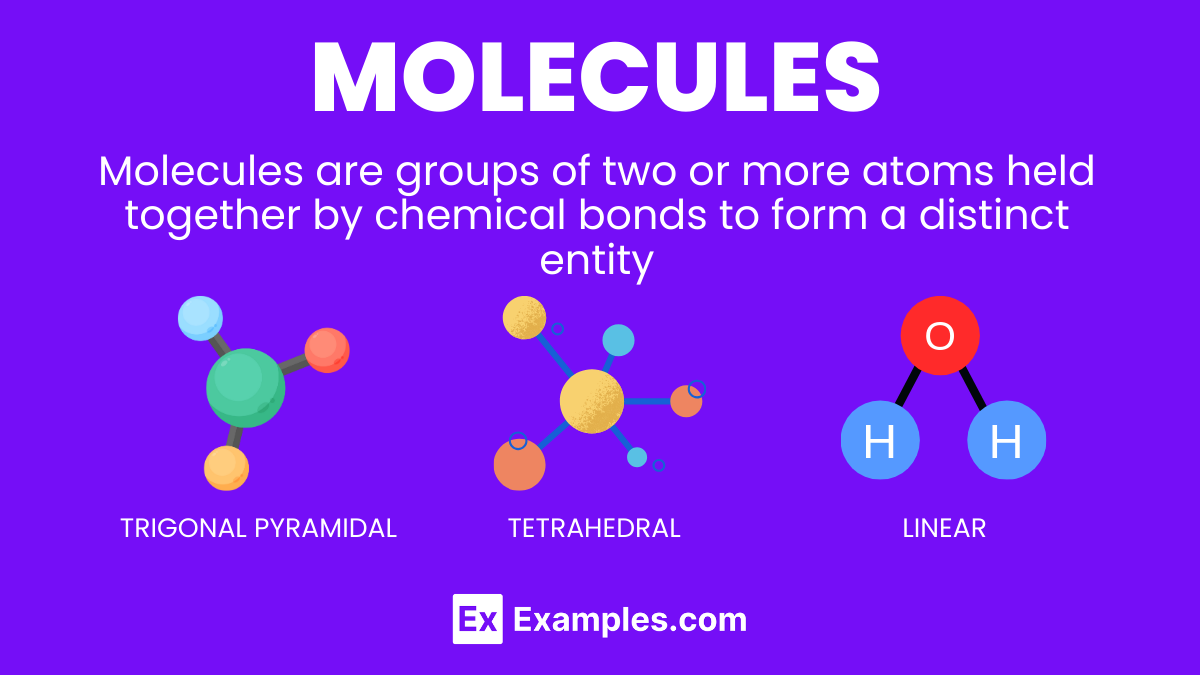
Here's a breakdown:
* Helium (He): Helium is a noble gas. It's perfectly happy existing as a single atom. It doesn't need to bond with anything else. So, it's not a molecule (although, under very specific and extreme conditions, scientists can force helium to form temporary molecules!). * Grain of Sand (SiO2): Aha! A grain of sand is primarily made of silicon dioxide, which has the chemical formula SiO2. That means one silicon atom bonded to two oxygen atoms. That's a molecule! We have a winner. * Ion of Sodium (Na+): An ion is an atom that has gained or lost electrons, giving it an electrical charge. While ions are crucial for many things (like nerve signals!), they are single atoms with a charge, not molecules. * Proton: A proton is a subatomic particle found in the nucleus of an atom. Definitely not a molecule!
Therefore, the answer is: Grain of Sand (SiO2).
Why Should You Care? (It's Actually Fascinating!)
Why bother learning about molecules? Well, understanding molecules helps you understand... well, everything! It unlocks a deeper appreciation for the world around you. Imagine understanding how different cooking ingredients interact at a molecular level to create delicious flavors. Or knowing how different medications work by interacting with specific molecules in your body. Knowledge is power, and molecular knowledge is like having a secret decoder ring for the universe.
Think about climate change, for example. The problem stems from an excess of greenhouse gas molecules (like carbon dioxide, CO2) in the atmosphere. These molecules trap heat and warm the planet. By understanding the molecular properties of these gases, scientists can develop better strategies to reduce their impact.
And it's not just about serious stuff like climate change. Understanding molecular interactions can explain why your clothes smell fresher after using a particular detergent (the detergent molecules break down the smelly molecules!), or why certain foods taste better when cooked in a specific way (heat alters the molecules, creating new flavors!). It's all connected!
So, the next time you're admiring a beautiful sunset, or enjoying a delicious meal, take a moment to appreciate the amazing dance of molecules that makes it all possible. It's a whole universe of tiny particles, constantly interacting and creating the world as we know it. Isn't that something?