
Which Molecule Produces The Most Atp

Okay, folks, let's talk energy. Not the "I need a nap" kind, but the actual energy powering your cells. We're talking ATP, the tiny batteries that keep us ticking.
Everyone always says it's all about glucose. Mr. Sugar himself, the king of cellular respiration. And sure, glucose does a lot of heavy lifting. Textbooks are practically love letters to the guy. But I'm here to tell you, I'm not convinced he's the real MVP.
The Usual Suspects
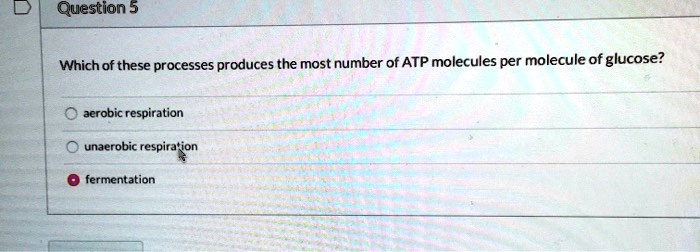
Let's recap. Glucose goes through glycolysis, then the Krebs cycle (or citric acid cycle, if you're fancy), and finally, the electron transport chain. It's a whole production! And at the end, poof, ATP! Roughly 38 of them, depending on who you ask and how efficient your cellular machinery is feeling that day.
Must Read
And yes, fats and proteins can also get in on the ATP-making action. They just have to jump through some extra hoops to join the glucose party. We appreciate their effort, truly.
But Here's My Hot Take
I think we're giving glucose too much credit. My (slightly controversial) opinion? The molecule that truly deserves the ATP crown isn't a single molecule at all. It's a group of molecules! Specifically, fatty acids.
I know, I know. It sounds ridiculous. But hear me out!
Why Fatty Acids are the Underdogs
Think about it. Gram for gram, fats pack a much bigger energy punch than carbohydrates. It's like comparing a tiny firecracker (glucose) to a whole dynamite stick (fatty acid). Sure, the firecracker is quicker to ignite, but the dynamite? Boom! Sustainable, powerful energy.
Here's where it gets fun (well, fun for cellular nerds, anyway). Fatty acids undergo a process called beta-oxidation. Sounds intimidating, right? Don't worry, it's basically just chopping those long fatty acid chains into bite-sized acetyl-CoA molecules. Guess who else uses acetyl-CoA? That's right, our friend glucose, in the Krebs cycle! But fatty acids get to skip glycolysis, the awkward first date of cellular respiration.
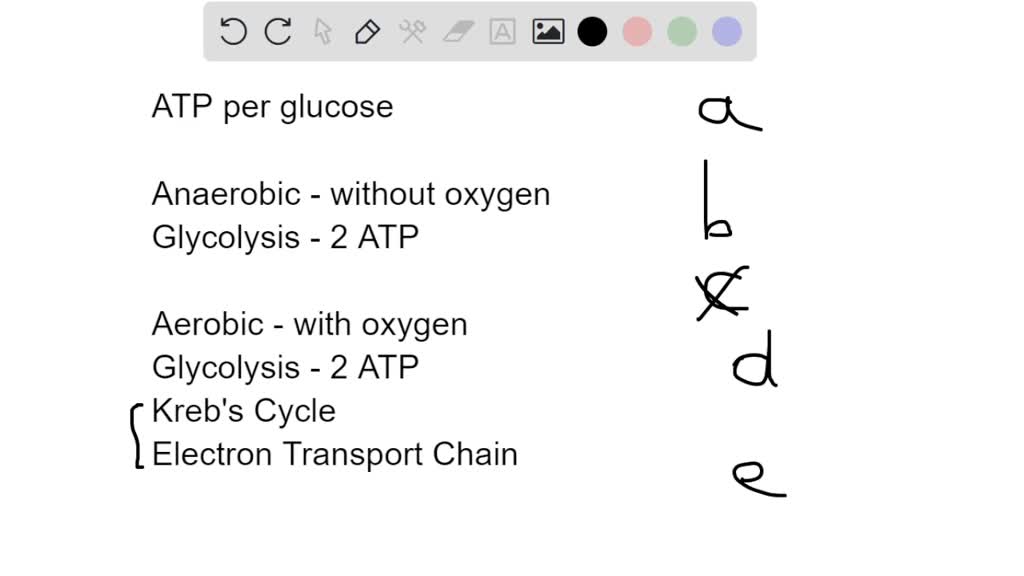
A single molecule of palmitic acid (a common fatty acid) can yield over 100 ATP molecules! That's like… three times the ATP of a single glucose molecule! Show me the money (or, you know, the ATP)!
Plus, we store way more energy as fat than as glycogen (stored glucose). Think of glycogen as the emergency snack in your purse. And fat? That's the well-stocked pantry in your basement. Which one is going to fuel you through a zombie apocalypse? (Hint: it's the one that doesn't run out after a few hours.)
The Downside (Because There's Always One)
Alright, alright, fatty acids aren't perfect. Burning fat takes longer. It's not the quick energy source you need when you're sprinting away from a bear. And if you don't have enough oxygen, things can get… messy. (Ketones, anyone?) Glucose still has its advantages, especially for high-intensity activities.
My Verdict: It's Complicated, But...
Look, I'm not saying glucose is useless. It's clearly important. It's the gateway drug to ATP production! But I think we've been underselling the power of fatty acids for far too long.
Ultimately, the most ATP comes from the molecule, or more accurately, the type of molecule, you have the most of readily available and the efficiency with which your body can utilize it. For most of us, that's going to be fat. And I think that's something worth celebrating!
So next time you're feeling energized, remember those unsung heroes of ATP production: the mighty fatty acids. They're working hard, even if they don't get all the glory.
And maybe, just maybe, consider switching to a slightly fattier snack. You know, for "research" purposes.