Which Is A Characteristic Of Nuclear Fusion

Okay, so you’ve probably heard about nuclear fusion. Maybe in a sci-fi movie where someone's powering a spaceship with a tiny sun, or perhaps in a slightly intimidating science documentary. But what is it, really? And more importantly, what makes it tick? Let's dive in, shall we, and figure out one key characteristic that makes nuclear fusion, well, nuclear fusion.
Think about making a really good pizza. You have all these individual ingredients: flour, water, yeast, tomatoes, cheese, maybe some pepperoni if you're feeling fancy. Each on their own, they're… fine. Flour is, well, flour. But put them all together, bake them at a ridiculously high temperature, and BAM! You get a pizza. Something completely new and much more satisfying than the sum of its parts. That, in a nutshell, is kind of what nuclear fusion does.
High Temperatures: The Secret Sauce
So, what's the "ridiculously high temperature" in our pizza analogy? That's the key! One of the biggest and most important characteristics of nuclear fusion is that it requires extremely high temperatures. We're talking millions of degrees Celsius, folks! Like, hotter than the surface of the sun! That's hot enough to make even the most stubborn pizza dough rise in seconds (though I wouldn't recommend trying it at home).
Must Read
Why so hot? Well, at these temperatures, atoms are stripped of their electrons, leaving behind just the nuclei – positively charged particles. Now, normally, these nuclei would hate getting close to each other. They're like two magnets with the same poles facing each other. They repel! Imagine trying to force two north ends of magnets together. You need serious force!
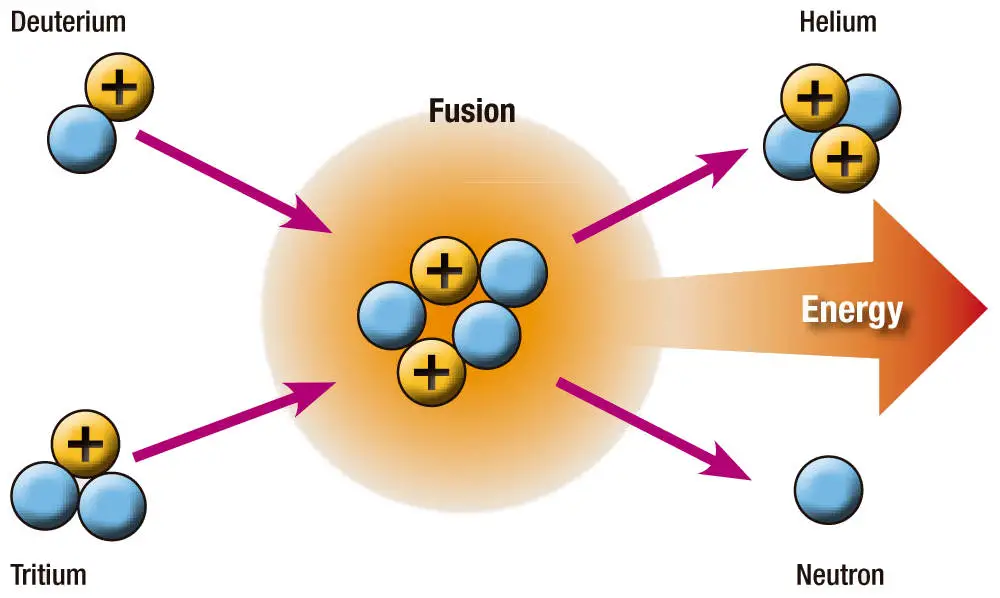
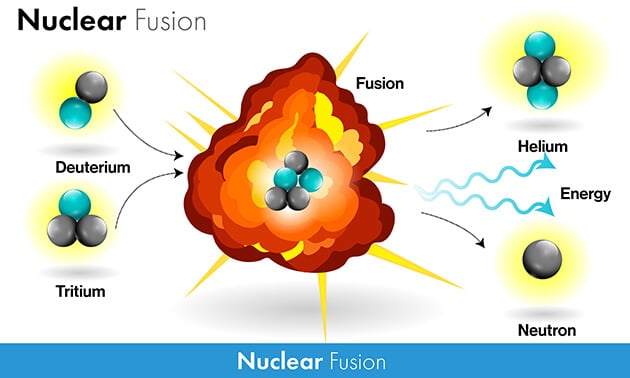
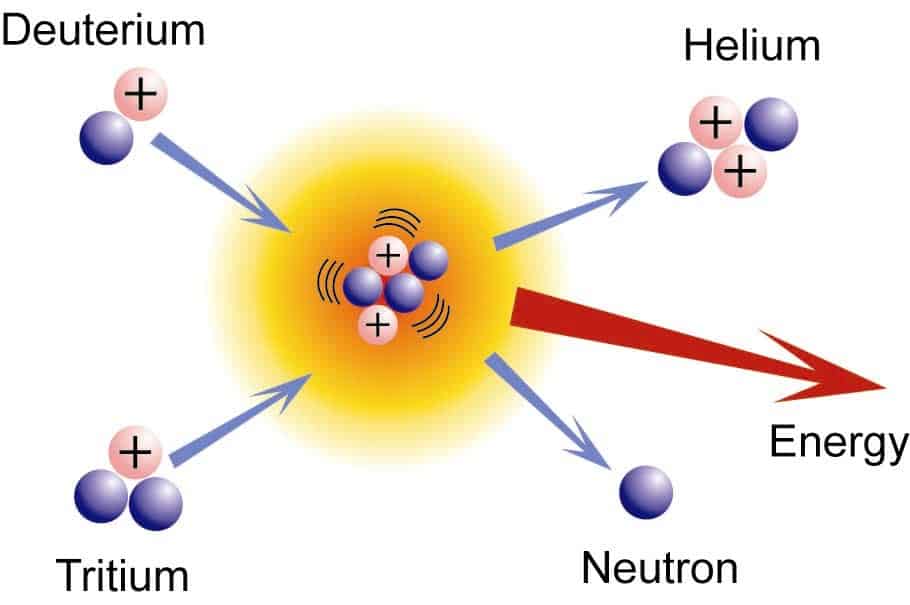
The intense heat provides the energy needed to overcome this repulsion. It forces the nuclei to collide with such incredible speed and force that they actually fuse together, forming a heavier nucleus. It’s like a cosmic dance of atoms, but instead of slow dancing, they're headbanging into each other.

It’s also why fusion is so hard to achieve on Earth. Think about it: how do you contain something hotter than the sun? It's not like you can just pop it in a regular oven! That’s why scientists are working on incredibly complex and powerful machines, like tokamaks, which use powerful magnetic fields to contain the superheated plasma where fusion occurs. It's like trying to herd cats, except these cats are made of superheated plasma and are hotter than you can possibly imagine.
I remember once trying to bake a cake without preheating the oven. Disaster! It was a gooey mess. The same principle applies here. Without the extreme heat, the nuclei simply won't fuse. No heat, no fusion. End of story.
High temperature is not just a characteristic; it’s a prerequisite. Without it, the whole process grinds to a halt. It’s the engine that drives the fusion reaction. It's like trying to have a rave without any music – it just wouldn't work, would it?
Think about it this way: if you wanted to create your own little mini-sun, you'd need to replicate its conditions. And what's one of the most defining features of the sun? Its mind-boggling temperature! That’s why scientists are trying to create these extreme conditions in labs around the world. Because mimicking the sun, minus the sunburn, is pretty darn cool.
So, next time you're firing up the BBQ, or even just microwaving some leftovers, remember the incredible heat required for nuclear fusion. It's a reminder that some of the most powerful processes in the universe rely on the simplest ingredients, just like that amazing pizza we talked about earlier. And it all starts with a whole lot of heat!