
Which Direction Should The Fan Go In The Summer

Okay, so picture this: I'm sweating. Like, seriously sweating. The kind of sweating where you question all your life choices that led you to this moment of intense, sticky discomfort. I’m sitting in my living room, convinced the AC is mocking me with its feeble attempts at coolness. Then it hits me: the ceiling fan! But... which way is it supposed to go again? Clockwise? Counter-clockwise? I felt a profound sense of fan-related shame wash over me. Has it been wrong this whole time?! It’s a tragedy, I tell you.
That little moment of summer-induced panic is what inspired this post. Because let's be honest, we've all been there. Staring up at that whirling dervish of blades, wondering if we're maximizing its cooling potential, or just creating a miniature windstorm of stagnant air. The answer, my friends, is surprisingly simple.
Summer Mode: Counter-Clockwise is Your Friend
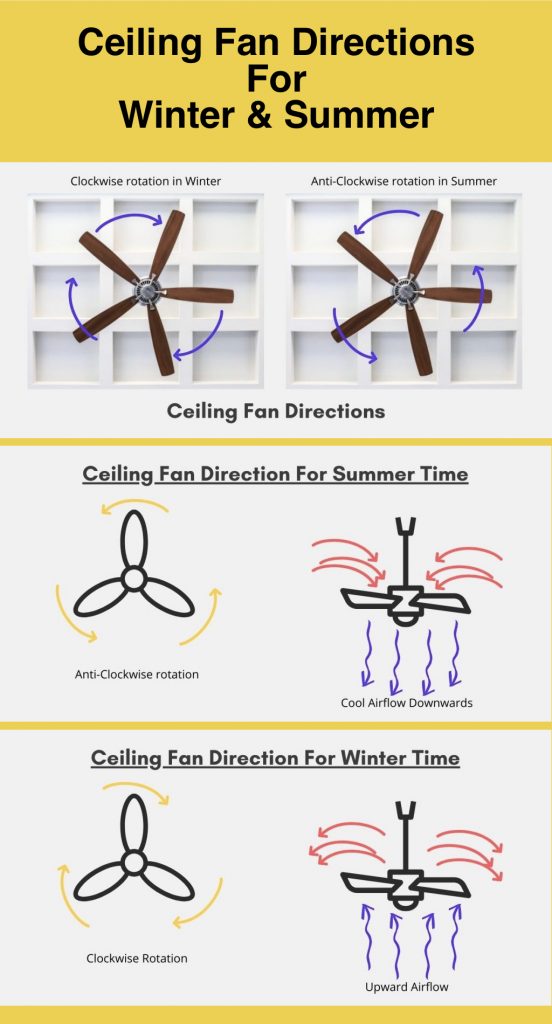
During the summer months, you want your ceiling fan to rotate counter-clockwise when you're looking up at it. I repeat, COUNTER-CLOCKWISE! Write it down, engrave it on your brain, tattoo it on your forehead - whatever it takes! But why, you ask?
Must Read
Well, when your fan spins counter-clockwise, it pushes air downward. This creates a direct breeze that you can feel on your skin. This breeze helps to evaporate sweat, which is your body's natural cooling mechanism. Think of it as your own personal, tiny, indoor hurricane of comfort. (Okay, maybe not a hurricane... but you get the idea.)
Now, before you get all excited and think you can ditch the AC entirely, let's be realistic. The fan itself doesn't actually cool the air. It just makes you feel cooler. It’s creating a wind-chill effect, similar to when you're outside on a breezy day. So, use it in conjunction with your AC to save energy and reduce your electricity bill. Genius, right?

How to Change the Fan Direction
Okay, so now you know the why, let's get to the how. Most ceiling fans have a small switch located on the motor housing. It’s often near the light fixture. This switch controls the direction of the fan's rotation. Important: Make sure the fan is completely stopped before flipping the switch! You don't want to risk damaging the motor or creating some sort of bizarre time-space continuum.
Flip the switch, turn the fan back on, and observe! If it's spinning counter-clockwise, you're golden. If not, flip the switch again. Congratulations, you've successfully navigated the treacherous waters of ceiling fan directionality!

Pro Tip: If you’re still unsure, most fans have a little arrow or diagram indicating which way is summer and which is winter. Look for it! It’s like a secret decoder ring for staying cool.
But What About Winter? (A Sneak Peek)
You might be thinking, "Okay, great, summer is sorted. But what about when the days get shorter and the temperature drops?" Well, that's a topic for another post (stay tuned!), but the short answer is: you’ll likely want to switch the fan direction to clockwise. This helps to distribute warm air that rises to the ceiling back down into the room. But for now, let's focus on conquering the heat!
So, there you have it! Now go forth and optimize your ceiling fan. You can bask in the glory of increased comfort and maybe even save a few bucks on your energy bill. And next time you're sweating in your living room, at least you'll know you're doing everything in your power to combat the heat.
And hey, if all else fails, there's always ice cream. Just saying.
