
Which Direction Should Ceiling Fan Turn In Winter
Have you ever stared at your ceiling fan, pondering its purpose beyond summer breezes? It's not just a warm-weather wonder! Believe it or not, it has a winter job too. And it all comes down to one simple question: Which way should it spin?
The Great Ceiling Fan Direction Debate
It might sound silly, right? Like arguing over whether cats prefer tuna or salmon. But the direction your ceiling fan spins in winter can actually make a noticeable difference in your comfort and your heating bill. Seriously!
We're not talking about some mystical, energy-saving secret here. It's pure physics, baby! And it's surprisingly fun to experiment with. Consider yourself an indoor climate engineer!
Must Read
Summer vs. Winter: The Directional Divide
In the summer, your fan should spin counter-clockwise. This creates a delightful downdraft, a gentle whoosh that makes you feel cooler. It's like a personal air conditioner, without the hefty electricity bill.
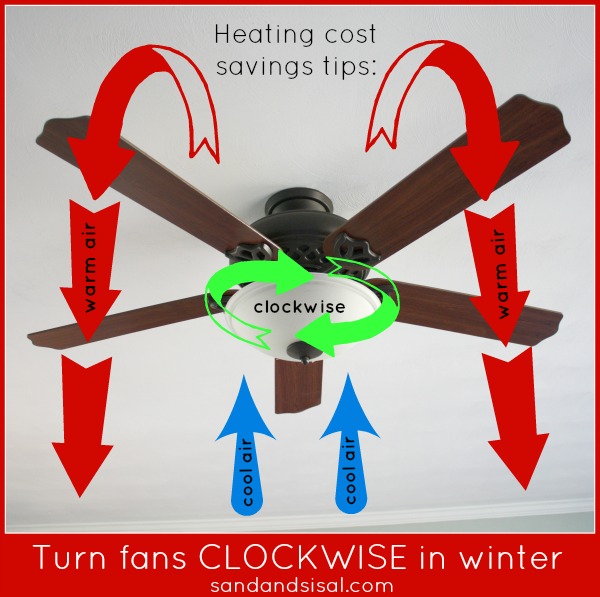
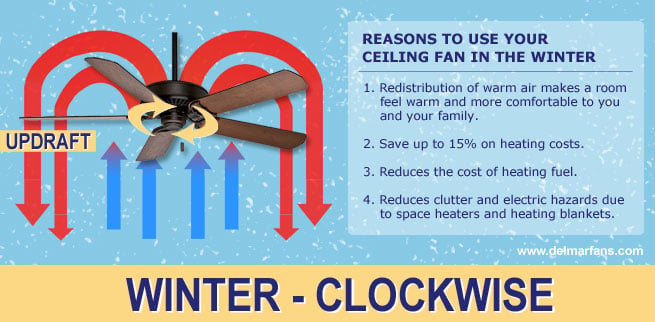
But winter? Ah, that's where the magic happens. Time to reverse that direction! Switch it to clockwise, and prepare for some warm air redistribution action.
Why Clockwise? Unveiling the Winter Wonder
Okay, let's get down to the nitty-gritty. Hot air rises, everyone knows that. In the winter, all that lovely warm air from your heater or fireplace ends up clinging to the ceiling, like a bunch of wallflowers at a dance.
Your ceiling fan, spinning clockwise at a low speed, gently pushes that warm air down the walls. Think of it as a warm air elevator, bringing the heat down to where you actually are. No more cold feet!
It's not a hurricane, mind you. We're talking about a subtle, gentle circulation. You shouldn't feel a direct breeze, just a general sense of warmth.
Finding the Reverse Switch: A Mini-Adventure
Now, the exciting part: finding the reverse switch! Usually, it's located on the motor housing of the fan. Sometimes it's a little slider switch, other times it's a button.
Turning off the fan is always a good idea before you start poking around. Safety first, climate engineers!
If you can't find it, don't despair! Consult your fan's instruction manual. Yes, those things actually come in handy sometimes. Or, you know, a quick Google search never hurts. Just type in the fan's model number and "reverse switch."
![Ceiling Fan Directions for Summer vs Winter [Infographic]](https://airflowacademy.com/wp-content/uploads/2021/06/Ceiling-fan-direction.jpg)
The Thrill of the Test: Does It Really Work?
Once you've flipped that switch, it's time for the moment of truth. Let your fan run for a while on a low speed, and then feel the air near the walls. Do you sense a subtle downward movement?
More importantly, do you feel warmer overall? This is where the fun begins! It might take a little tweaking to find the perfect speed. You don't want it to be too strong, just a gentle nudge of warm air.
And if you don't notice a difference right away, don't get discouraged. It might depend on the layout of your room, the height of your ceiling, or the efficiency of your insulation.
Beyond the Thermostat: Energy Savings!
The real payoff? Energy savings! By circulating the warm air more efficiently, you might be able to lower your thermostat a degree or two without sacrificing comfort. Every little bit helps, right?
Think of it as a small victory against rising heating costs. Plus, you get to feel like a savvy homeowner, optimizing your home's energy efficiency with a simple flip of a switch.
Who knew a ceiling fan could be so empowering?
Embrace the Experiment: Become a Fan Fanatic!
So, are you ready to join the ranks of ceiling fan enthusiasts? It's a simple, low-stakes experiment that can actually make a difference in your home's comfort and your energy bills.
Plus, it's just plain fun to tinker with things and see how they work. It's like a little science project, right in your living room!
![Ceiling Fan Directions for Summer vs Winter [Infographic]](https://airflowacademy.com/wp-content/uploads/2021/06/Ceiling-fan-directions-infographic-552x1024.jpg)
Don't be afraid to play around with the speed and direction. Find what works best for you and your home. You might be surprised at the results.
Troubleshooting Tips for the Aspiring Climate Engineer
Fan wobbling? That's a common issue. Usually, it just means the blades are slightly unbalanced. Many fans come with a balancing kit – little weights that you attach to the blades.
Noisy fan? It could be loose screws. Check all the screws on the motor housing and the blade brackets. A little tightening can often solve the problem.
Still not feeling the warmth? Make sure your fan is running at a low speed. A high speed will create a breeze and defeat the purpose.
The Ceiling Fan: A Year-Round Champion
So, there you have it. The ceiling fan: not just a summer fling, but a year-round companion! A simple device with a surprising amount of versatility. And a secret weapon against the winter chill.
Take a moment to appreciate this unsung hero of home comfort. It's more than just a fan; it's a temperature-regulating, energy-saving, and slightly-nerdy addition to your home.
Now go forth and conquer that reverse switch! Your toes (and your wallet) will thank you.
Beyond Direction: Other Ways to Optimize
While we're on the topic of ceiling fans, here are a few other tips for making the most of them. Keep your fan blades clean. Dust and grime can reduce their efficiency.

Consider the size of your fan. A larger room might need a larger fan to circulate the air effectively. Smaller rooms will do just fine with a standard-sized fan.
And don't forget about the light fixture! A ceiling fan with a light can be a great way to add ambient lighting to your room.
The Final Spin: Enjoy Your Cozy Home!
Ultimately, the best way to enjoy your ceiling fan is to experiment and find what works best for you. There's no one-size-fits-all answer. It's all about personal preference and home comfort.
So, embrace the challenge, flip that switch, and get ready to enjoy a warmer, cozier, and more energy-efficient winter. Your ceiling fan is waiting to help!
And who knows, you might even become a ceiling fan evangelist, spreading the word to all your friends and neighbors. "Have you reversed your fan yet?"
Share Your Fan Adventures!
Got any funny stories about reversing your ceiling fan? Or any amazing energy-saving tips to share? We'd love to hear them! Leave a comment and let us know about your ceiling fan adventures.
Maybe you accidentally turned it on high and created a mini-tornado in your living room. Or maybe you discovered the perfect speed setting that keeps your entire house perfectly comfortable.
Whatever your experience, we want to hear about it. Let's celebrate the joys (and occasional mishaps) of ceiling fan ownership!
A Nod to the Ingenious Inventor (Whoever They Were!)
Let's take a moment to appreciate the genius who invented the ceiling fan. Okay, maybe it wasn't a single person, but rather a gradual evolution of design and technology.
But whoever is responsible, thank you! For creating a simple yet effective device that keeps us cool in the summer and warm in the winter. You're a true hero of home comfort.
So next time you flip that reverse switch, give a little nod to the inventor(s). They deserve our gratitude.
The Future of Ceiling Fans: What's Next?
What does the future hold for ceiling fans? Will they become even more energy-efficient? Will they be able to automatically adjust their speed and direction based on the temperature?
Perhaps they'll even be able to connect to our smart home systems and be controlled with our voices. "Hey Siri, reverse the ceiling fan!"
The possibilities are endless! And who knows, maybe you'll be the one to invent the next generation of ceiling fan technology.
So Go Ahead, Give That Fan a Spin!
Seriously, what are you waiting for? The cold weather is here, and your ceiling fan is ready to help. Flip that switch, experiment with the speed, and get ready to enjoy a warmer, more comfortable winter.
It's a simple, easy, and surprisingly fun way to improve your home's comfort and save a little money on your heating bill. Plus, you get to feel like a climate-controlling superhero.
So go ahead, give that fan a spin! You might be surprised at how much of a difference it makes.