Which Direction A Fan Should Turn In Summer

Let's talk fans! Not the cheering kind (though we appreciate them too!), but the ones that keep us cool during those sweltering summer months. Figuring out which direction your ceiling fan should turn might seem like a minor detail, but trust us, it can make a big difference in your comfort and your energy bill. It's a fun little life hack that's surprisingly useful, and something practically everyone can benefit from.
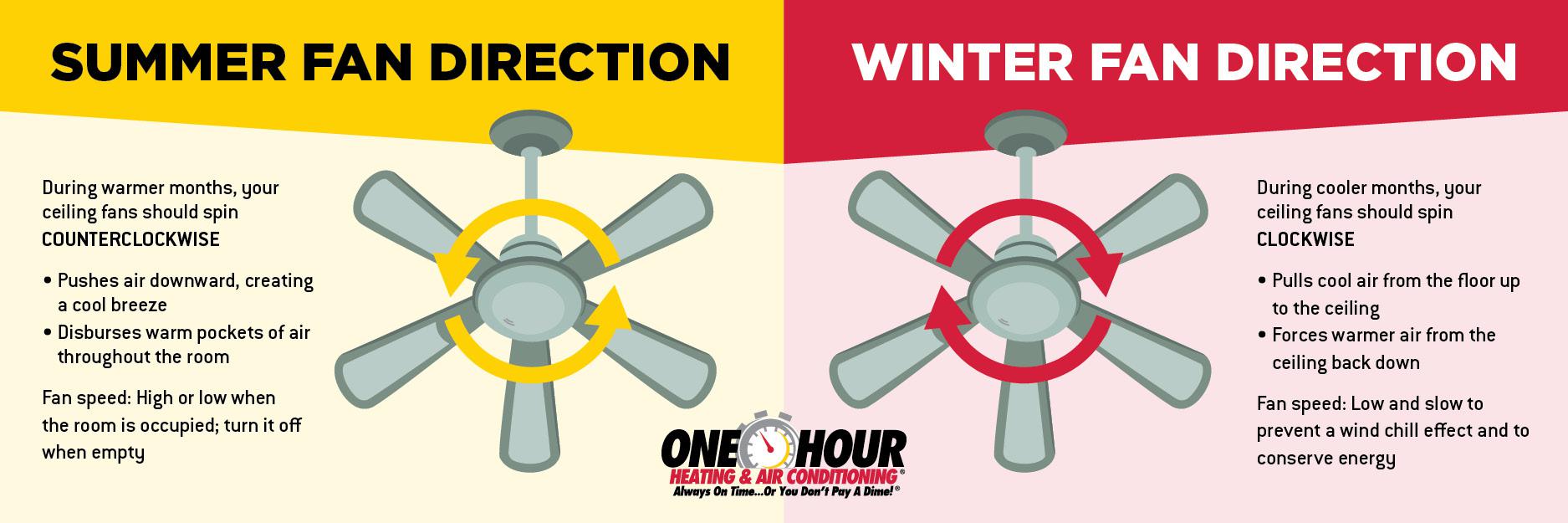
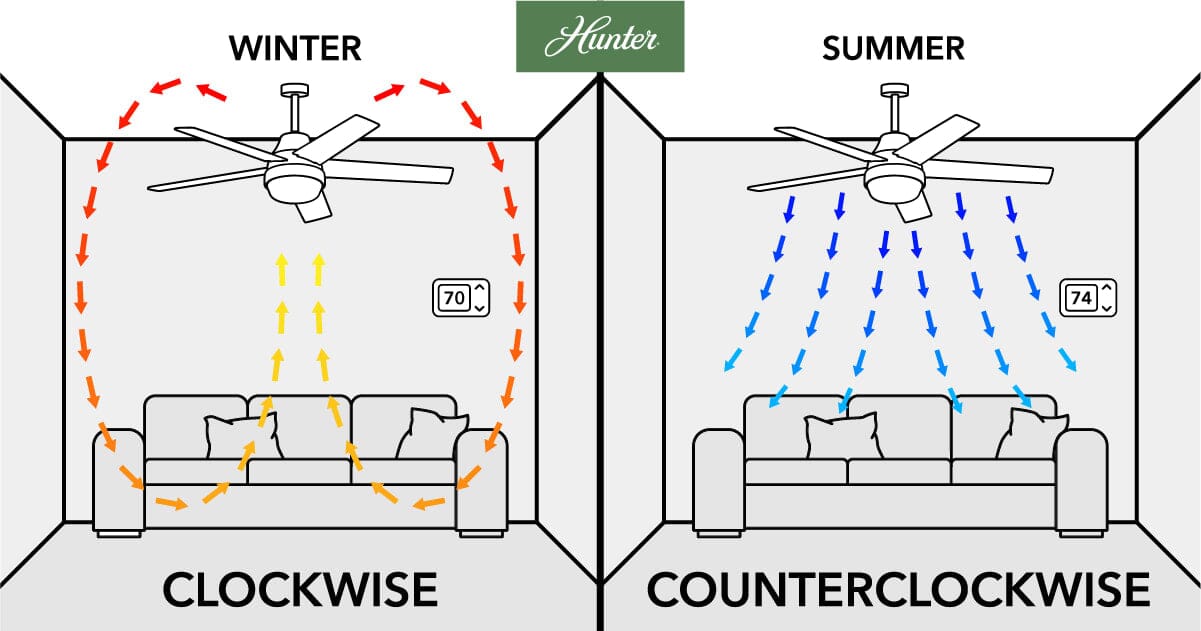
So, what's the secret? In the summer, your ceiling fan should be turning counter-clockwise when you're looking up at it. Why? This creates a downdraft, a gentle breeze that pushes the air straight down. Think of it as a personal, localized wind chill effect. This breeze helps to evaporate sweat from your skin, making you feel cooler even if the actual temperature of the room hasn't changed. It's a simple trick that can significantly improve your comfort, and might even let you bump up the thermostat a degree or two, saving you some money.
For Beginners: Don't worry if you've never thought about this before! Most ceiling fans have a small switch on the motor housing that controls the direction. It might be labeled "forward/reverse" or have arrows indicating the direction. Just switch it to the counter-clockwise position and feel the difference. Start on a low setting and adjust as needed.
Must Read
For Families: Think about how your fan impacts the whole family. If you have young children, make sure the fan is installed high enough to be out of reach. If someone in the family is particularly sensitive to drafts, you can adjust the fan speed to a lower setting or only use it when the room is occupied. Also, remember that fans cool people, not rooms. Turn off the fan when you leave to conserve energy.
For Hobbyists (and the Curious): Want to get even more out of your fan? Experiment with different blade types and angles. Some blades are designed for maximum airflow, while others are quieter. You can also consider installing a smart fan controller, which allows you to adjust the fan speed and direction remotely, and even program it to automatically adjust based on the room temperature.
There are a few variations to consider too. If you have a fan with a light fixture, be mindful that the light can generate heat. Using energy-efficient LED bulbs can help minimize this effect. Also, the size of the fan should be appropriate for the size of the room. A small fan in a large room won't be very effective.

Practical Tips to get started:
- Locate the direction switch: It's usually on the motor housing.
- Test the direction: Stand directly beneath the fan to feel the airflow.
- Adjust the speed: Start low and increase as needed.
- Clean the blades: Dust and grime can affect airflow.
- Turn it off when you leave: Fans cool people, not rooms.
Adjusting your fan's direction is a small change that yields big results. It's a simple way to improve your comfort, save energy, and make the most of your cooling system during those hot summer months. So, go ahead, give it a try! You might be surprised at how much of a difference it makes. Enjoy the cool comfort!