
Which Country Has An Effective Replacement Level

Okay, folks, let's talk about something that might seem dry, but is actually way more relevant to your life than you think: replacement level fertility. Imagine your family is like a little lemonade stand. You need enough kids (or, uh, lemons!) to keep the stand running when you're ready to, you know, retire to a beach in the Bahamas. Replacement level is basically that sweet spot – enough babies being born to replace the current population. Not too many (because who needs a lemon surplus?), and definitely not too few (or your lemonade empire crumbles!).
So, which country is rocking the replacement level fertility game right now? Well, buckle up, because the answer is… complicated. And maybe a little disappointing. You see, most developed countries are struggling to even reach it. Think of it like trying to parallel park a monster truck. Looks easy on paper, but in reality… yikes!
What's the Magic Number?
The magic number, by the way, is roughly 2.1 births per woman. Why 2.1 and not just 2? Because, as my grandma used to say, "Life ain't perfect, honey!" Some babies, sadly, don't make it to adulthood. And, well, sometimes it's twins! Gotta factor in the unexpected lemon drops, right?
Must Read
Now, let's be clear: no country consistently maintains replacement level across long periods. Things fluctuate! Economic booms, recessions, trendy avocado toast affecting baby-making moods... all kinds of stuff can throw the numbers off. It's more like trying to keep a bouncy ball afloat in a swimming pool – constant adjustments are needed.
However, there are some countries that perform better than others, hitting or briefly exceeding that 2.1 mark from time to time. Historically, and still somewhat today, some countries in Africa tend to have higher fertility rates. Places like Niger, for example, often have significantly higher numbers, but this also comes with its own set of socio-economic complexities. It's not just about the birth rate; it's about the quality of life, education, and healthcare available to these children.

Scandinavian Success Stories (Sort Of...)
You might be thinking, "Surely, those super-organized Scandinavians have it figured out!" And you'd be partially right. Countries like Iceland and, at times, Sweden have managed to get relatively close to replacement level, often through robust social support systems. Think generous parental leave, affordable childcare, and a general societal attitude that supports families. Imagine the lemon stand providing free lemonade refills for anyone bringing a new customer! That’s the Scandinavian way.
But even they aren't immune to the general trend of declining fertility rates. It's a constant balancing act. They might have excellent policies, but also super high living costs. Tough to buy a lot of lemons when each one costs a small fortune!

Why Does It Even Matter?
So why all this fuss about replacement level? Well, imagine your lemonade stand suddenly has fewer and fewer customers. Eventually, you can’t afford to keep it running, right? A declining population can lead to all sorts of problems: a shrinking workforce, strains on social security systems, and a general sense of societal stagnation. Nobody wants that! We want a thriving, lemon-filled future!
It also impacts cultural identity. If your population shrinks dramatically, you risk losing your unique language, traditions, and way of life. It's like forgetting the secret ingredient in your lemonade recipe – you end up with something that just isn't quite the same.
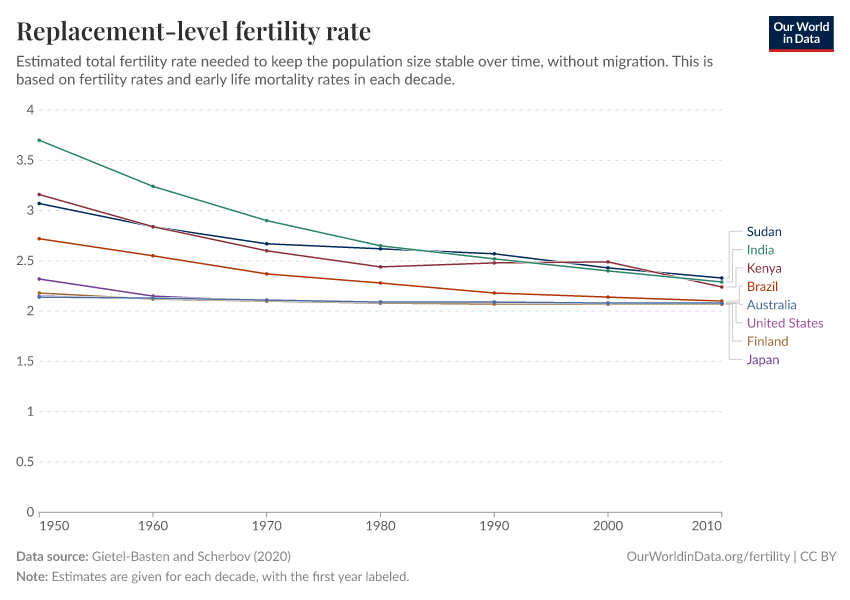
The truth is, achieving and maintaining effective replacement level is a global challenge. There’s no single, easy solution. It's a mix of government policies, societal values, and individual choices. And let’s be honest, sometimes people just aren’t in the mood to make lemons, metaphorically speaking. But hey, at least we’re talking about it, right?
In conclusion, while no single country has completely cracked the code, some are doing a better job than others. The lesson? Let's learn from the successes (and failures) of others, and try to create societies that are both pro-family and pro-future. And maybe, just maybe, we can all keep our lemonade stands running for generations to come. Now, who wants a glass?
Disclaimer: This article is a lighthearted take on a complex issue. Actual fertility rates and demographic trends are constantly evolving. Always consult reliable sources for the most up-to-date information.
