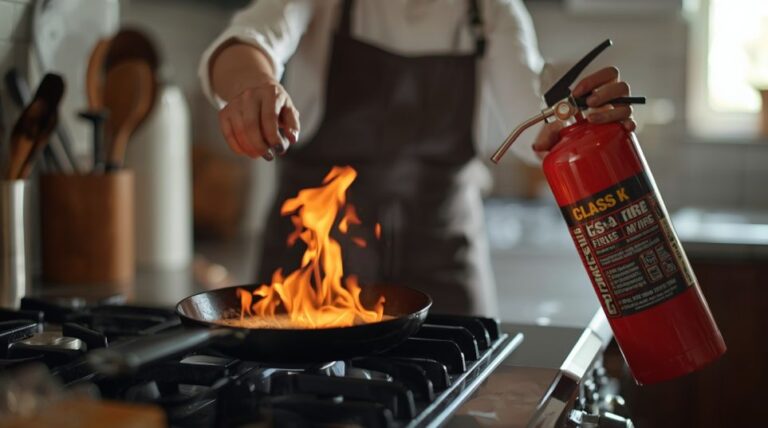
Which Class Of Fire Extinguisher Is Used For Grease Fires

Hey there, kitchen wizard! Ever been happily sizzling some bacon or deep-frying something delicious, and then BAM! A flare-up. Or worse, a full-blown grease fire? Talk about a party crasher! It’s one of those moments that can make anyone panic faster than a cat seeing a cucumber. But fear not, my friend, because today we’re going to demystify the mighty grease fire and figure out exactly which class of fire extinguisher is its ultimate nemesis.
First off, let’s get something straight, crystal clear, absolutely no wiggle room: if you ever have a grease fire, your immediate, gut reaction might be to grab a glass of water. Stop right there! Put. The. Water. Down. Seriously, resist the urge! Using water on a grease fire is like trying to put out a bonfire with gasoline – it’s just going to make things way, way worse. The water instantly vaporizes, carrying those burning grease droplets with it, spreading the fire faster than gossip at a family reunion.
So, if water is out (and it absolutely is!), what’s a budding culinary hero to do? Enter the specialized cavalry!
Must Read
The Grease Fire Gladiator: Class K Extinguishers
Drumroll, please! For grease fires, especially the ones involving cooking oils, animal fats, and vegetable fats, you need a Class K fire extinguisher. Ta-da! This is your go-to champion for those hot, fiery fat-fueled fiascos. In some parts of the world, you might also see them referred to as Class F, but Class K is the standard designation in North America, particularly for commercial kitchens.
“K” actually stands for “Kitchen,” which makes perfect sense, right? It’s designed to tackle fires that burn at incredibly high temperatures, often seen in professional kitchens with those giant fryers and griddles. But guess what? Your home kitchen isn't immune, so knowing about Class K is super smart.

How do these magical contraptions work their charm? Well, Class K extinguishers contain a special chemical, often a potassium acetate-based agent. When sprayed onto a hot grease fire, it goes to work performing a little trick called saponification. Don't let the big word scare you! It basically means it reacts with the burning fat to create a soapy, non-combustible foam or crust. This crust acts like a blanket, cutting off the oxygen supply to the fire and simultaneously cooling the grease. It’s like tucking the fire into bed and telling it to chill out permanently!
Think of it as the ultimate “nope!” for grease fires. It's gentle, yet incredibly effective, without causing the explosive splatter you'd get from water. Pretty neat, huh?

A Quick Noodle on Other Classes (Just So You Know!)
Just for context, here’s a super quick rundown on what other extinguishers are for, so you know why they aren’t for grease:
- Class A: For ordinary combustibles like wood, paper, cloth. Think campfires or burning documents.
- Class B: For flammable liquids like gasoline, oil, paint. But we're talking about non-cooking oils here, not your frying pan!
- Class C: For electrical equipment. Think sparking toaster or overloaded outlets.
- Class D: For combustible metals (like magnesium or titanium). Highly specialized, you won’t find these in your average home kitchen (unless you’re a mad scientist… which, no judgment!).
So, while those ABC multi-purpose extinguishers are great for general household fires, they're not the star player for a grease inferno. They might suppress it for a second, but they usually won't create that saponifying effect needed to truly extinguish a hot grease fire safely and effectively.

Prevention is Your Superpower!
Okay, so you know the extinguisher secret. But here’s an even better secret: not having the fire in the first place!
- Never leave cooking unattended: Seriously, grease fires happen in a flash. Step away for a second, and you might come back to a fiery surprise.
- Keep an eye on the heat: If oil starts smoking, it’s too hot! Turn off the burner and let it cool down.
- Have a lid handy: For small pan fires, sliding a non-glass lid over the pan can smother the flames.
- Baking soda to the rescue: For very small grease fires, a generous amount of baking soda can sometimes help. But for anything bigger, grab that K-class or evacuate!
Knowing which extinguisher to use for a grease fire isn't just a cool party trick; it's a vital piece of knowledge that can keep you and your loved ones safe. While Class K extinguishers are more common in commercial settings, understanding their purpose empowers you to make informed decisions for your home, too. You can also look into residential wet chemical extinguishers designed for home kitchen use that have similar properties.
So, next time you're whipping up a storm in the kitchen, you can cook with confidence, knowing you’re ready for anything. You're not just a chef; you're a prepared, fire-safety-savvy chef! Now go forth and create culinary masterpieces, with a little extra peace of mind and a whole lot of deliciousness. Stay safe, stay smart, and keep those good vibes (and delicious smells) flowing!