Where On The Periodic Table Are Metalloids Found
Ever looked at the periodic table and felt a little overwhelmed? Don't worry, most people do! But nestled between the shiny, reactive metals and the gaseous, non-reactive nonmetals lies a fascinating group of elements: the metalloids. Think of them as the chameleons of the element world – not quite one thing, not quite another. Understanding where they hang out on the periodic table isn't just about memorizing facts; it's about understanding the fundamental building blocks of our tech-driven world.
Why bother learning about metalloids? Well, for starters, they are the key to modern electronics. Their unique ability to act as both conductors and insulators under different conditions is what makes our computers, smartphones, and solar panels work. It’s like having a light switch that can also dim the lights – incredibly versatile! Understanding metalloids gives you a glimpse into the science behind the everyday technology we often take for granted.
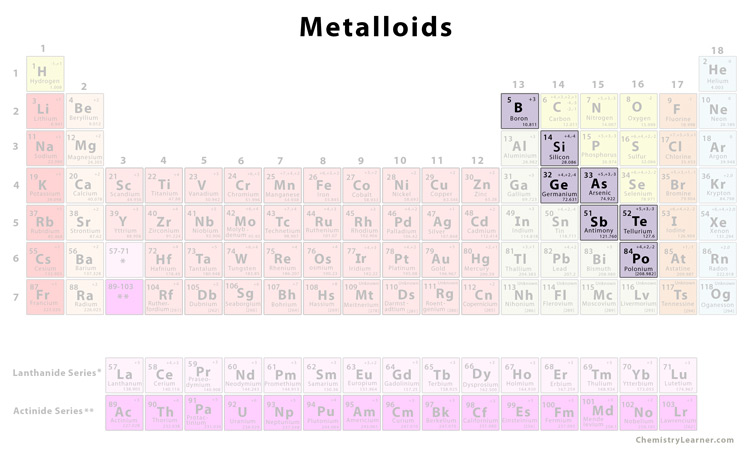
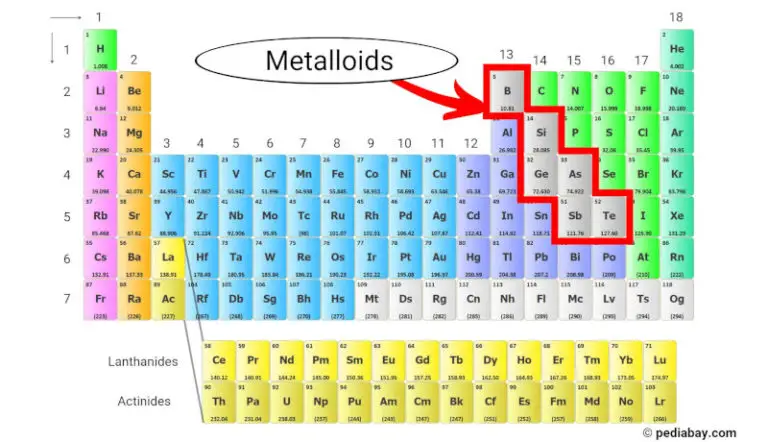
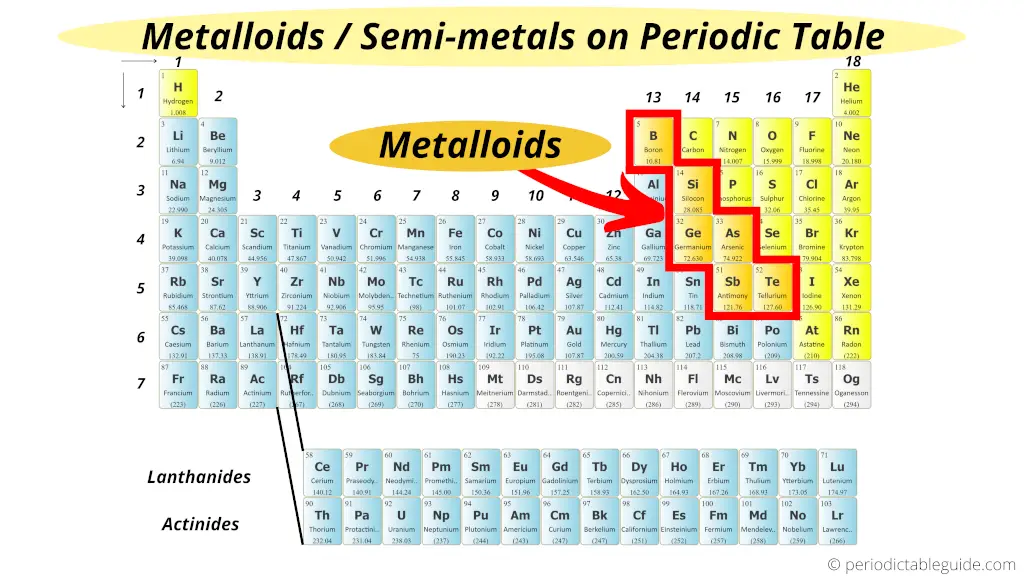
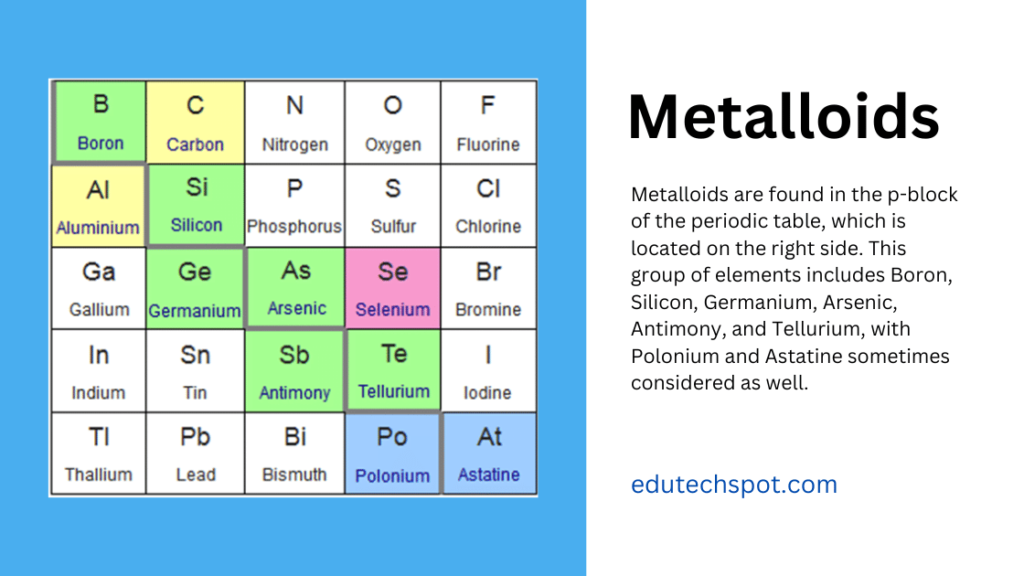
So, where exactly can you find these intriguing elements? Metalloids are typically found along the "staircase" or diagonal line that separates metals from nonmetals on the periodic table. These elements are: Boron (B), Silicon (Si), Germanium (Ge), Arsenic (As), Antimony (Sb), Tellurium (Te), and sometimes Polonium (Po) and Astatine (At) are also included. They form a sort of bridge between the two extremes of metallic and nonmetallic properties. Think of them as the "Goldilocks" elements - not too metallic, not too nonmetallic, but just right!
Must Read
In education, understanding the location and properties of metalloids helps students grasp the concept of periodicity and trends in elemental behavior. Instead of just memorizing names, students can understand why elements in certain regions of the table behave similarly. For example, silicon's semiconducting properties are often used to explain how transistors work, a core component in electronics. In daily life, silicon is found in everything from the sand on the beach (silicon dioxide) to the chips inside your phone. Germanium was one of the original semiconductors. Arsenic, though often associated with poison, is used in certain alloys and semiconductors, while Boron is critical in fiberglass.
Want to explore this further? There are some easy ways to delve deeper. First, grab a periodic table (there are plenty online!) and highlight the metalloids. See how they sit between the metals and nonmetals. Next, research one specific metalloid and its uses. For example, look up "silicon semiconductors" or "boron in fertilizers." You'll be amazed by the diverse applications. Another tip: when reading about new technologies, pay attention to the materials involved. You might just spot a metalloid doing its magic! Don't be afraid to ask "why" or "how" a material is used in a certain application. The periodic table, and particularly the metalloids, are a window into understanding the material world around us. It is not about rote memorization but understanding the unique properties of each element.
Exploring the periodic table, one metalloid at a time, is like embarking on a treasure hunt. You never know what fascinating discoveries you'll unearth! Happy exploring!