
Where Is The Transformer For The Doorbell

Alright, gather ‘round, pull up a digital chair, and let me tell you a tale. It’s a story as old as time, or at least as old as electric doorbells. You know the drill: someone rings your doorbell, or rather, they try to. They press the button with a hopeful jab, perhaps a second, more assertive jab, and then… silence. A silence so profound it makes you wonder if your house is just pretending not to be home. Your doorbell, that stalwart herald of visitors, is dead. And you, my friend, are about to embark on a quest worthy of a medieval knight, a quest for the legendary, the elusive, the oft-mythical:
The Doorbell Transformer.
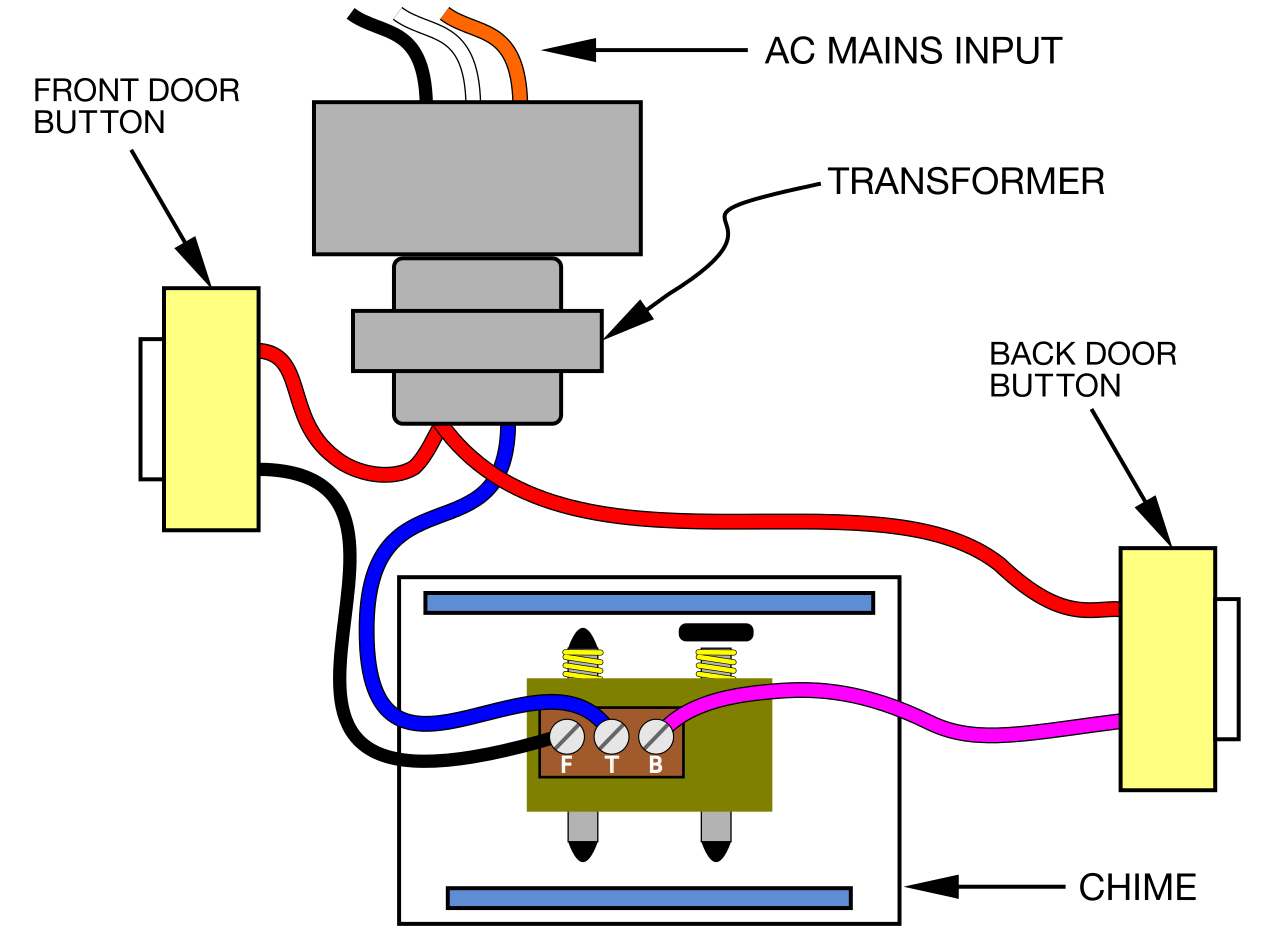
Ah, the transformer. It’s not a giant robot from outer space, though finding it can sometimes feel like solving a riddle from an alien civilization. No, this little gadget is the unsung hero of your home’s greeting system. It takes that mighty 120 volts from your house wiring and steps it down to a polite, doorbell-friendly 10 to 24 volts. Without it, your chime would be nothing but a fancy piece of plastic, and your visitors would be left knocking like peasants at a castle gate. So, where is this indispensable piece of kit hiding?
Your first instinct, naturally, might be to look near the doorbell button itself. Logical! But alas, no. That little button is just a switch, a simple trigger. Like expecting to find the entire orchestra inside the conductor's baton. Then you might try near the chime unit inside your house. Closer! You might even see a few wires snaking into it. But no, the transformer is usually playing a much grander game of hide-and-seek.
Must Read
Think of the doorbell transformer as the introverted genius of your electrical system. It doesn’t want to be front and center. It prefers the quiet, unassuming corners, tucked away where it can do its job without all the fuss and bother of human interaction. And boy, does it have some favorite haunts!
The Usual Suspects: Where to Begin Your Expedition
Prepare yourself, because the hunt can take you to some of the less glamorous parts of your abode. The most common hiding place, the absolute numero uno on the "Where's Waldo of Wiring" list, is often near your furnace or HVAC unit. Why? Because the HVAC system usually has its own low-voltage wiring for the thermostat, and electricians, being practical creatures, often just piggyback the doorbell transformer onto that existing circuit. So, head down to your basement or utility closet and peer around your furnace. You’re looking for a small, metal box, roughly 2x2 inches, often grey or black, with a couple of wires poking out. It might even be bolted directly to the side of the furnace or to an adjacent junction box.
Another strong contender for "Most Likely to Be Found" is near your electrical panel or breaker box. Again, convenience is key. An electrician might have found an easy conduit for power right there. So, check the wall around your main electrical panel. It might be mounted directly to it, or on a nearby joist. It's often small enough to be easily overlooked, blending in with the general organized chaos of your home's nervous system.
But wait, there's more! The transformer, being the sneaky little devil it is, sometimes likes to venture further afield. You might find it:

- Dangling from a joist in your basement rafters.
- Tucked away in the darkest corners of your attic (bring a flashlight and an adventurous spirit!).
- In a utility closet, perhaps near the water heater or another appliance that requires power.
- Even in your garage, often near the overhead garage door opener, if that's where the initial power hook-up was easiest.
The key is to look for something that looks a bit like a small, unassuming brick or box, usually with a couple of wires coming out of one side and connecting into your house’s main electrical wiring. On the other side, you’ll see the low-voltage wires heading off towards your chime unit. Sometimes, it’ll even have the voltage clearly printed on it – something like "16V" or "24V".
The "Aha!" Moment and What Comes Next
Once you’ve finally spotted it, perhaps after muttering a few choice words under your breath and contemplating buying a really loud air horn for future visitors, you’ll experience a moment of triumph. That feeling of "Aha! So THAT'S where you've been hiding, you scoundrel!" is truly satisfying. At this point, you might realize the wires are loose, or the unit itself looks fried. If you're comfortable with basic electrical work (and have turned off the power at the breaker first!), you can attempt to reattach loose wires or replace the unit. Transformers are pretty inexpensive and straightforward to swap out.
:max_bytes(150000):strip_icc()/SPR-how-to-install-a-doorbell-5214163-step-03_30271-2dbd37d14eaa4bac8bde1b94817409cf.jpg)
But here’s a crucial piece of advice, delivered with the seriousness of a seasoned detective: if you’re at all uncomfortable or unsure about fiddling with electrical components, please call a professional. This isn't rocket science, but electricity always demands respect. We don't want your doorbell quest to end with a shocking conclusion, metaphorically or literally!
So, the next time your doorbell goes silent, remember the transformer. It’s out there, lurking in the shadows, waiting to be discovered. Armed with this knowledge and perhaps a sturdy flashlight, you too can become a hero of the home, restoring the sweet symphony of your doorbell and ensuring your guests never have to resort to interpretive dance on your doorstep again.
