Where In A Hurricane Are The Winds Strongest
Hey there, weather enthusiast! Ever wondered where the real action is during a hurricane? You know, where the wind is just absolutely screaming? Well, buckle up, because we're about to take a whirlwind tour of a hurricane and pinpoint exactly where those ferocious winds pack the biggest punch. Spoiler alert: It's not in the center! (Well, not exactly… keep reading!)
Think of a hurricane like a giant, swirling donut. A very, very angry donut. You've got the calm eye in the middle, but where's the sugary goodness? It’s the donut itself, right? In a hurricane, that “donut” is the eyewall – a ring of intense thunderstorms surrounding the eye. And guess what? That's where the strongest winds live.
The Eyewall: Hurricane's Powerhouse
The eyewall is like the VIP section of the hurricane. It’s where air rises rapidly, creating those towering thunderstorms that produce the heaviest rain and, you guessed it, the most powerful winds. These winds are fueled by the warm ocean water that the hurricane is sucking up, like a giant vacuum cleaner. All that energy gets concentrated right there in the eyewall.
Must Read
Why the eyewall and not the exact center, you ask? Good question! It’s all about the physics of rotation. As air rushes towards the center of the hurricane, it gets spun around faster and faster, like an ice skater pulling their arms in. This spinning motion concentrates the energy in a ring around the eye, creating the intense winds of the eyewall. Think of it as the hurricane's way of showing off its spinning skills. Pretty impressive, huh?
But here's a crucial point: the strongest winds aren't necessarily evenly distributed around the entire eyewall. Factors like the hurricane's forward motion and interaction with land can cause certain sections of the eyewall to be even more intense than others.

The Right-Front Quadrant: A Zone of Extra Oomph
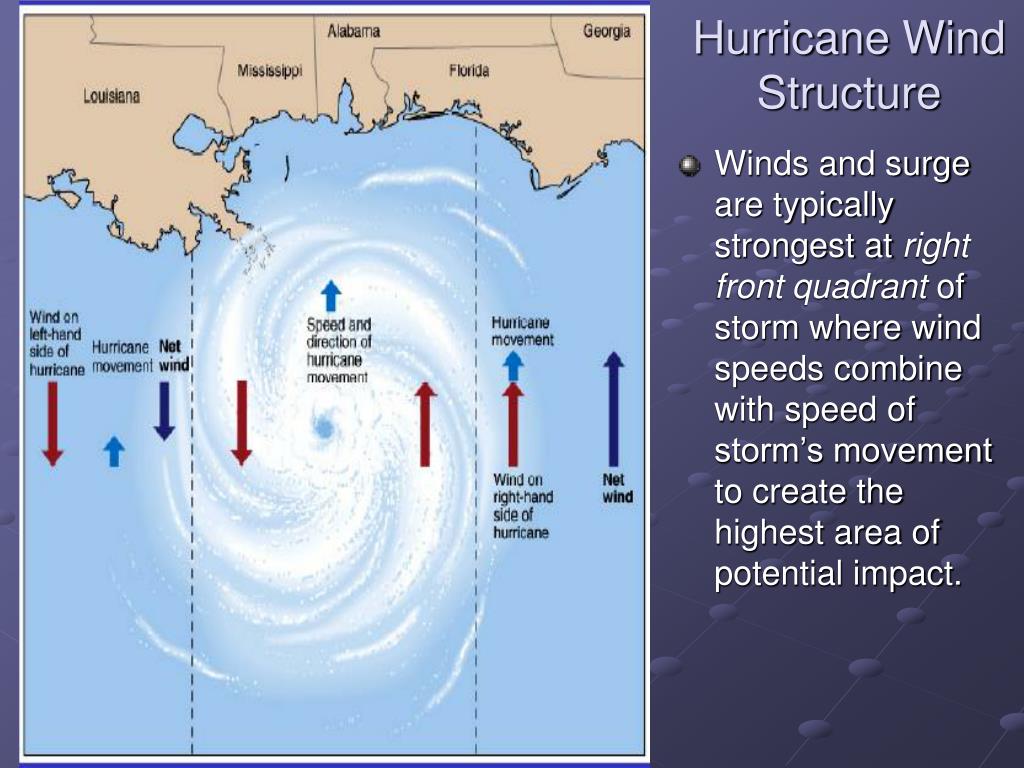
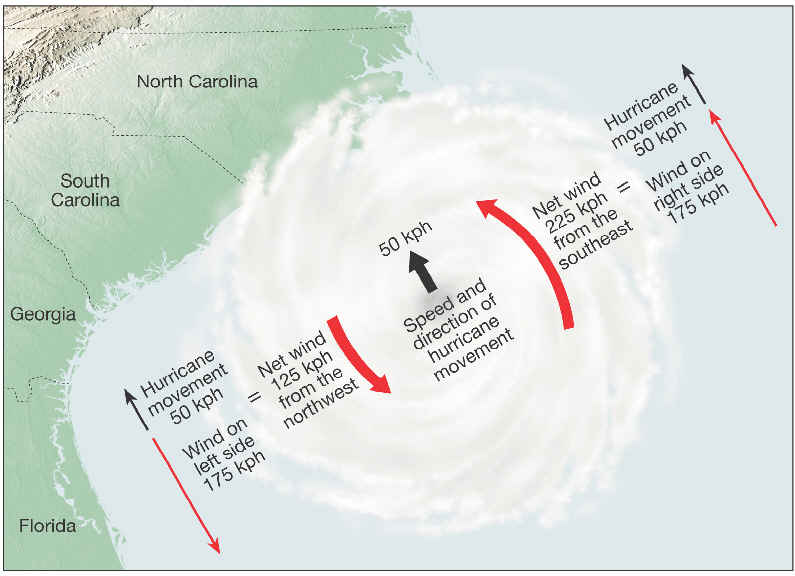
So, where within the eyewall are the winds typically the strongest? Generally, it's in the right-front quadrant of the storm (relative to its direction of motion). This is because the hurricane's forward speed adds to the rotational wind speed in that area. It’s like running on a treadmill – your speed plus the treadmill's speed equals your total speed. The same principle applies to hurricanes!
Imagine you're standing in the path of a hurricane moving west. The right side of the hurricane is the northern side. The forward motion of the hurricane adds to the already intense rotational winds on that side. BOOM! You've got the strongest winds right there.

Think of it this way: if the hurricane is moving forward at 20 mph and the rotational winds are 100 mph, the right-front quadrant could experience winds up to 120 mph! That's some serious wind power. On the opposite side (the left-rear quadrant), the forward motion subtracts from the rotational winds, resulting in slightly weaker winds (though still pretty darn strong!).
Why This Matters (And Why It's Kind of Cool!)
Okay, so knowing where the strongest winds are in a hurricane might seem like just a piece of trivia. But it's actually super important for understanding the potential impacts of these storms. Emergency managers use this information to predict which areas will be most severely affected and to issue appropriate warnings. The more you know, the better you can prepare and stay safe. And isn't that empowering?

Plus, understanding the dynamics of hurricanes is just plain fascinating! It’s a chance to appreciate the incredible power of nature and the complex forces that shape our world. From atmospheric pressure to wind shear, there's a whole universe of fascinating weather phenomena to explore. It's like becoming a weather detective!
Next time you're watching a hurricane on the news, remember the eyewall, the right-front quadrant, and the forces that make these storms so powerful. You'll be able to impress your friends with your newfound knowledge, and you'll have a deeper appreciation for the science behind these incredible weather events. Who knows, maybe you'll even be inspired to become a meteorologist yourself!
So, go ahead! Dive deeper into the world of meteorology. There's a whole world of weather waiting to be discovered, and it's more exciting than you might think. Embrace the storm of knowledge! You might just find your next passion.