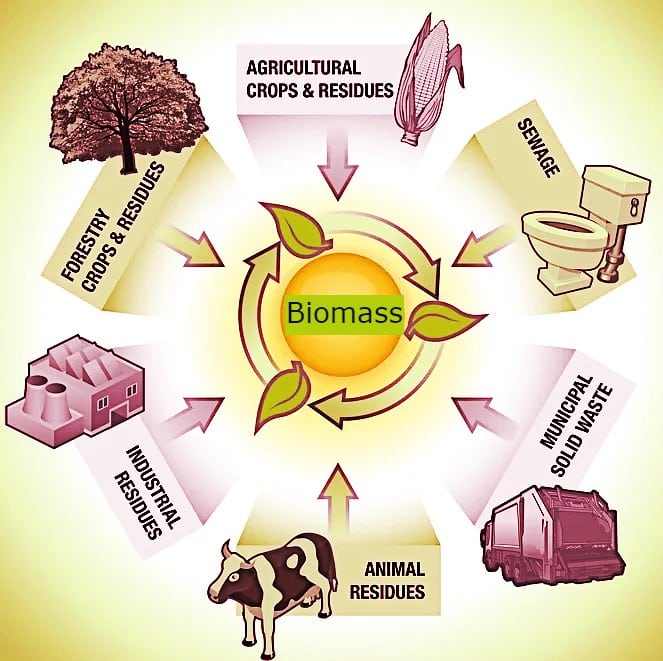
Where Does Most Of A Plants Biomass Come From

Imagine you're baking a cake. You carefully weigh out the flour, the sugar, the eggs, the butter… everything seems to contribute to the final, delicious product, right? Well, the story of where a plant gets its "cake" – its biomass – is surprisingly similar, but with a plot twist that might just make you chuckle.
For centuries, folks thought plants were primarily pulling stuff up from the soil. Makes sense, doesn’t it? You water the plant, you fertilize it... surely all that goodness is being sucked up through the roots and transformed into leafy green glory. This idea was a popular one, championed by influential thinkers for a long, long time. It felt intuitive.
Then came along this rather clever chap named Jan van Helmont. Back in the 17th century, he conducted a now-famous experiment. He planted a willow tree in a pot of soil, carefully weighed both the tree and the soil, and then watered the tree for five years. At the end of the five years, he weighed the tree again. The tree had gained a whopping amount of weight! But here's the kicker: the soil had barely lost any weight at all! Where did all that extra “tree” come from?
Must Read
Van Helmont concluded, wrongly, that it was all from the water. He wasn’t entirely off base, water is important, but he missed a crucial ingredient. Think of it as adding the water to your cake mix, but forgetting the… well, the actual cake part.
The Air Apparent
The true hero of our plant biomass story is something far less tangible: the air! That's right, most of a plant's bulk comes from the very air we breathe out – specifically, carbon dioxide (CO2).

Through the magic of photosynthesis, plants act like tiny chefs, using sunlight as their oven. They take in CO2 from the air through tiny pores called stomata, combine it with water they’ve absorbed from the soil, and voila! They create sugars (their food) and release oxygen as a byproduct. That’s why plants are often referred to as the "lungs of the planet." They’re literally pulling carbon dioxide from the atmosphere and turning it into the building blocks of their existence.
It’s a bit like a magician’s trick, isn’t it? Taking something seemingly invisible and transforming it into something solid and substantial. Imagine telling someone, "Hey, that giant oak tree? It's mostly made of air!" They'd probably look at you like you've sprouted leaves yourself!
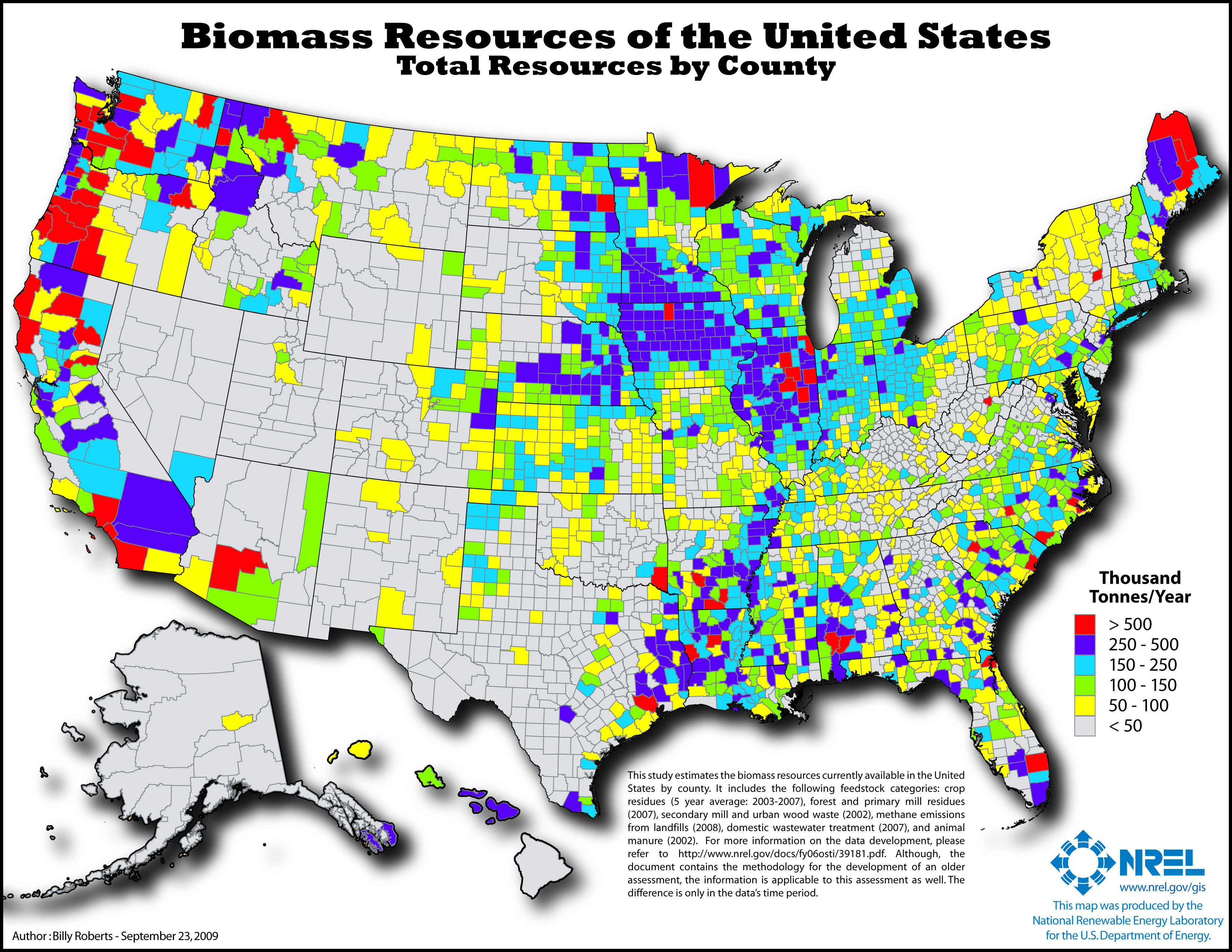
Think about it. The next time you see a towering redwood, a field of sunflowers, or even a humble houseplant, remember that the vast majority of its mass didn't come from the soil. It came from the very air swirling around us. It's a truly humbling thought.
Of course, the soil does play a vital role. It provides water and essential minerals that the plant needs to thrive. It’s like the vitamins in your cake recipe – essential for a healthy and delicious outcome, but not the main ingredient.
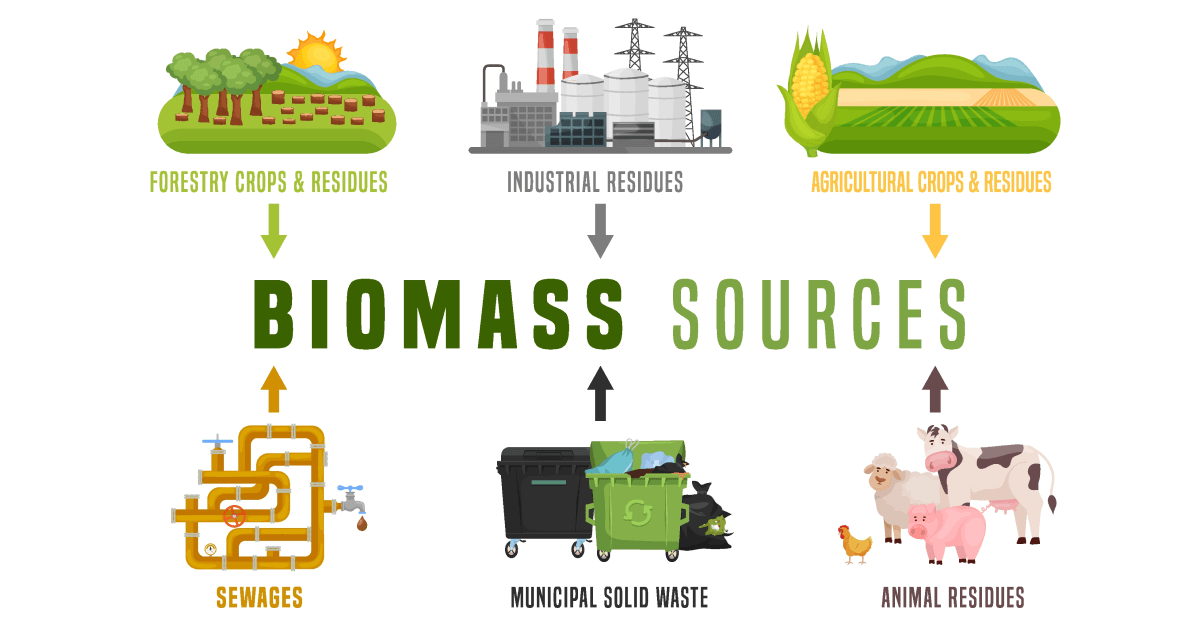
Why This Matters
Understanding where plants get their biomass isn't just a fun fact to impress your friends. It’s fundamental to understanding the entire ecosystem. It highlights the interconnectedness of everything on our planet. Plants are taking carbon dioxide, a greenhouse gas, and turning it into…well, themselves! They’re helping to regulate our climate, and they’re providing food and shelter for countless creatures, including us.
So, the next time you're enjoying a walk in nature, take a deep breath of that fresh, plant-filtered air and give a little nod of appreciation. You're breathing in the byproduct of a truly amazing process – a process that turns thin air into the very fabric of life.
Consider this the next time you are thinking about carbon sequestration. Isn't it amazing what a little plant can do?