
Where Do You Place Carbon Monoxide Detectors In The House
Ever had that feeling of forgetting something important, like whether you locked the front door or unplugged the curling iron? Most of the time, it's just a minor inconvenience, maybe a quick dash back home. But when it comes to something as vital as a carbon monoxide detector, forgetting – or not knowing where to put it – can have much bigger consequences. Don't worry, we're not here to scare you, but rather to chat about this little guardian angel in a way that makes you feel empowered, not overwhelmed!
Think of carbon monoxide (CO) like that really sneaky houseguest you never invited. It's invisible, it has no smell, and it certainly doesn't knock before it walks in. That's why it's earned the nickname, the silent killer. But let's ditch the scary labels for a moment and focus on how we can give this uninvited guest the boot, or at least, make sure it never gets comfortable enough to cause trouble.
Why Should You Even Care, Anyway? (Besides the Obvious)
Okay, so it’s invisible and odorless – sounds like a villain from a B-movie, right? But seriously, CO comes from everyday things that burn fuel: your furnace, water heater, gas stove, fireplace, and even your car in an attached garage. When these things aren't working quite right, or if ventilation is blocked, CO can build up.
Must Read
Why care? Because while it might not make a grand entrance, CO can make you feel progressively unwell – like a really bad flu, but without the fever. Headaches, dizziness, nausea… it can quickly turn into something much more serious. Imagine a quiet Sunday morning, you're just enjoying your coffee, maybe the kids are playing, and you don't even realize you're breathing in something harmful. A CO detector is like having a tiny, vigilant superhero standing guard, ready to blare an alarm if CO levels get dodgy. It's truly about peace of mind for you and your loved ones.
Guardians on Every Level: The Floor Plan Strategy
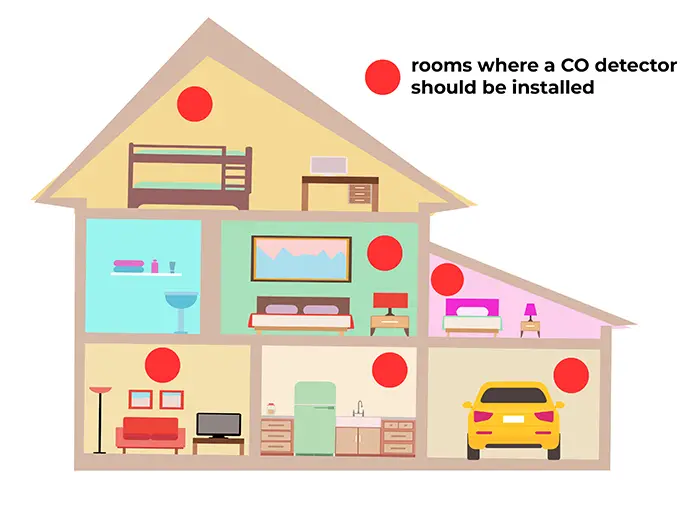
Alright, let’s get down to brass tacks: where do these silent superheroes stand guard? The general rule of thumb is to place them on every level of your home. Yes, even the basement and the attic if they’re used living spaces!
Imagine your home is a multi-story fortress. You wouldn't just put guards on the ground floor, would you? You'd want them everywhere! CO detectors work similarly.

-
The Basement Beat: If you've got your furnace, water heater, or other fuel-burning appliances down there (which many of us do!), this is a crucial spot. Place a detector nearby, but not right next to the appliance, which could lead to false alarms during normal operation. Think 5 to 20 feet away.
-
Main Floor Patrol: This is where a lot of the action happens. Place one in a central location, perhaps near the kitchen (if you have gas appliances) or close to the living room. If you have an attached garage, this is a prime location we'll talk about in a moment!
-
Upstairs Watch: Especially important for homes with multiple levels, make sure there's one on the sleeping floor. If you have a two-story home, this means a detector on the second floor, ideally in a hallway near the bedrooms.

Carbon In A House at Angela Hagberg blog
The Sleepy Time Savior: Near Bedrooms
This is arguably the most critical placement. Why? Because you're most vulnerable when you're asleep. You wouldn't wake up to a strange smell, because there isn't one. You wouldn't notice a headache, because you're dreaming of fluffy clouds. That's why detectors should be placed:
Within 10-15 feet of every sleeping area.
If you have multiple bedrooms, aim for a detector in the hallway that serves them. If you have a sprawling master suite, consider one inside the bedroom itself. The goal is that if CO starts to creep in, that alarm will blare loudly enough to wake even the deepest sleeper (yes, even your teenager!).
:max_bytes(150000):strip_icc()/where-to-place-smoke-detectors-1152485_V2-3c5086adfaa646d69d312b45d342c621.png)
The Garage Gatekeeper: An Attached Garage Special
Got an attached garage? This is a common source of CO issues, especially if you accidentally leave a car running, or if exhaust fumes seep in. Here's the trick:
Place a CO detector outside the door that connects your garage to your living space.
It's like having a bouncer at the door, making sure no funny business gets inside. Do NOT place it inside the garage itself. Why? Because your car naturally produces CO, and you'd be getting constant false alarms when you start or move your vehicle, which would just make you want to rip the thing off the wall! The idea is to catch the CO if it tries to migrate into your home.

Height Matters... or Does It?
Unlike smoke detectors, which usually go on the ceiling because smoke rises, carbon monoxide mixes with air. So, the exact height isn't as critical. Most manufacturers recommend installing them at a mid-height level, or on the wall about 5 feet from the floor. Follow the specific instructions that come with your detector, as some can be plugged directly into wall outlets.
A few "don'ts" for placement:
- Don't place them directly in front of a fan, air vent, or window: This can dilute the sample of air reaching the detector.
- Don't put them behind curtains or furniture: Again, it blocks the sensor.
- Don't put them in direct sunlight or areas of extreme temperature: This can affect their accuracy.
Your Detector's Annual Check-up: The Test Button!
You wouldn't drive your car for years without an oil change, right? Your CO detector also needs a little TLC. Most units have a "test" button. Push it once a month! It's like your detector shouting, "Hey, I'm still here and ready for action!" Also, remember to replace batteries (if applicable) at least once a year – a good reminder is when you change your clocks for Daylight Saving Time. And remember, detectors don't last forever; they typically have a lifespan of 5-7 years, so check the "replace by" date on the back of the unit.
A Happy, Healthy Home
Placing carbon monoxide detectors isn't a chore; it's a simple, smart step towards ensuring your home is a safe and healthy haven. It’s like putting on your seatbelt – a small action that makes a huge difference. So go ahead, find those little guardians, give them their prime spots, and enjoy the peace of mind knowing you've outsmarted that sneaky, silent invader. Your lungs (and your family!) will thank you for it.