
Where Did The Energy In Fossil Fuels Come From
Ever filled up your car and thought, "Wow, that's expensive!"? But have you ever wondered where all that energy in gasoline (or coal, or natural gas) actually came from in the first place? Get ready for a seriously long journey – back billions of years!
The Sun: Our Star, Our Everything (Seriously)
First stop: the Sun. That big, bright ball of gas is constantly blasting out energy in the form of sunlight. It's not just giving us tans and making plants grow, it's the original power source for pretty much everything on Earth.
Think of the sun as a giant, ridiculously powerful microwave. Except instead of popcorn, it's "cooking" hydrogen into helium. And releasing tons of energy in the process, that light travels across space and hits our little blue planet.
Must Read
Plants: Tiny Solar Panels
Here's where things get really interesting. Sunlight beams down, and plants, those clever green things, soak it up. They’re basically tiny, living solar panels!
Through a process called photosynthesis (don't worry, there won't be a quiz), plants use sunlight, water, and carbon dioxide to make their own food. This food is essentially stored energy.
Imagine plants as little chefs, whipping up delicious energy-rich snacks using sunshine as their main ingredient. They’re like the world's first food trucks, fueled by pure solar power!
Ancient Organisms: The Real MVPs
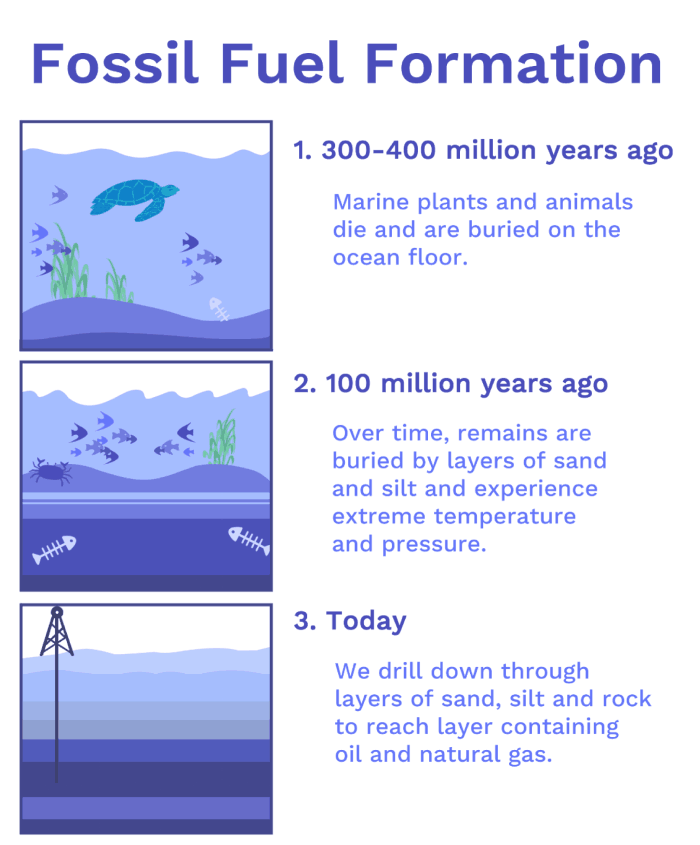
Now, fast forward millions of years. Those plants (and tiny little sea critters like plankton) lived, thrived, and eventually... well, you know… died. This is where things get a little grim, but also super important.

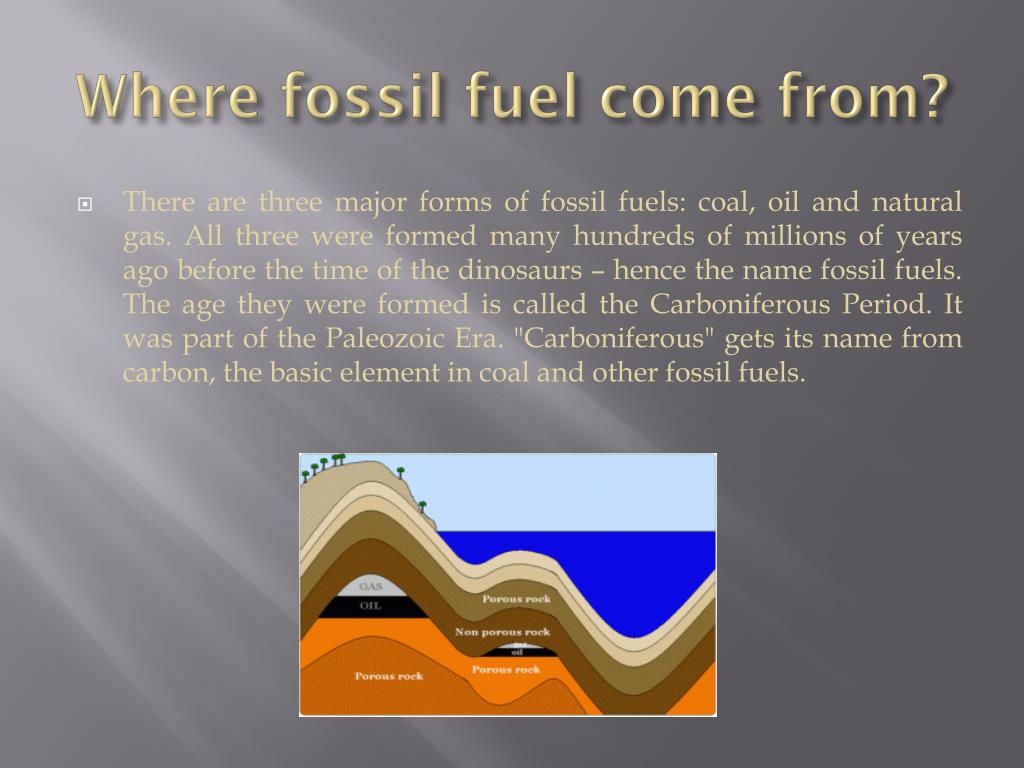
These dead plants and animals didn’t just disappear. Over eons, they piled up in massive layers, often at the bottom of oceans and swamps. Think of it as a giant, prehistoric compost heap!
Imagine layers and layers of ancient seaweed, grumpy ferns, and single-celled organisms all squished together like a geological lasagna. It might sound gross, but this "lasagna" is the key to fossil fuels.
Pressure Cooker Earth
Over millions of years, these layers of dead stuff got buried deeper and deeper. The weight of all that sediment created immense pressure and heat. The Earth became a gigantic, slow-motion pressure cooker.
This pressure and heat transformed the organic material. It slowly morphed into what we now know as fossil fuels: coal, oil, and natural gas.
Picture it: Tiny plankton, cooked under immense pressure for millions of years, transforming into the fuel that powers our cars! It's like the ultimate slow-cooker recipe, with a side of geological time.
Coal: The Remains of Giant Forests
Coal is mostly formed from ancient forests. Imagine towering trees, bigger than anything you see today, falling and accumulating in swampy areas. Over time, that plant matter turned into the black rock we burn for energy.
So, the next time you see a lump of coal, remember it's not just a dirty rock. It’s the compressed remains of ancient forests, powered by sunlight from hundreds of millions of years ago!
It’s like holding a piece of prehistoric sunshine in your hand. A very dirty, flammable piece of prehistoric sunshine, but sunshine nonetheless.
Oil and Natural Gas: Tiny Sea Creatures' Legacy
Oil and natural gas are primarily formed from the remains of tiny marine organisms, like plankton and algae. These microscopic creatures lived in the oceans, soaked up sunlight, and then, well, you know… passed on.
Their remains sank to the ocean floor and, over millions of years, transformed into the liquid and gaseous fuels we use today.

So, the next time you fill up your gas tank, give a silent thank you to those billions of tiny sea creatures who gave their all (unintentionally, of course) to power your commute!
The Time Travelers Inside Your Car
When you burn fossil fuels, you're releasing the energy that was originally captured by plants and algae millions of years ago. You’re literally unleashing ancient sunshine!
It's like having a time machine under your hood. You're using the power of prehistoric sunlight to get to work, visit friends, or go on an adventure.
Think about that next time you're stuck in traffic. You're surrounded by cars all powered by the ghosts of ancient sunlight. It's a slightly bizarre, but also kind of amazing, thought.
A Finite Resource: The Sun's Ancient Savings Account
Here's the kicker: fossil fuels are a finite resource. We're using them much faster than they can be replenished. The Earth isn't currently pressure-cooking new batches of oil and coal at any significant rate.

Imagine it as a giant savings account of solar energy. We’re spending the interest (solar energy) and digging into the principal (fossil fuels) at a rapid pace.
Once the "savings" are gone, they're gone. This is why it's so important to explore other, more sustainable energy sources.
Looking to the Future: Back to the Source
The good news is, we can go back to the source: the Sun! Renewable energy sources like solar and wind power harness the Sun's energy directly, without relying on ancient, finite reserves.
We can learn from the plants and become efficient solar panels ourselves! Okay, maybe not literally become solar panels, but we can use technology to capture and use solar energy in sustainable ways.
So, the story of fossil fuels is a fascinating tale of ancient sunlight, dead plants and animals, and a whole lot of geological time. It's a story that reminds us of the interconnectedness of everything on Earth and the importance of using our resources wisely. Plus, it gives you a pretty cool fact to drop at your next party: "Did you know my car is powered by dead plankton and prehistoric sunshine?" Guaranteed to be a conversation starter!