
Where Can We Find Natural Gas
Alright, settle in, grab your imaginary coffee, because we're about to embark on a truly epic quest: finding natural gas! Now, you might think, "Oh, it's just... underground, right?" And sure, that's like saying a cat lives in a house. Technically true, but it doesn't tell you if it's lounging on the silk pillows or terrorizing the basement mice.
Natural gas, that invisible workhorse that fires up your stove and warms your home, is quite the elusive character. It's not like digging for buried treasure where X marks the spot. This stuff is shifty. It’s like trying to catch a whisper in a hurricane – invisible, but oh-so-powerful.
Where's the Party At?
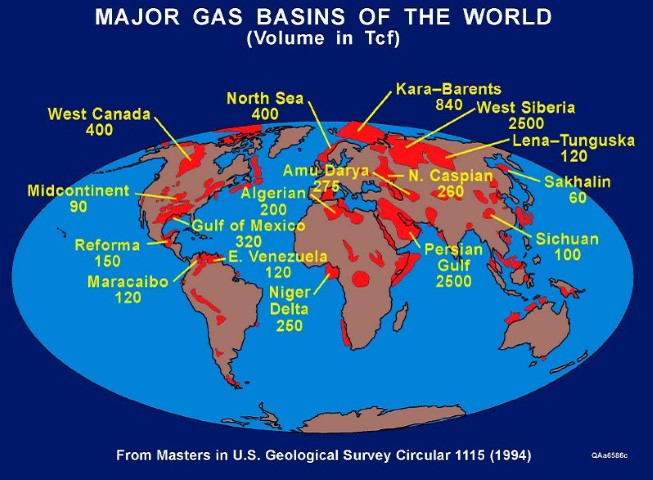
So, where does this gaseous superstar hang out? The short, less exciting answer is: deep beneath the Earth's surface. But "deep" can mean anything from a couple of hundred feet to several miles down. We’re talking about depths where even your most dramatic Instagram filter wouldn't reach.
Must Read
Think of it this way: natural gas is the ultimate result of Mother Nature's very own, incredibly slow, and super-high-pressure cooking show. We're talking about ingredients that have been simmering for millions of years. Yes, I said millions. Your grandma’s secret recipe ain’t got nothing on this.
The Dinosaur Connection (Sort Of)
Here's a fun fact that might make you feel a little bit like you’re burning prehistoric goo: natural gas, along with oil, is essentially the liquefied and gaseous remains of ancient marine organisms and plants. So, not dinosaurs directly, but maybe their tiny sea creature cousins. Imagine all those microscopic sea critters, algae, and plants dying, sinking to the ocean floor, and then getting buried under layers and layers of sediment.
Over eons, with immense pressure and heat from the Earth's core, these organic leftovers slowly transform. It’s like the universe’s largest, slowest compost pile, eventually yielding that precious energy source. We're essentially siphoning off the farts of ancient Earth. Kidding! (Mostly.)
The Classic "Gas Pocket" – Conventional Reservoirs
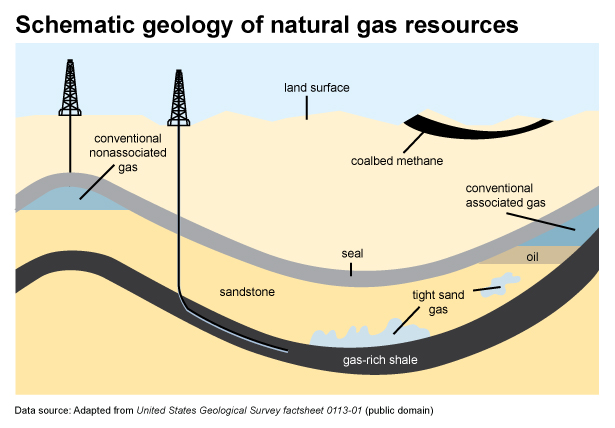
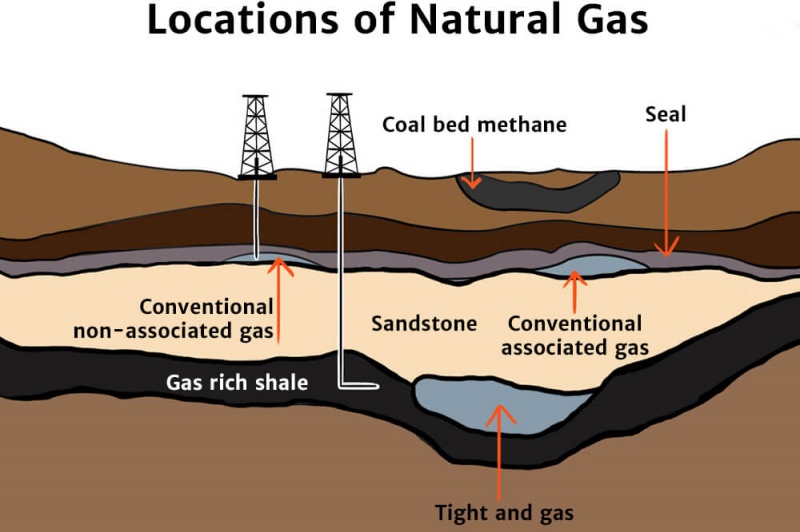
The easiest places to find natural gas, historically, are what we call conventional reservoirs. Imagine a sponge (a porous rock like sandstone or limestone) that’s absolutely saturated with gas. This gas then tries to escape upwards, because, well, gas likes to rise!
But then, it hits a roadblock. An impermeable layer of rock, like a big, solid lid, traps it. So, you end up with these massive underground bubbles or pockets of natural gas, just patiently waiting for us to come along with our fancy drills. It's like finding a giant, fizzy soda bottle deep underground. You just need to know where to pop the cap!
The Tricky Bits – Unconventional Reservoirs
Now, not all gas is so obliging. Sometimes, it’s a bit more introverted, hiding in what we call unconventional reservoirs. These are the places where the gas isn't just sitting in a nice, neat pocket. Oh no, that would be too simple!
Shale Gas: The Stuck-in-Rock Scenario
Ever tried to squeeze water out of a dry sponge? That’s kind of what shale gas is like. It’s trapped within the tiny pores of shale rock – a fine-grained, sedimentary rock. The gas is literally part of the rock matrix. To get it out, we often employ methods like hydraulic fracturing (or "fracking" for short), which is basically injecting high-pressure water, sand, and chemicals to create tiny fractures and release the gas. It's like giving the rock a really intense, internal massage.
Tight Gas: The Squeeze Play
Similar to shale gas, but often found in sandstone or limestone with very low permeability. The gas is there, but it's tightly held, meaning it doesn't flow easily. Think of it as gas trying to escape through a super-tight, microscopic maze. More technological wizardry is needed to coax it out.
Coalbed Methane: Coal's Secret Seltzer
Surprise! Coal, that solid black stuff we burn, actually holds natural gas within its seams. This is called coalbed methane. It’s like finding a fizzy drink trapped inside a solid block of jelly. When coal forms, methane gas is generated and absorbed into the coal itself. We extract this gas before or during coal mining, which is a win-win because it’s both a useful fuel and makes coal mines safer by reducing explosive methane levels.
Methane Hydrates: The Frozen Fire!
And for the grand finale, the most surprising hideout of all: methane hydrates. Picture this: ice, but not just any ice. Ice that contains methane molecules trapped within its crystalline structure. It looks like dirty snow or ice, but if you hold a flame to it, it burns!
These icy marvels are found in two main places: deep under the ocean floor, where high pressure and low temperatures create the perfect conditions, and in permafrost regions on land (like the Arctic). There's an astounding amount of methane locked up in hydrates – potentially more energy than all other fossil fuels combined! The challenge, of course, is figuring out how to get it out without melting the ice and releasing all that potent methane into the atmosphere. It's truly a mystery wrapped in an enigma, frozen in ice, and ready to potentially burn!

The Great Gas Hunt: How We Find It
So, how do we find these hidden treasures? It's not just a guy with a divining rod (though I'm sure some have tried). It involves sophisticated geological surveys, seismic imaging (basically sending sound waves into the Earth and listening for echoes), and a whole lot of data analysis. Geologists are like super-sleuths, piecing together clues from rock formations and subterranean maps.
Once they've identified a promising spot, that's when the drilling starts. It's a massive, expensive undertaking, but when you think about the incredible journey that gas has made – from ancient plankton to your cozy home – it makes you appreciate every flicker of that blue flame.
So, the next time you fire up your stove, give a little nod to those ancient sea creatures, the immense pressures of the Earth, and the clever folks who figure out how to unearth that fantastic, invisible energy. It’s been quite the adventure, hasn't it?