
Where Are The Nonmetals Found In The Periodic Table
Hey there, science enthusiast! Ever wondered where all the cool, quirky nonmetals hang out on the periodic table? Let's dive in – it's more exciting than you think! Forget memorizing; we're going on an adventure!
The Nonmetal Neighborhood
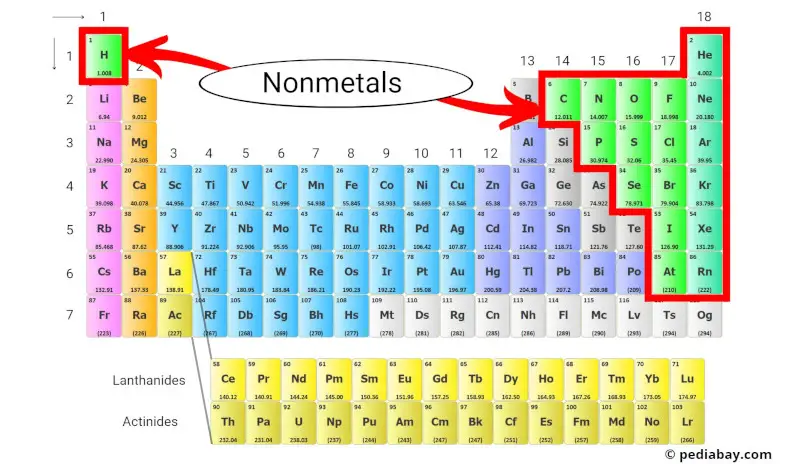
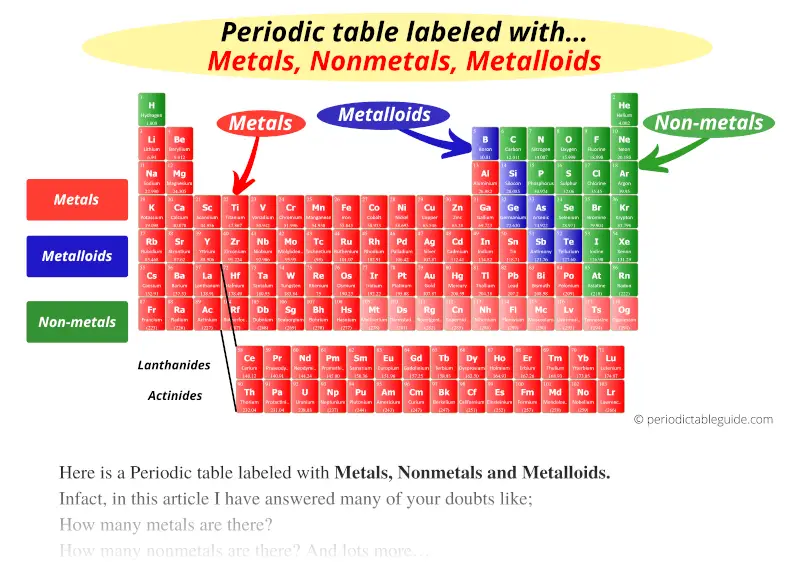
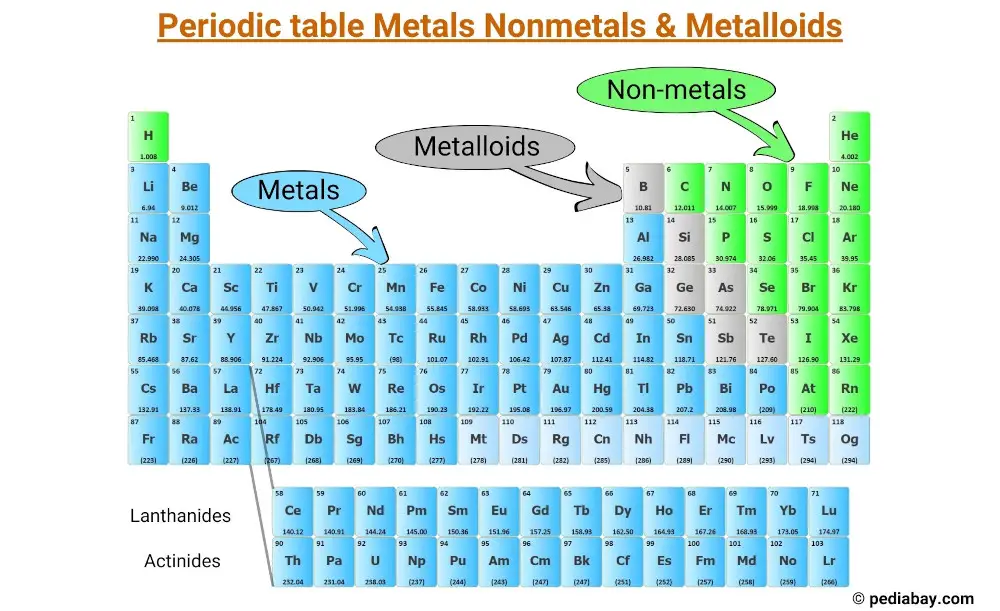
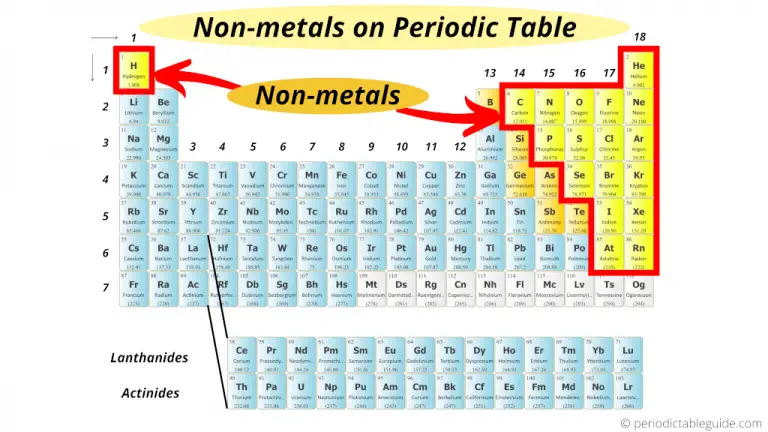
Think of the periodic table like a city. Metals? They're the bustling downtown. Nonmetals? They're chilling on the right side and up top, mostly. Easy peasy, right?
Specifically, look to the upper right corner. That’s where the nonmetal party’s at! Hydrogen is a bit of a rebel, hanging out on the left, but we’ll get to him.
Must Read
The nonmetals aren’t one homogenous group. There is quite a bit of variance, each with special properties and characteristics.
Hydrogen: The Lone Wolf (Sometimes)
Okay, let's talk about Hydrogen. It's technically a nonmetal, but it's a bit of a periodic table wildcard. Seriously! It’s usually plopped at the top left, but it sometimes acts like a metal, sometimes not.
Think of Hydrogen as the teenager of the periodic table – constantly experimenting with its identity. It's got only one proton and one electron. Super simple!
But here's the fun part: Hydrogen is EVERYWHERE. Water? H2O. Organic molecules? Full of Hydrogen. The Sun? Mostly Hydrogen, fusing into Helium. Talk about being influential!
The Usual Suspects: Gases Galore
Now, let's look at the stars of the show: the noble gases! They're the super-chill nonmetals on the far right – Helium (party balloons!), Neon (bright signs!), Argon (light bulbs!). They're all about that #NoDrama life. They’re so stable, they barely react with anyone.
And then there are the halogens, one column to the left of the Noble Gases. Fluorine, Chlorine, Bromine, Iodine, and Astatine. These guys are reactive, seriously reactive! Chlorine disinfects your pool (and smells kinda funky). Iodine keeps your cuts clean. These nonmetals are useful, but a little…intense. Be careful not to mix them!
Oxygen and Sulfur are also key players. Oxygen, of course, is what you're breathing right now. Thank a nonmetal! And Sulfur? It’s used in everything from sulfuric acid to (historically) gunpowder. It also gives some smelly compounds their distinctive odor (think rotten eggs!).
Carbon: The Backbone of EVERYTHING
We can’t forget Carbon! This nonmetal is the absolute backbone of all organic chemistry. It's in you, me, trees, burgers...everything living! Carbon can form crazy long chains and rings, making it super versatile.
Think of diamonds and graphite (pencil lead). Both are pure carbon, but arranged differently. Talk about a glow-up!
Nitrogen and Phosphorus: Life's Building Blocks
Nitrogen and Phosphorus are also essential to life. Nitrogen is a huge part of the atmosphere, and it's also in your DNA! Phosphorus is important in bones, teeth, and energy transfer in cells.
Ever seen fertilizer? It’s got lots of Nitrogen and Phosphorus! They help plants grow big and strong.
Why Should You Care?
So, why bother learning about where nonmetals live on the periodic table? Because they are fundamental to everything around us! From the air you breathe to the food you eat, nonmetals are there, doing their thing.

Understanding their location helps you understand their properties. And that's pretty darn cool!
Fun Facts to Drop at Parties
- Did you know that the human body is about 96% nonmetals (oxygen, carbon, hydrogen, and nitrogen)?
- Fluorine is the most reactive element on the periodic table. Talk about a firecracker!
- Helium is so light that it can escape Earth's gravity! It's literally lighter than air!
Go Explore!
So next time you glance at a periodic table, remember this: The nonmetals are the cool, quirky, and essential elements that make our world go round. They're not just letters and numbers; they're the building blocks of life, the source of light, and the key to countless chemical reactions. Pretty amazing, right?
Now go forth and impress your friends with your newfound nonmetal knowledge! You're practically a periodic table pro!