
When Was Electricity First Harnessed

Ever stopped to think about how utterly dependent we are on electricity? Like, seriously dependent. From charging our phones to making our morning coffee, from lighting up our homes to powering the internet that brings you this very article, electricity is just... everywhere. It’s like the invisible wizard behind the curtain of modern life.
But here’s a cool question that often gets us scratching our heads: when did we actually first get a handle on this magical force? When did we stop just marveling at lightning storms and start actually making electricity do our bidding? It’s not as simple as a single "Aha!" moment, and that’s what makes the story so much more interesting!
From Sparky Observation to Steady Flow
First, let’s be clear about what we mean by "harnessed." We’re not talking about just seeing electricity. Humans have been aware of its existence for thousands of years in its most dramatic form: lightning! And even in smaller, sparkier ways. Imagine ancient humans playing with static electricity without even knowing what it was!
Must Read
Think about rubbing a balloon on your hair and making it stand on end, or shuffling across a carpet and getting a sudden jolt from a doorknob. That’s static electricity, right? People have been noticing stuff like that forever.
Way back around 600 BC, the ancient Greek philosopher Thales of Miletus observed that if you rubbed a piece of amber (fossilized tree resin, super cool!) with fur, it could attract light objects like feathers. He probably just thought amber had some sort of weird, mystical "soul." He didn’t call it electricity; the word actually comes from the Greek word for amber, elektron. But this was an early, curious peek into the phenomenon.
So, people knew about static cling and zaps. But how do you go from a quick zap to something that can power a light bulb? That’s the real trick, isn’t it?
The First Zappy Storage: The Leyden Jar
Fast forward a couple of millennia to the 1700s. Things started getting really exciting. Scientists and curious minds were experimenting like mad. In 1745, independently in both Germany and the Netherlands, a device called the Leyden Jar was invented. And it was a game-changer.
Imagine it: a glass jar, partly filled with water, with a wire poking out. Sounds innocent, right? But if you charged it up with a static electricity generator, it could store a serious electric charge! And deliver a rather shocking jolt. People would hold hands in a circle to see how many could feel the shock – a truly electrifying party trick, if a little risky!
The Leyden Jar was effectively the first capacitor, a device that stores electrical energy. It showed us that we could not just create a static charge, but also store it and then release it on demand. This was a huge step from just observing a zap to actually controlling one.

Franklin and His Kites (and Common Sense)
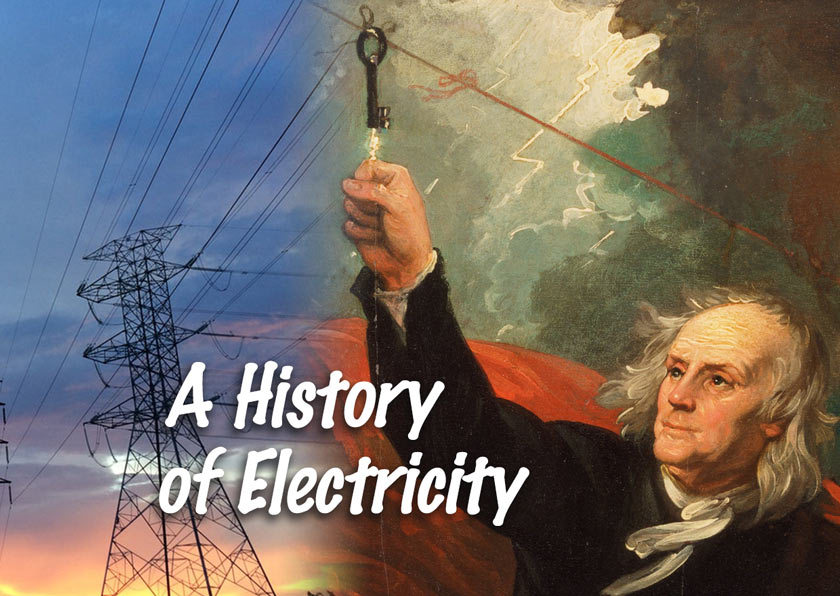
Around the same time, a certain clever fellow named Benjamin Franklin was busy flying kites in thunderstorms. Now, the famous story of him actually being struck by lightning is probably a myth. That would have been... not great for Ben.
However, he did perform experiments that proved lightning was indeed a form of electricity. His work was pivotal in showing that the massive, dangerous power of a storm cloud was the same stuff as the tiny sparks from a Leyden Jar. More importantly, he invented the lightning rod, a device that tamed lightning, directing its destructive power safely into the ground. This was a direct example of harnessing electricity to protect things.
The Frog's Legs and the First Battery!
But static electricity, while cool, wasn't very practical for continuous power. You couldn’t power a factory with a Leyden Jar. We needed a steady flow!

Enter the late 1700s, and an Italian physician named Luigi Galvani. Legend has it (and it’s a pretty solid legend!) that he was dissecting frogs and noticed that their legs twitched when touched by different metals. He thought there was some sort of "animal electricity" in the frogs themselves. Weird, right?
Another Italian scientist, Alessandro Volta, heard about Galvani’s frog experiments. Volta had a different idea: he figured the electricity wasn't from the frog, but from the metals themselves reacting with the frog’s bodily fluids. And he was right!
In 1800, Volta created something truly revolutionary: the Voltaic Pile. This was essentially a stack of copper and zinc discs, separated by brine-soaked cardboard. And guess what? It produced a continuous, steady current of electricity! This wasn't a spark or a zap; it was a constant flow, like turning on a tap of energy. The Voltaic Pile was the world's first true battery, and it completely changed the game.
Lighting Up the World
With Volta’s battery, scientists suddenly had a reliable source of electricity to experiment with. This led directly to discoveries like electromagnetism by Hans Christian Ørsted, and then, crucially, to Michael Faraday's invention of the electric motor and the electric generator in the 1820s and 30s. Faraday essentially showed us how to convert mechanical motion into electrical current, and vice-versa. He’s often called the "Father of Electricity" for good reason!
By the late 1800s, pioneers like Thomas Edison and Nikola Tesla were building on these foundations, developing practical light bulbs and entire power distribution systems. This is when electricity truly began to light up cities and power homes, becoming the force we recognize today.
A Long, Sparky Journey
So, when was electricity first harnessed? It wasn't a single event. It was a fascinating, often accidental, and sometimes painful journey over thousands of years. From ancient Greeks curious about amber, to shocking party tricks with Leyden Jars, to twitching frog legs, and finally to the brilliant invention of the battery and the generator. Each step was a small victory in understanding and controlling this fundamental force of nature.
It’s pretty mind-blowing to think about, isn’t it? Next time you flip a light switch or plug in your phone, take a moment to appreciate that long, curious, and incredibly clever journey that brought us such everyday magic. It truly is one of humanity’s greatest achievements!