
When Was A 3d Printer Invented

Ever gazed at a fancy 3D printer whirring away, conjuring objects out of thin air, and thought, "Whoa, that's some futuristic wizardry!"? You're not alone. It feels like something straight out of a sci-fi movie that just landed on our desks, right? But here’s a fun little secret: 3D printing isn’t as new as you might think. Nope, not even close! The roots of this incredible tech actually stretch back further than most of us realize, to a time when mullets were cool and shoulder pads were king.
So, when exactly was a 3D printer invented? Buckle up, buttercup, because we're taking a quick hop into a time machine, and it's going to be a blast!
The Big Bang: The 1980s Called!
Forget the sleek, silent machines of today for a moment. Picture the 1980s. A time of big hair, bigger computers, and even bigger ideas. While we were all busy trying to solve Rubik's cubes, a bright spark named Charles "Chuck" Hull was cooking up something truly revolutionary. He wasn't trying to print a miniature Yoda (though we bet he would have loved to!). He was actually trying to find a faster, better way to create prototypes for small plastic parts. Think about it: before 3D printing, if you wanted a custom part, you had to carve it, mold it, or go through a super expensive and slow process. Total drag!
Must Read
Chuck, being the genius he was, started experimenting. He had an epiphany: what if you could build an object layer by painstaking layer, rather than cutting it out of a bigger block? This wasn't just a different way of doing things; it was a fundamental shift from subtractive manufacturing (taking material away) to additive manufacturing (building it up). And boom! A whole new world started to take shape.
Enter Stereolithography: The OG of 3D Printing
So, what did Chuck come up with? He invented something called Stereolithography (SLA). Don't let the fancy name scare you; it's pretty neat. Imagine a vat of liquid, light-sensitive resin. Now, imagine a UV laser drawing a pattern on the surface of that liquid. Wherever the laser hits, the liquid magically solidifies. Then, a platform dips ever so slightly, and the laser draws the next layer. Repeat, repeat, repeat, and voilà! You've got a solid 3D object rising from the goo. Pretty wild, right?
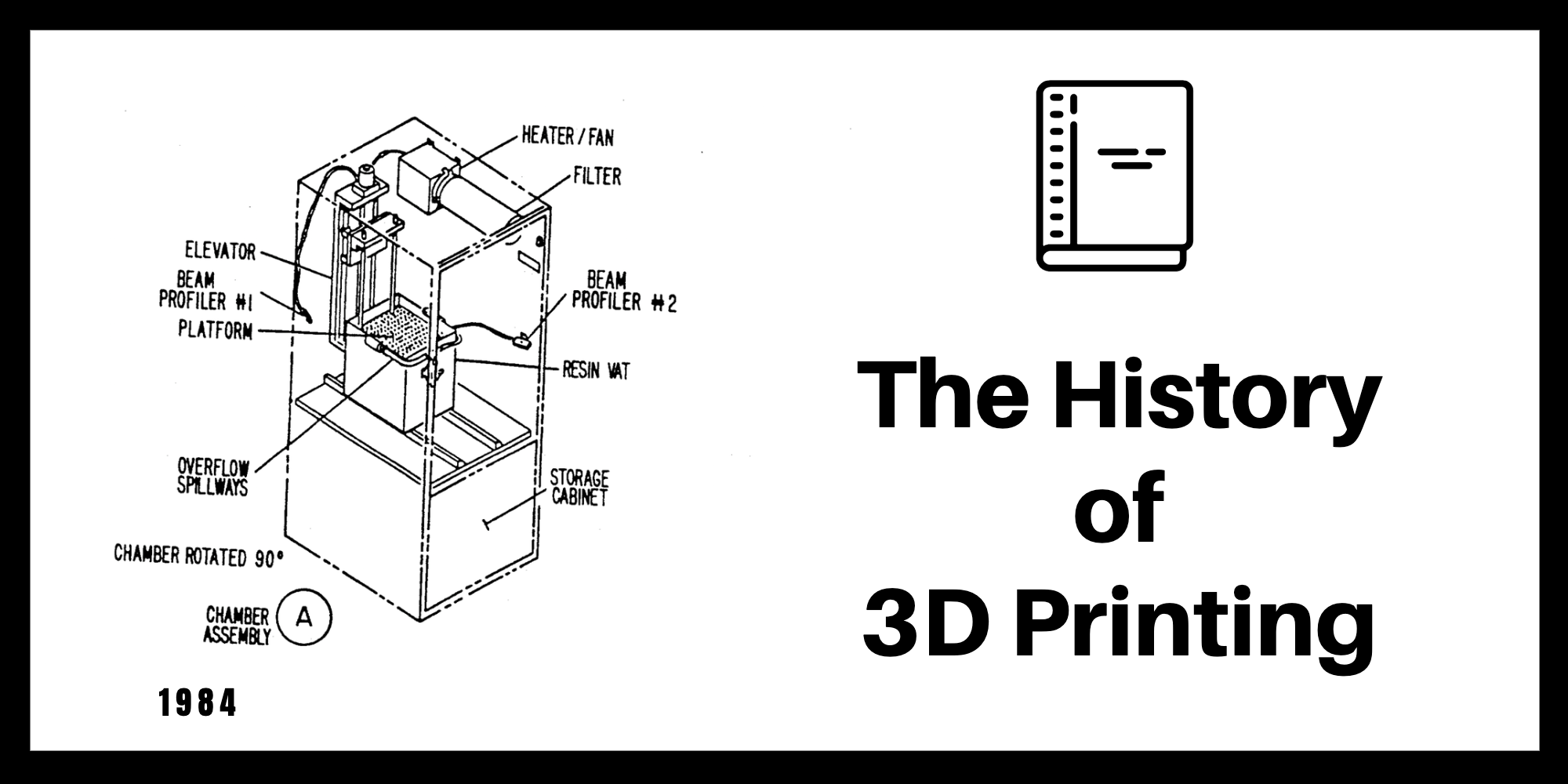
This wasn't just a cool science experiment. Chuck Hull went ahead and filed a patent for his "Apparatus for Production of Three-Dimensional Objects by Stereolithography" in 1984. And guess what? The patent was granted in 1986. So, if you're looking for the official birth certificate of the 3D printer, that's your golden ticket! He even co-founded the company 3D Systems in 1986 to commercialize his invention. Talk about a busy bee!
Not Just One Light Bulb Moment
While Chuck Hull often gets the credit for patenting the first commercial 3D printing technology, it’s worth noting that innovation is rarely a solo act. Around the same time, other clever folks were exploring similar additive ideas, sometimes even before Hull’s patent. For instance, a Japanese inventor named Hideo Kodama filed a patent in 1980 for a rapid prototyping system that used a photo-hardening polymer and UV light. However, he didn't complete the patent application, so Hull's 1986 grant became the landmark.

And it didn't stop there! Another rockstar named Scott Crump, in the late 1980s, invented Fused Deposition Modeling (FDM). This is the tech you probably know best – where a plastic filament is melted and extruded layer by layer, like a super precise hot glue gun building an object. He and his wife co-founded Stratasys in 1988, another giant in the 3D printing world. So, while SLA was first, FDM is arguably the most common and accessible type of 3D printer today, making its own huge splash!
From Industrial Marvel to Desktop Darling
Back in the day, these early 3D printers weren't exactly sitting on desks in homes. Oh no, sir! They were massive, expensive machines tucked away in industrial labs, churning out prototypes for big companies. We're talking about devices that cost more than a fancy sports car! Imagine trying to explain to your grandma in the '80s that this giant contraption was building a plastic trinket layer by layer. She'd probably just offer you a cookie and tell you to stop messing with her VCR.
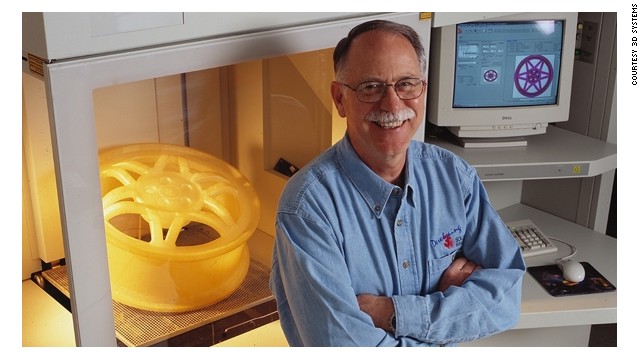
But that's the beauty of technology, isn't it? What starts as a specialized, high-cost tool for engineers slowly, surely, becomes more accessible. Over decades, patents expired, new materials emerged, and clever engineers made them smaller, faster, and way more affordable. Now, you can snag a decent 3D printer for a few hundred bucks and print anything from custom cookie cutters to replacement parts for your dishwasher.
Why This Is Just Plain Fun!
Thinking about the invention of the 3D printer is awesome because it reminds us that truly groundbreaking ideas often come from surprisingly humble beginnings. It wasn't about building starships at first; it was about making plastic prototypes a bit quicker! It shows the incredible power of human ingenuity – seeing a problem and dreaming up an entirely new way to solve it. It’s like a mad scientist moment, but instead of zapping a monster to life, they zapped a wobbly plastic thing into existence. And that’s pretty darn cool!
So, the next time you see a 3D printer doing its thing, give a little nod to Chuck Hull and all the other pioneers who dared to dream in layers. They kicked off a revolution that's still unfolding, constantly pushing the boundaries of what we can create. From those clunky, expensive 1980s machines to the slick desktop units of today, the journey of the 3D printer is a fantastic tale of innovation, persistence, and a whole lot of additive magic!
![The first 3D printer invented by Charles (Chuck) Hull [4]. | Download](https://www.researchgate.net/profile/Mehmet-Sahin-82/publication/362952258/figure/fig1/AS:11431281099310867@1669249661919/The-first-3D-printer-invented-by-Charles-Chuck-Hull-4.png)