
When Is Deer Hunting Season In New York State

Okay, so you're thinking about maybe, possibly, venturing into the woods of New York State with the hopes of bagging a deer? Excellent! Welcome to a time-honored tradition filled with crisp air, stunning scenery, and the occasional close encounter with a squirrel who thinks you're there to feed him.
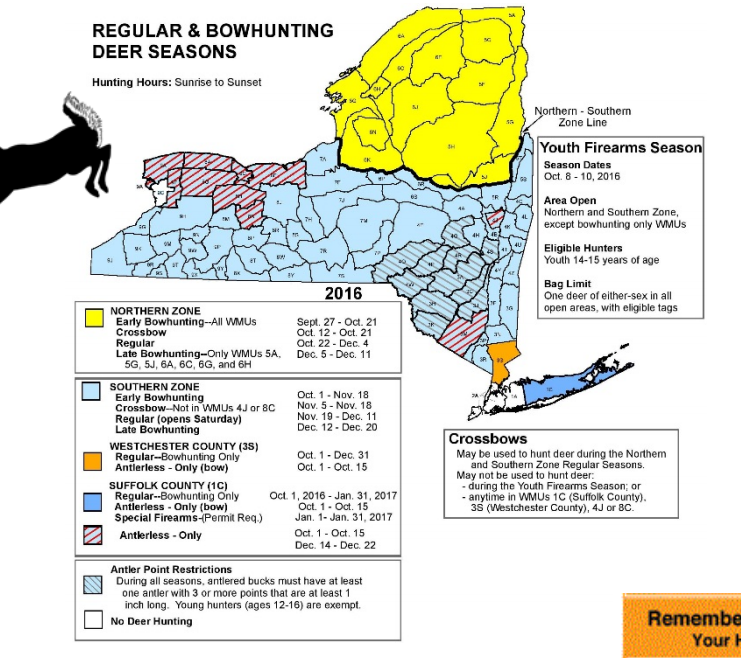
But before you picture yourself draped in camouflage, worthy of a runway at a "Hunter Chic" fashion show, there's a crucial question: When exactly is deer hunting season in New York?
The Big Picture: It's Complicated (But We'll Simplify!)
Let's be honest, figuring out New York's deer hunting seasons can feel like trying to understand the plot of a soap opera you missed the first ten seasons of. There are zones, dates, weapons… It's a lot.
Must Read
The New York State Department of Environmental Conservation (DEC) is your go-to source for the official, nitty-gritty details. They're the folks who set all the rules, so consulting their website is like asking the all-knowing oracle. We'll give you the highlights, though, so you don't get completely lost in the bureaucratic wilderness.
The Season's Key Players
First, understand that deer hunting isn't just one big free-for-all. It's broken down into segments, each with its own rules and regulations. Think of it as chapters in a deer-hunting novel, each with its own exciting plot twists. What are the plot twists, you might ask?
We have the Early Season, the Regular Season, and the Late Season. Oh, and don't forget about the archery and muzzleloader seasons – they have their own quirks! Each season has a specific weapon that can be used.
These seasons are primarily determined by Wildlife Management Units or WMUs, which are designated areas within New York State that are managed for their deer population.
Early Seasons: Archery and Muzzleloader Adventures
If you're itching to get out there with a bow and arrow, or perhaps a classic muzzleloader, you're in luck! The early seasons generally kick off in late September or early October in many WMUs.

This is where things get really interesting. Imagine yourself, silent as a ninja (or at least trying to be), drawing back your bow as a magnificent buck wanders into view. Or perhaps you're carefully loading your muzzleloader, feeling the weight of history in your hands. It's all very cinematic, until a rogue leaf crunches under your boot and sends the deer bounding away. Then it’s just hilarious.
Remember to check the DEC website for the specific dates in your desired WMU. Don't just assume! Assuming is like going into the woods without a map – you might end up in New Jersey.
Regular Season: The Main Event!
This is the big one. The Regular Season, often starting in mid-November, is when most hunters take to the woods with rifles and shotguns. It's the classic image of deer hunting that comes to mind for many.
Think crisp autumn air, leaves crunching underfoot, and the camaraderie of fellow hunters sharing stories (and maybe a thermos of hot cocoa) around a crackling campfire. The Regular Season can be a bit more crowded but offers an ample opportunity to harvest a deer.
The exact start and end dates of the Regular Season depend on the WMU, so, yes, you guessed it, check the DEC website. Seriously, bookmark that page!
Late Season: For the Dedicated (and Slightly Crazy)
For those who aren't afraid of a little cold, the Late Season, which generally takes place in December, is the ultimate test of endurance. Think snow-covered landscapes, frozen toes, and the satisfaction of outsmarting a deer that's already survived the earlier seasons.
Hunting in the Late Season requires extra layers of clothing, a healthy dose of optimism, and the ability to laugh at yourself when you inevitably slip and fall on a patch of ice. Remember, safety is key. Frostbite is not a fashion statement.
In some WMUs, the Late Season offers opportunities for antlerless deer harvest, which helps manage deer populations. Again, the DEC website is your friend here.
Weapon of Choice: Matching Your Tools to the Time
Each season has its allowed weapons. The Early Season favors archery and muzzleloaders, while the Regular Season opens the door to rifles and shotguns in many areas.
Make sure you're using the right tool for the job. Bringing a slingshot to a rifle season is like bringing a spoon to a knife fight. Also, it's illegal. The DEC takes weapon regulations very seriously.

Know your weapon, practice with it, and be absolutely certain it's legal to use in your specific WMU during the season you're hunting. This is not the time for improvisation.
The Human Element: It's More Than Just Deer
While the pursuit of deer is the primary focus, deer hunting is about more than just the kill. It's about connecting with nature, spending time with friends and family, and appreciating the beauty of the outdoors. Plus, it's an excuse to wear camouflage and pretend you're a stealthy woodland creature. Win-win!
Many hunters find immense satisfaction in providing food for their families and contributing to wildlife management. There's a deep sense of responsibility and respect for the natural world that comes with the sport.
So, as you prepare for your deer hunting adventure in New York, remember to be safe, ethical, and respectful of the environment. And don't forget to check the DEC website for those crucial dates and regulations!
Beyond the Dates: Other Important Considerations
Knowing the deer hunting seasons is just the first step. You'll also need to consider things like licensing, tagging requirements, and safety courses. The DEC offers comprehensive information on all of these topics.

Take a hunter education course! It's not just about learning how to shoot; it's about understanding wildlife management principles, ethical hunting practices, and how to stay safe in the woods. These courses are invaluable for both new and experienced hunters.
Familiarize yourself with the hunting regulations in your chosen WMU. There may be specific restrictions on hunting hours, antler point restrictions, or the use of certain types of bait. Ignorance is not an excuse, and violating these regulations can result in fines and other penalties.
A Final Word: Respect and Responsibility
Deer hunting is a privilege, not a right. It's essential to approach the sport with respect for the animals, the land, and other hunters.
Practice ethical hunting. Take clean, responsible shots. Retrieve your deer promptly and treat the meat with care. Leave no trace of your presence in the woods.
By following these principles, you'll not only have a more enjoyable hunting experience, but you'll also contribute to the conservation of deer populations and the preservation of our natural resources. Happy hunting!
Remember to always check the official DEC website for the most up-to-date information on deer hunting seasons and regulations in New York State.