When Did Asc 606 Go Into Effect

Ever heard someone casually drop "ASC 606" into a conversation and felt like you needed a decoder ring? Yeah, me too. It sounds intimidating, right? But trust me, it's actually a pretty fascinating update to how companies report revenue. And figuring out when it went into effect? That's the first step to understanding the whole shebang.
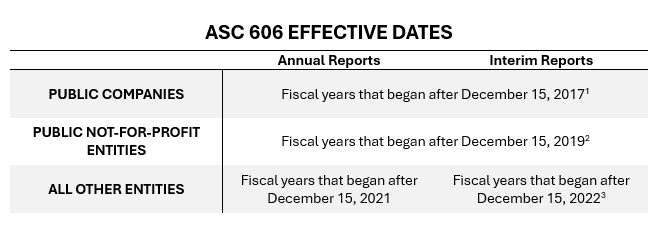
So, when did this ASC 606 thing actually become a reality? Think of it like a movie release date – you wanna know when to hit the theaters, right? Well, for most public companies, ASC 606 officially hit the big screen for reporting periods beginning after December 15, 2017. That means that generally, for these companies, 2018 was the first year they reported under the new rules. For private companies and some non-profits, the debut was a little later, reporting periods beginning after December 15, 2018, meaning calendar year 2019.
Why all the fuss about a date, anyway?
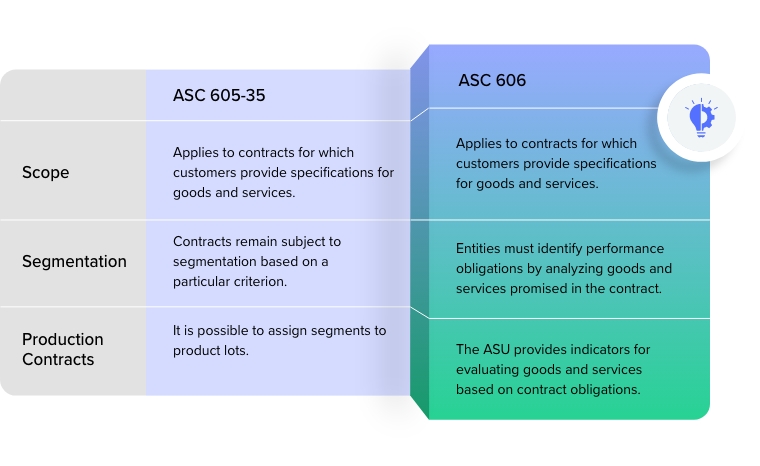
Good question! It's not just about a date. It's about a fundamental shift in how companies recognize revenue. Imagine it like switching from VHS to Blu-ray. Same movie (revenue), but way better picture (more accurate accounting!). Before ASC 606, accounting for revenue could be a bit…well, inconsistent. Different industries had different rules, leading to some pretty confusing financial statements.
Must Read
Think of it this way: imagine you're buying a house. Before ASC 606, different real estate agents might have described the income potential of that house very differently, depending on their personal style. One might have focused on potential rental income, another on future resale value. ASC 606 is like standardizing the evaluation process, so everyone's speaking the same language.
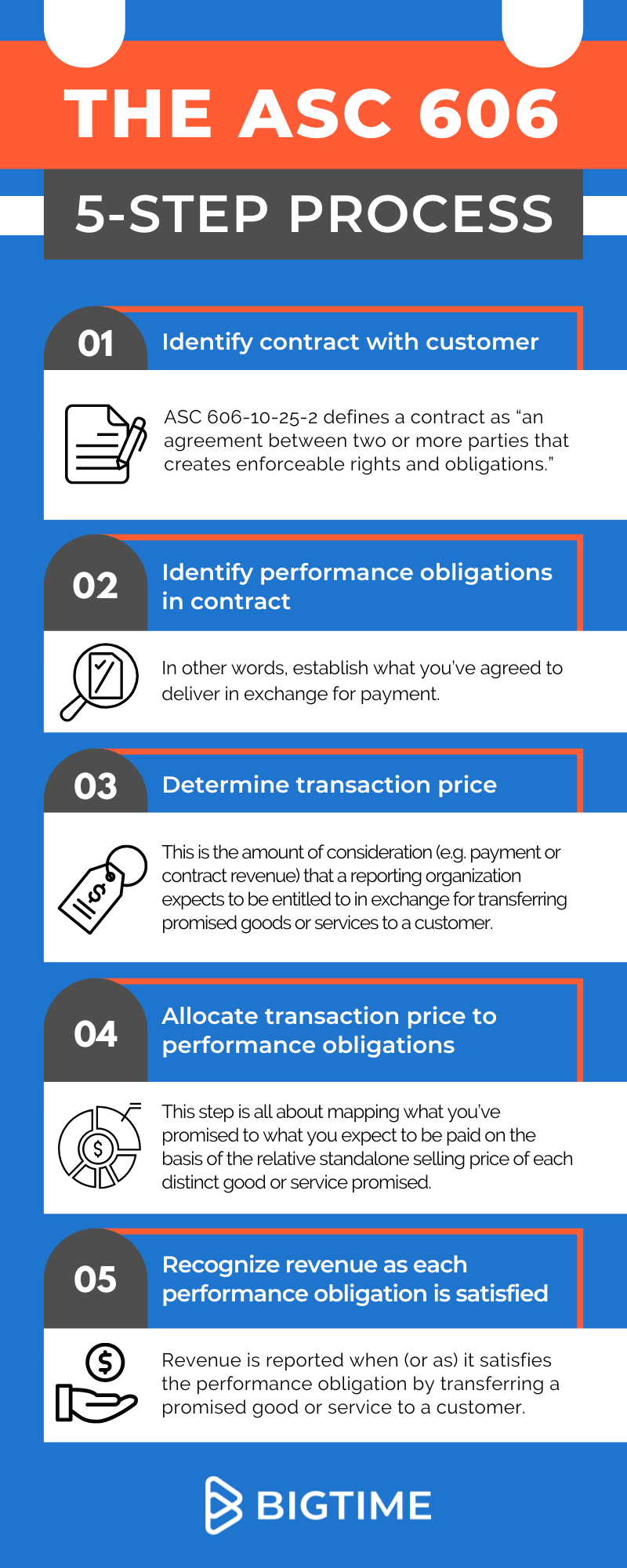
ASC 606 aims to create a single, comprehensive framework for revenue recognition. It’s about aligning revenue recognition with the economic reality of a transaction. Sounds complex? Maybe a little. But the core principle is: recognize revenue when you transfer goods or services to a customer, and when you're entitled to payment for that transfer.
Okay, so who cares about this?
Well, if you're an investor, a business owner, an accountant, or really anyone who uses financial statements to make decisions, you should care! ASC 606 impacts pretty much every industry. If you're trying to compare the financial performance of two companies, it’s crucial to know if they're both following the same rules. Imagine comparing the speed of two cars, but one is measured in miles per hour and the other in kilometers per hour. Not very helpful, right? ASC 606 is the speedometer calibration for the business world.
And even if you're not a finance whiz, understanding the basics of ASC 606 can help you better understand the financial health of companies you interact with – maybe even the company you work for! Think of it as becoming more financially literate – you'll be able to see through the jargon and understand what's really going on.

Is it still relevant today?
Absolutely! While the initial implementation might feel like a distant memory, ASC 606 is the standard operating procedure now. Companies continue to refine their processes and interpretations to ensure compliance. It’s not a "one and done" deal; it’s an ongoing process of ensuring accurate and transparent financial reporting.
The ongoing relevance is also linked to the dynamic nature of the business world. New technologies, business models, and contractual arrangements require ongoing analysis under the ASC 606 framework. The interpretation of the standard is constantly evolving.
So, what’s the takeaway?
ASC 606 went into effect for most public companies in 2018 (reporting periods beginning after December 15, 2017) and later for private companies (reporting periods beginning after December 15, 2018). It’s a big deal because it standardized how companies report revenue, making financial statements more consistent and comparable. And while it might sound intimidating, understanding the basics can empower you to make better informed decisions, whether you're investing, running a business, or simply trying to understand the financial world around you.
Think of it like learning a new language – the more you understand the vocabulary and grammar, the better you can understand the culture and the people who speak it. In this case, the "language" is financial accounting, and the "culture" is the world of business. So go forth, explore, and don't be afraid to ask questions! Understanding ASC 606 is a journey, not a destination.