What's The Difference Between Fission And Fusion
Ever wondered where the sun gets its incredible power? Or how those nuclear power plants work? The answer, in both cases, lies in the mind-boggling world of atoms, specifically, the processes of fission and fusion. These two reactions, while opposites in some ways, both involve manipulating the nucleus of an atom to release tremendous amounts of energy. And trust me, understanding the difference is more exciting than it sounds!
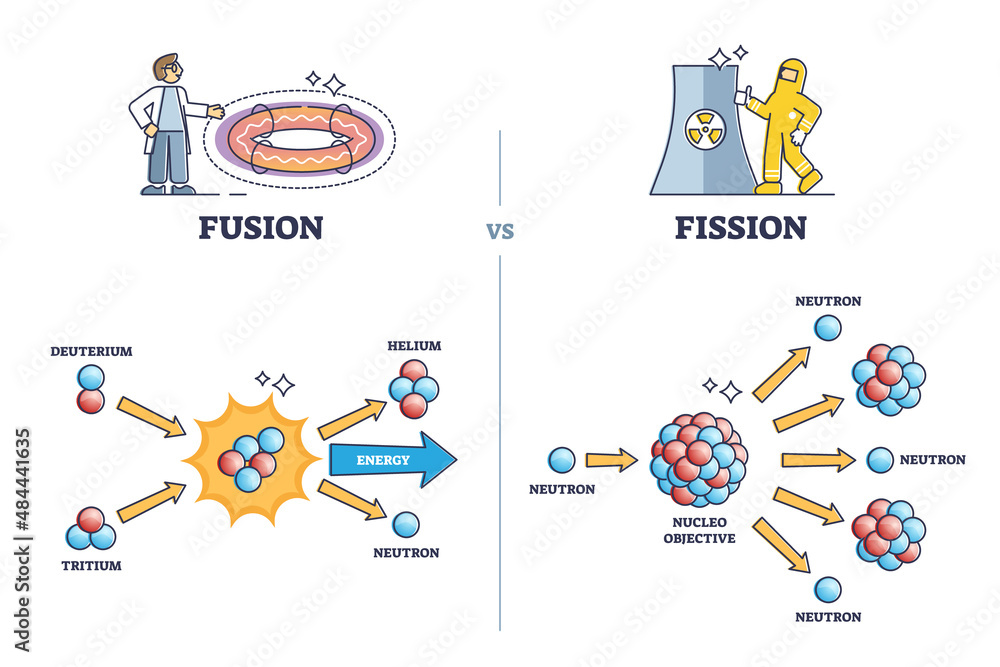
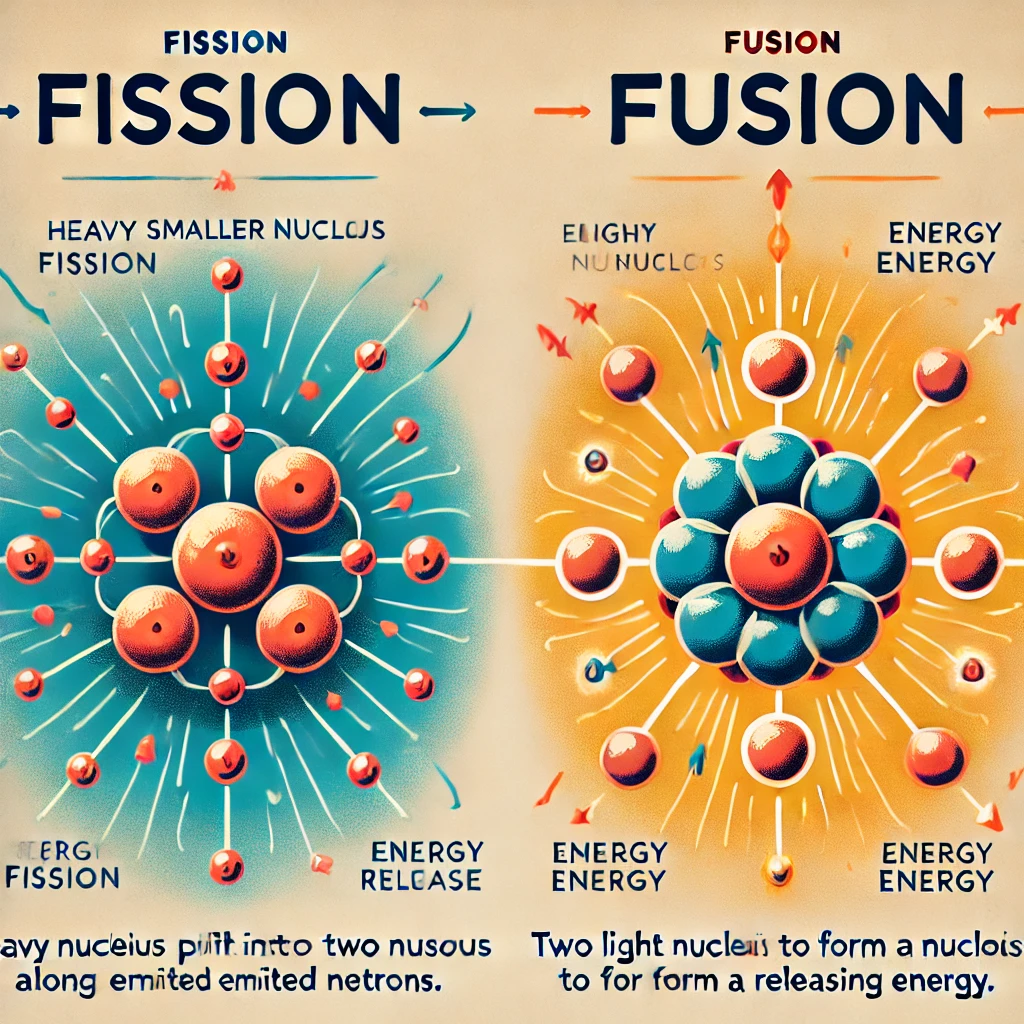
So, what's the deal? Let's start with fission. Think of it as nuclear division. Imagine taking something big, like a heavy uranium atom, and splitting it into smaller pieces using a neutron "bullet." This split releases a huge amount of energy, along with more neutrons. Those newly released neutrons can then go on to split other uranium atoms, creating a chain reaction. Boom! You've got a nuclear reaction. The purpose of fission, in most applications, is to generate heat, which is then used to create steam, which then spins turbines to generate electricity. That’s how many nuclear power plants work! The benefit? Fission produces a lot of energy from a relatively small amount of material. However, it also produces radioactive waste, which needs careful management.
Now, let's switch gears to fusion. This is where things get even more interesting. Instead of splitting atoms, fusion is about smashing them together. Think of it as the ultimate atomic merger! Specifically, lighter atoms, like hydrogen, are forced together under extreme pressure and temperature to form a heavier atom, like helium. This is what powers the sun and all the stars in the universe. The purpose of fusion is, again, to release energy, but on an even grander scale than fission. The potential benefit is enormous: fusion is far cleaner than fission, producing little to no long-lived radioactive waste, and the fuel (hydrogen) is abundant. The challenge? Replicating the conditions of the sun – that's extreme heat and pressure – here on Earth is incredibly difficult (but scientists are working hard on it!).
Must Read
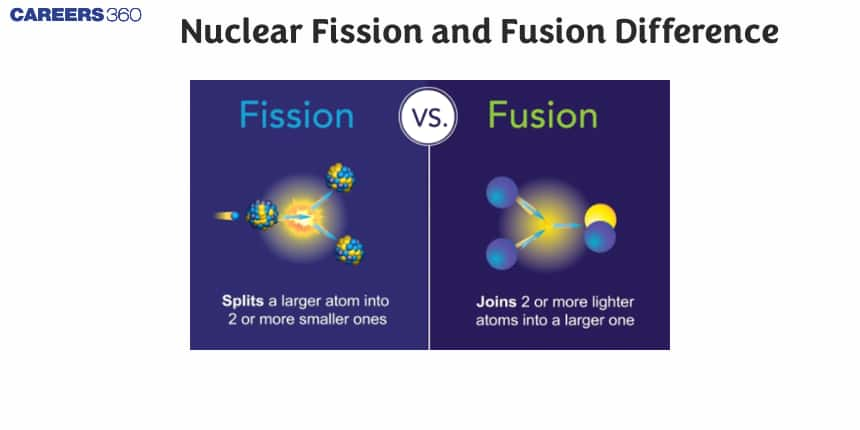
To put it simply: Fission is splitting a heavy atom; Fusion is joining light atoms. Fission is used in nuclear power plants today; Fusion is what powers the sun and is a promising, but currently unrealized, energy source for the future. Both release tremendous amounts of energy, but they do it in fundamentally different ways.
So, there you have it! Fission and fusion, two sides of the same atomic coin, both with the potential to shape our world. Now, next time you hear about nuclear energy, you'll have a much better understanding of the science behind it. And who knows, maybe you'll be part of the team that finally cracks the fusion code!