
What's The Difference Between Amps And Volts
Ever looked at a battery or an appliance and seen those mysterious "V" for Volts and "A" for Amps and thought, "What in the electric-boogaloo are those things?" Don't worry, you're not alone! Electricity can seem like magic, but understanding Volts and Amps is easier than, well, figuring out why cats are obsessed with boxes.
Imagine a Water Slide!
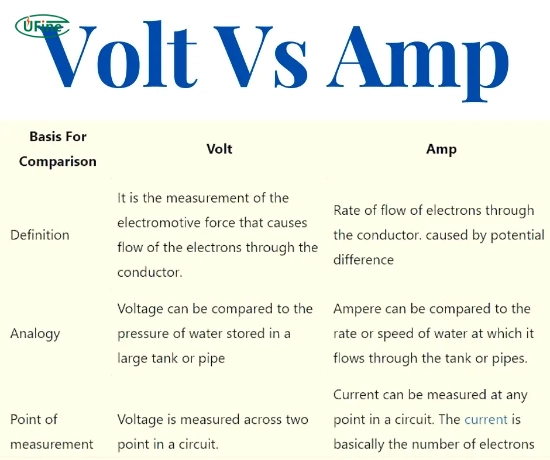
Let's ditch the wires for a minute and think about a water slide. Seriously! Volts are like the water pressure pushing you down the slide. The higher the Volts, the steeper the slide feels, and the more potential "oomph" you've got. A tiny kiddie pool slide might have low voltage – a gentle little trickle. Niagara Falls? That's some serious voltage, baby! (Okay, not really, but you get the idea!). High voltage means the electricity has a lot of potential force behind it. Think of it like the difference between a gentle tap and a full-blown shove.
Now, the Amps are like the amount of water flowing down the slide. A tiny little trickle might have high voltage, but if it's only a dribble, it's not going to do much. But a huge surge of water, even with moderate pressure, can knock you off your feet! Amps are the flow rate – the amount of electric current zooming along. Think of it like the difference between a tiny straw and a fire hose. Both might have water pressure (Volts), but the fire hose (high Amps) is going to be much more impactful.
Must Read
Voltage is the "Why," Amps are the "How Much"
So, Volts are the potential for electrical force, and Amps are the actual flow of that force. Volts are like the reason the electrons want to move, and Amps are the number of electrons actually moving. Think about it this way: you need both Volts and Amps for things to work. A device needs a certain "push" (Volts) to get the electricity flowing, and then it needs a certain "amount" (Amps) of that electricity to actually do something. A really high voltage with virtually no Amps is like yelling really loudly at a locked door – you're exerting a lot of force, but nothing's actually happening. And a ton of Amps with low voltage is like trying to push a car uphill with one hand – you've got the strength, but not the necessary force to overcome the resistance.

Real-World Examples (Hold on to Your Hats!)
Let's get back to our trusty electrical devices! A standard AA battery is 1.5 Volts. That's enough "push" to power a small toy. But a car battery is 12 Volts – a much bigger "push" needed to start a powerful engine. The Amps, on the other hand, will vary depending on what the device needs. A tiny LED light might only need a few milliAmps (thousandths of an Amp), while a power drill might need several Amps to spin that drill bit!
Think about charging your phone. The wall adapter takes the high-voltage electricity from your wall outlet (usually 120 Volts in the US) and converts it to a lower voltage (usually 5 Volts) that your phone can handle. The Amps determine how quickly your phone charges. A higher Amp charger (like a "fast charger") will pump more electricity into your phone faster.

Don't Mix 'Em Up! (Seriously!)
It’s important to use the right voltage and amperage for your devices. Too much voltage can fry your electronics (imagine hooking up a kiddie pool slide to Niagara Falls!). Too little voltage, and your device won't work properly (like trying to run a power drill on a AA battery!). And too many Amps can overwhelm a circuit and cause a fire hazard. Always follow the manufacturer's instructions! (And maybe wear safety goggles, just in case. You can never be too careful with electricity!).
So there you have it! Volts and Amps, demystified! Now you can impress your friends at your next cocktail party with your newfound electrical knowledge. Just remember: Volts are the "push," and Amps are the "flow." Now go forth and conquer the world of electricity… responsibly, of course!

