What's The Difference Between A Cyclone And Hurricane
Ever find yourself wondering what the heck folks are talking about when they mention a cyclone versus a hurricane? Are they the same beast with different names, or are we talking about completely different weather monsters? Don't worry, you're not alone! Let's untangle this swirling mystery in a way that's as easy to swallow as your morning coffee.
It's All About Location, Location, Location!
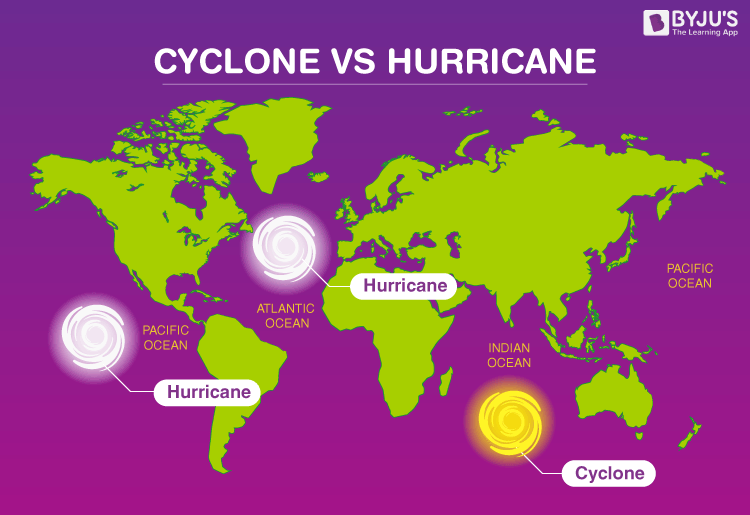
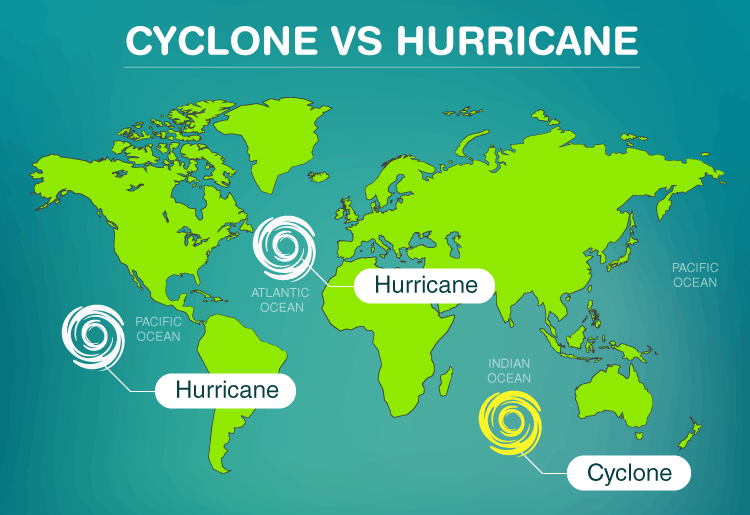
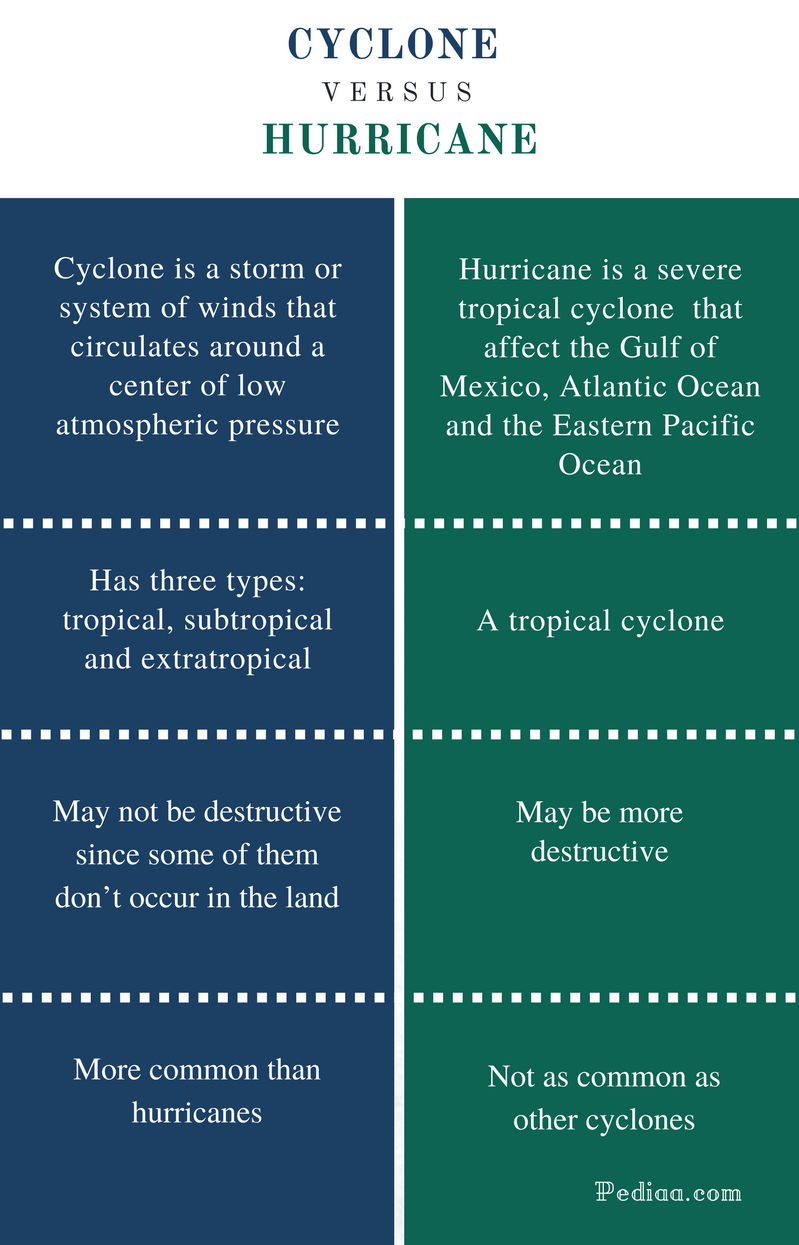
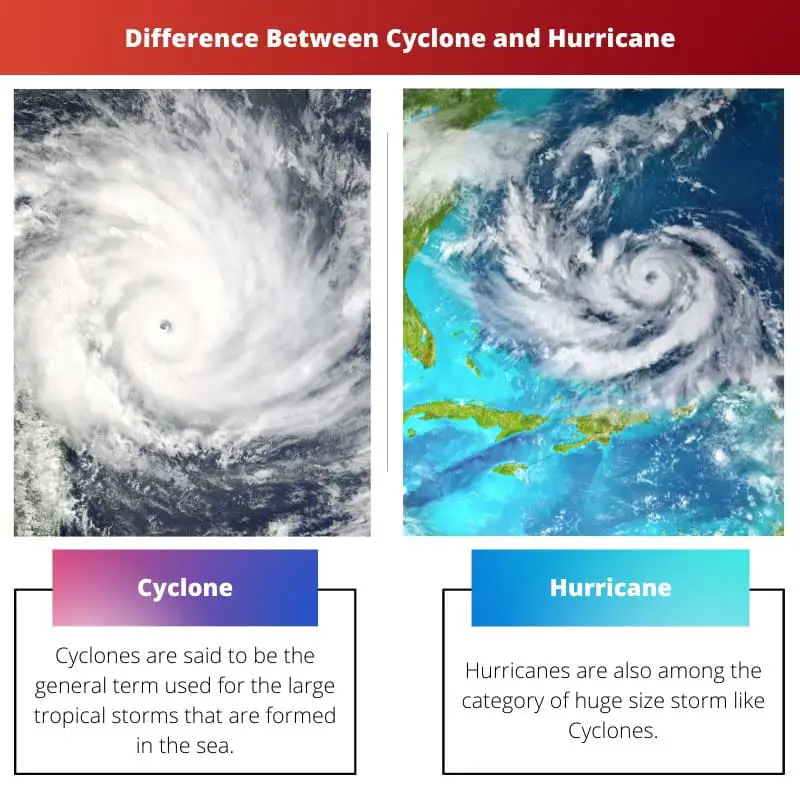
Think of it like this: "soccer" versus "football." Same sport, right? But what you call it depends on where you are in the world. It's the same with cyclones and hurricanes. They're both tropical cyclones – a rotating, organized system of clouds and thunderstorms that originates over tropical or subtropical waters. The only real difference is where they happen to be partying.
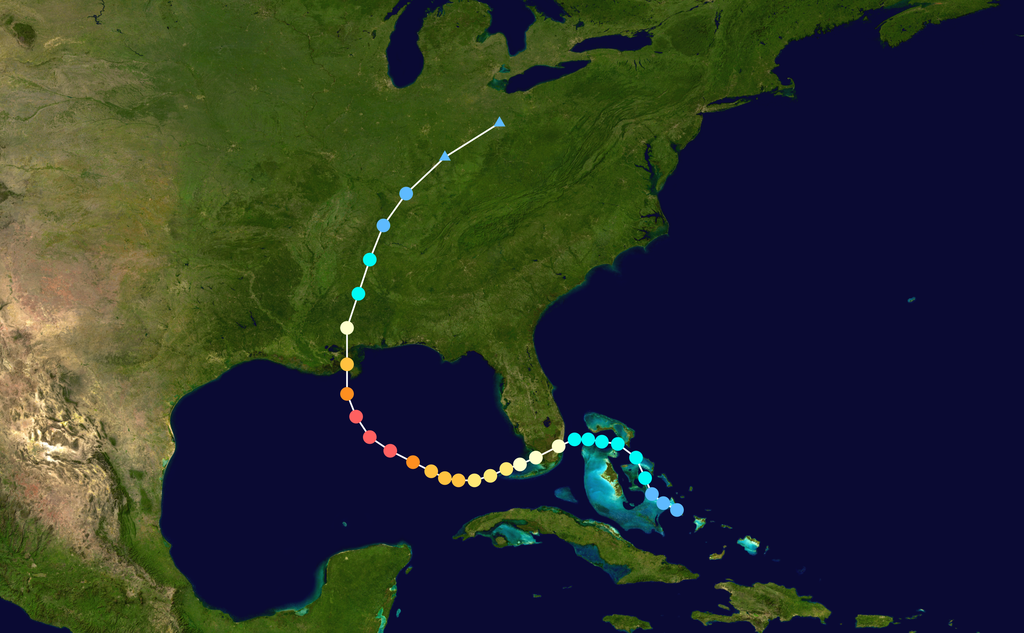
A hurricane is the name we give these swirling storms when they form over the North Atlantic Ocean and the Northeast Pacific Ocean. So, if it's hitting Florida, the Carolinas, or even Mexico's Pacific coast, you're probably dealing with a hurricane.
Must Read
A cyclone, on the other hand, is the term used in the South Pacific and Indian Ocean. Think Australia, India, Madagascar – if it's brewing there, it's a cyclone.
Imagine you’re planning a potluck. You tell your friend in America to bring "chips and dip," but your friend in England might scratch their head and ask what "chips" are. You'd have to explain, "crisps!" Different words, same delicious crunchy snack. Hurricane and cyclone are just like "chips and crisps" – different names, same type of storm.
So, Are There Any Real Differences?
Besides the name, not really! They both operate under the same physics, fueled by warm ocean waters and atmospheric conditions. They both have an "eye" – that eerily calm center – surrounded by the eyewall, which packs the strongest winds and heaviest rainfall. And they both can be devastating.
The scale used to measure their intensity can vary slightly depending on the region. In the Atlantic and Northeast Pacific, we use the Saffir-Simpson Hurricane Wind Scale, classifying hurricanes from Category 1 (least intense) to Category 5 (most intense). Other regions might use different scales, but the underlying principle is the same: to gauge the storm's potential for damage.
Why Should You Care? (Even If You Don't Live Near the Coast)
Okay, so maybe you live in a landlocked state and think, "Hurricanes and cyclones? Not my problem." But here's the thing: these storms can have far-reaching impacts.
Food prices: Think about the crops grown in coastal regions. A big storm can wipe out harvests, leading to higher prices at your local grocery store. That salad you were planning might suddenly cost a bit more!
Global economy: Major ports are often located in coastal areas. A hurricane or cyclone can shut down shipping lanes, disrupting the flow of goods and impacting businesses worldwide. Your new gadget might be delayed because of a storm thousands of miles away.
Climate change: Scientists believe that climate change is making these storms more intense and potentially more frequent. Understanding how these systems work helps us prepare for and mitigate the impacts of a changing climate, no matter where we live.
The Human Element: Ultimately, learning about these storms makes us more aware of the challenges faced by communities affected by them. It fosters empathy and encourages us to support disaster relief efforts, even from afar.
Knowledge is Power (and Peace of Mind)
Knowing the difference between a cyclone and a hurricane isn't just about winning trivia night (though, hey, bragging rights are cool!). It's about being informed, prepared, and understanding the interconnectedness of our world. So, the next time you hear about a big storm brewing, you'll know exactly what's going on and why it matters, even if you're miles away from the coast. And maybe, just maybe, you’ll feel a little more connected to the big, beautiful, and sometimes stormy world we all share.