
What's Difference Between Typhoon And Hurricane

Ever felt like the weather is playing a giant, watery game of tag, and we're all "it"? You're not entirely wrong! Sometimes this game brings us a typhoon, other times a hurricane. But what's the actual difference? Are they just show-offs with different names?
Location, Location, Location!
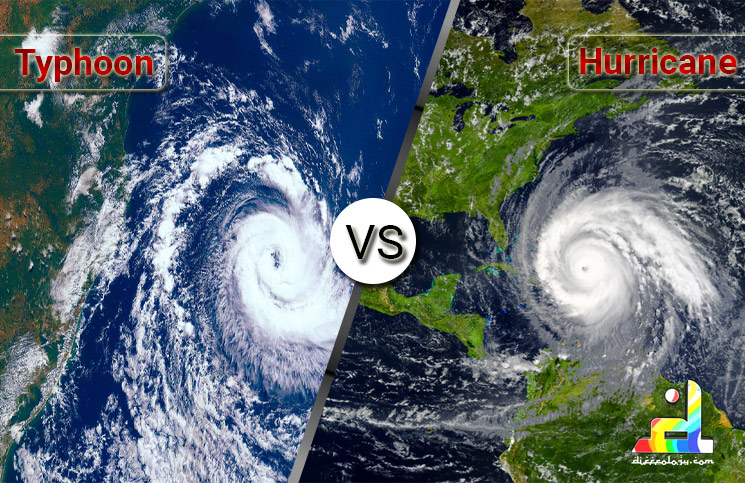
Think of it like this: hurricanes and typhoons are basically the same delicious cake. The only difference is where you're eating it! Imagine you're at a world baking championship, and the judges are spread out across the globe.
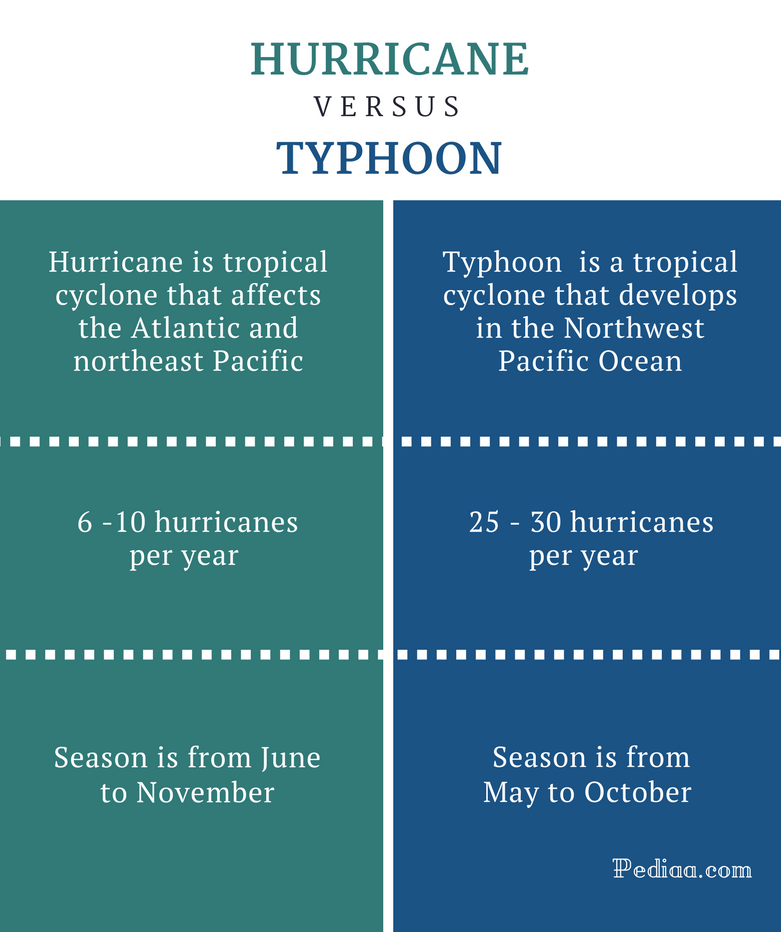
If you're enjoying your cake in the Atlantic Ocean or the northeastern Pacific Ocean, you're devouring a hurricane. That's right, from Florida to the Carolinas, and even parts of Mexico and Central America, these swirling storms go by the name hurricane.
Must Read
Now, jet across the globe to the northwestern Pacific Ocean, near Asia. This is where things get a little more tyriffic! Here, that same powerful, spiraling cake is called a typhoon.
Basically, if it's swirling menacingly near Japan, the Philippines, or China, then it's probably a typhoon. It’s all about the postal code!
Wind Speed: The Great Equalizer
Regardless of whether it’s a hurricane or a typhoon, there's one thing that binds them: sheer, unadulterated power. To even earn these dramatic names, the storm needs to hit sustained wind speeds of at least 74 miles per hour.
That's like having a constant, screaming fan aimed at you, powerful enough to relocate your garden gnomes. If a storm doesn't reach this threshold, it gets a less exciting title, like a tropical storm or tropical depression.
So, the name game is purely geographical. The wind speed determines if it gets to play in the big leagues, whether as a typhoon or a hurricane!

The Eye of the Storm: A Moment of Calm (But Don't Be Fooled!)
Both hurricanes and typhoons have a characteristic "eye" – a relatively calm center. It's like the storm took a deep breath to gather even more energy.
Imagine you’re in the middle of a chaotic dance party, and suddenly everyone pauses. It’s strangely quiet. That’s the eye. Enjoy the momentary peace, because the music is about to get cranked up to eleven!
But don't be fooled! The eye is surrounded by the eyewall, the most intense part of the storm, packed with the strongest winds and heaviest rain. Stepping into the eyewall after experiencing the eye is like going from a quiet library directly into the mosh pit at a rock concert.
Naming Conventions: Alphabetical Chaos
So, how do they come up with the names for these powerful weather systems? It's not like they draw names out of a hat (although, wouldn't that be fun?). There's an actual system!
Each region has its own pre-determined list of names. These lists rotate every few years, so you won’t see the same names popping up all the time (unless a storm is so devastating that its name is "retired" out of respect, like a veteran athlete retiring their jersey).
The naming usually follows an alphabetical order, switching between male and female names. If a season is particularly wild and they run out of names, they start using the Greek alphabet. It's basically a weather-themed version of naming your pets – but with slightly higher stakes!
Measuring the Mayhem: The Saffir-Simpson Scale
Once a storm earns the title of hurricane (or typhoon, remember, same difference!), it gets assessed using the Saffir-Simpson Hurricane Wind Scale. This scale, numbered 1 to 5, rates the storm's intensity based on its sustained wind speeds.
A Category 1 hurricane is like a grumpy teenager – annoying and disruptive. A Category 5 hurricane is like a mythological beast, capable of causing catastrophic damage.
These categories help officials and the public understand the potential impact of a storm and prepare accordingly. It's like having a rating system for your personal level of chaos – "Today, I'm feeling like a Category 3!"
The Real Deal: Respect the Power
Humor aside, both hurricanes and typhoons are serious business. They can bring torrential rain, devastating storm surges, and destructive winds.
It's important to pay attention to weather warnings and advisories, and to follow the instructions of local authorities. These storms are forces of nature, and respecting their power is key to staying safe.
So, next time you hear about a hurricane or a typhoon, remember they’re basically the same thing, just wearing different geographical hats! Stay informed, stay prepared, and stay safe!

Storm Surge: The Sneaky Culprit
Often, the most dangerous aspect of these storms isn't just the wind itself, but the storm surge. This is when the storm's winds push seawater inland, causing massive flooding.
Imagine trying to empty a bathtub with a spoon – that's a gentle breeze against the ocean. Now imagine a hundred elephants blowing as hard as they can all at once. That's a storm surge!
This surge can inundate coastal areas, causing significant property damage and posing a serious threat to life. So, when preparing for a hurricane or typhoon, pay close attention to storm surge warnings and evacuation orders.
Why Do They Spin? The Coriolis Effect
Ever wondered why hurricanes and typhoons spin? It's all thanks to something called the Coriolis effect. This is caused by the Earth's rotation.
Imagine trying to throw a ball straight on a spinning merry-go-round. The ball will appear to curve to the side. That’s similar to what happens to the winds in a hurricane or typhoon!
In the Northern Hemisphere, these storms spin counter-clockwise, while in the Southern Hemisphere, they spin clockwise. Mother Nature is a complicated but fascinating choreographer!
Climate Change and Storms: A Worrying Trend
Scientists are increasingly concerned about the impact of climate change on hurricanes and typhoons. Warmer ocean temperatures provide more fuel for these storms, potentially leading to more intense and frequent events.
It's like adding extra spices to a recipe – it might taste good at first, but eventually it's going to be overwhelming. While it's impossible to attribute any single storm directly to climate change, the overall trend is worrying.
Reducing our carbon footprint and investing in climate resilience measures are crucial steps in mitigating the potential impacts of these powerful storms. We need to be good stewards of our planet if we want to continue living comfortably on it!
Beyond the Science: Respect and Resilience
At the end of the day, hurricanes and typhoons are powerful forces of nature that demand our respect. While we can't control them, we can prepare for them and build resilient communities.
Being informed, having a plan, and working together are essential for weathering these storms and emerging stronger on the other side. It's not about being afraid, it's about being prepared.
So, let's embrace our inner weather nerds, stay safe, and remember that even the most chaotic storms eventually pass. After all, sunshine always follows the rain... even after a hurricane or a typhoon!