What Way Should Ceiling Fans Turn In The Winter
Ever feel a chill in the air, even with the heating cranked up? You might be overlooking a simple solution swirling right above your head: your ceiling fan! It's easy to think of ceiling fans as just summer appliances, blasting us with cool breezes. But did you know that they can actually help warm your home in the winter months? It all comes down to the direction they're spinning.
The key lies in understanding how heat behaves. Hot air rises, naturally accumulating near the ceiling. This leaves the floor level, where we actually live, feeling significantly colder. A ceiling fan, when used correctly, can gently redistribute this trapped heat, making your room feel warmer and more comfortable.
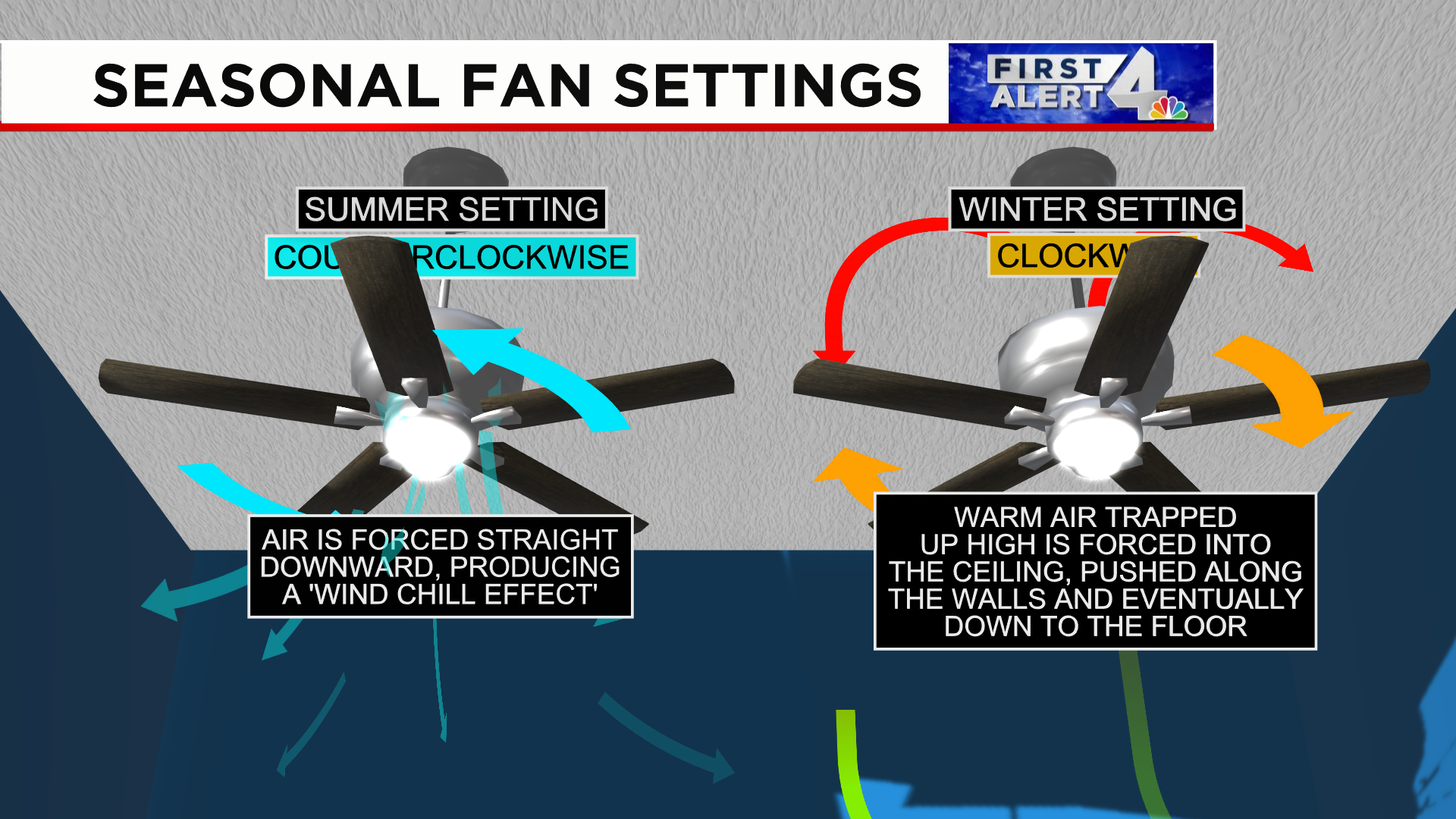
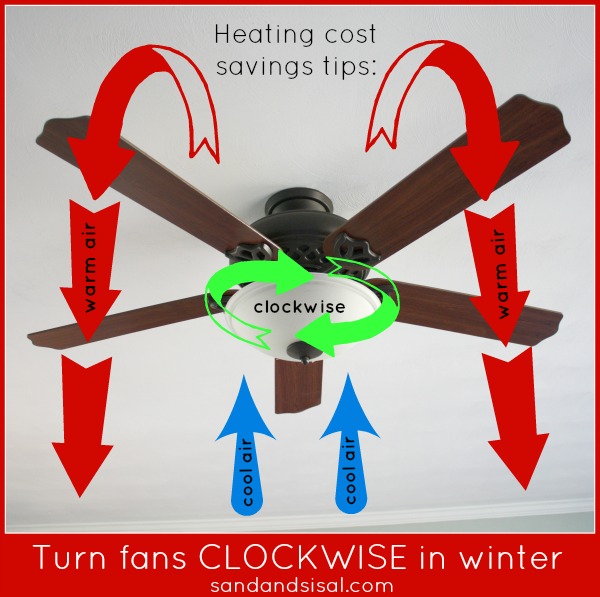
But here's the catch: it’s not about creating a strong breeze like in the summer. Instead, you want the fan to turn in a direction that draws the cooler air upwards, pushing the warmer air down along the walls. This gentle circulation mixes the air layers without creating an uncomfortable draft. Think of it like a subtle shuffle of the air molecules, bringing the cozy warmth down where you need it most.
Must Read
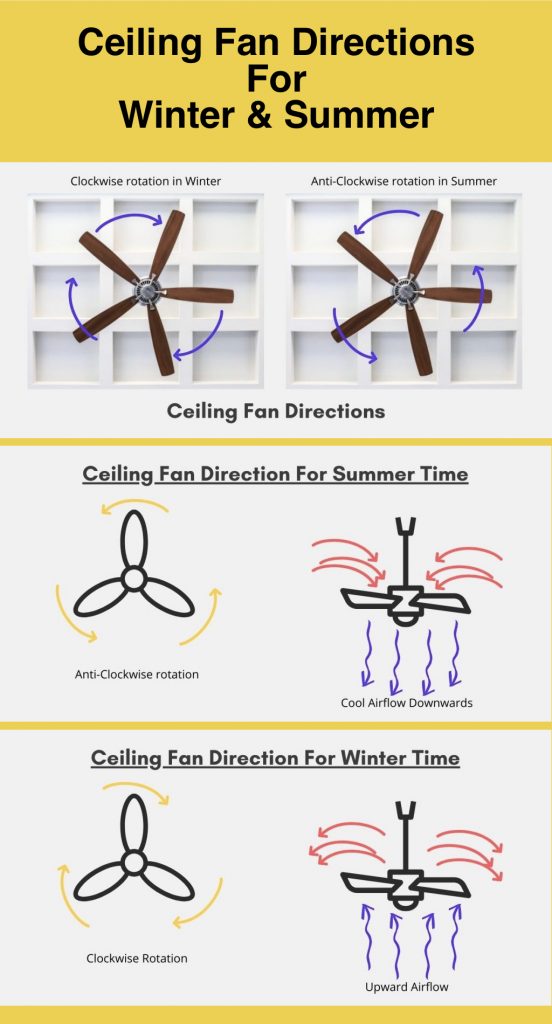
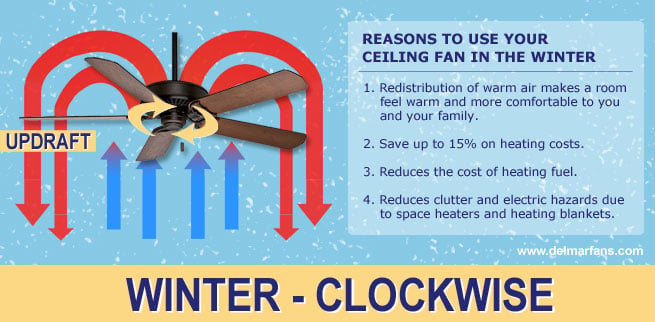
So, which way should your fan turn? In the winter, you want your ceiling fan to rotate clockwise when viewed from below. Most ceiling fans have a small switch on the motor housing that allows you to reverse the direction. Check your fan's manual for specific instructions, but generally, switching it will change the rotation direction. When operating in this reverse setting you typically want the fan speed set to low. You don’t need a gale force wind, just a gentle mixing of the air.
This principle of heat distribution is often used in educational settings to illustrate concepts in physics and thermodynamics. Students can learn about convection, air pressure, and energy transfer by observing how a ceiling fan impacts the temperature gradient in a room. Even in daily life, understanding this simple concept can translate to real savings on your heating bill. By more effectively utilizing the heat your furnace is already producing, you can often lower your thermostat setting and still feel just as comfortable.
Want to explore this further? Try this: on a cold day, stand on a chair near your ceiling. Do you feel warmer air near the ceiling? Then, switch your fan to its winter setting (clockwise, low speed). After an hour or so, check the temperature at floor level again. You should notice a slight, but perceptible, increase in warmth. You could even use a thermometer to measure the difference more accurately!
Another tip: if you have high ceilings, the benefits of using a ceiling fan in winter are even more pronounced, as there's a greater volume of warm air trapped at the top of the room. So, before you reach for the thermostat, give your ceiling fan a spin in the right direction. It might just be the simplest and most effective way to beat the winter chill!