What Type Of Strain Is Present In This Structure

Have you ever wondered why bridges stand strong, airplanes soar, or even why your favorite chair doesn't collapse under your weight? It's all about understanding the invisible forces at play within these structures – forces we call strain! Figuring out what type of strain is present isn't just for engineers; it's a fascinating peek into the physics that shapes our everyday world. It's like being a detective, uncovering the secrets hidden in plain sight. And who doesn't love a good mystery?
Why is understanding strain important, you ask? Well, for beginners, it's about building a foundation for understanding how things work. Knowing that a rope experiences tension when you pull it or that a diving board bends due to compression is a great first step. For families, it can turn everyday observations into fun learning experiences. Building a tower out of blocks? Talk about how the bottom blocks are under more compressive strain. For hobbyists, like woodworkers or model builders, understanding strain helps you choose the right materials and construction techniques for a more durable and impressive final product.
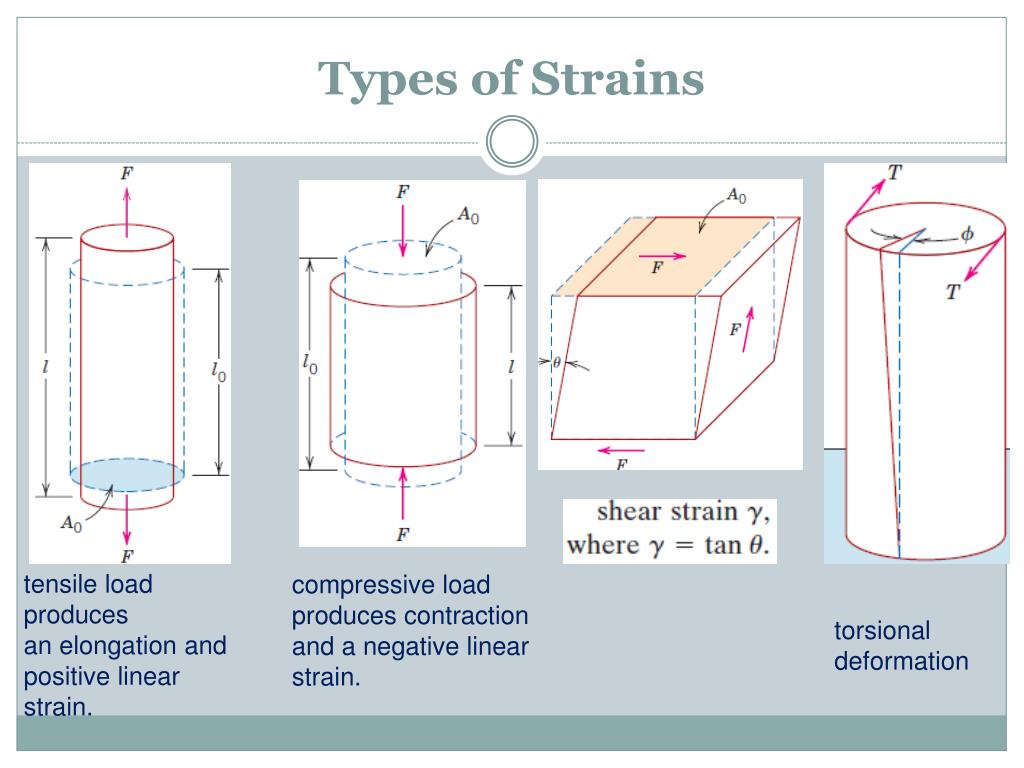
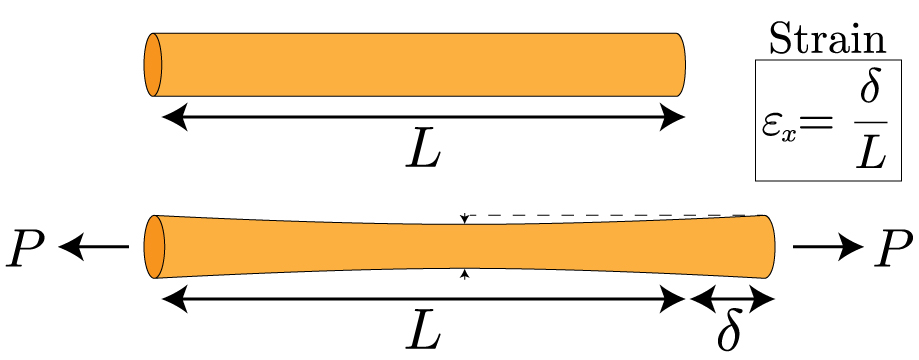
So, what types of strain are we talking about? The main types are: Tensile strain, which happens when something is stretched or pulled, like a rubber band. Compressive strain, which occurs when something is squeezed or pushed together, like a stack of books. Shear strain, which arises when forces act parallel to a surface, causing it to deform, think of pushing a deck of cards from the side, making them slide past each other. And finally, there’s torsional strain, which is caused by twisting, like tightening a screw.
Must Read
Examples are everywhere! A bridge experiences a complex combination of all these strains. The cables are under tensile strain, the pillars under compressive strain, and the roadway might experience shear and torsional strain depending on the load and design. Think about a tree branch bending in the wind. The top of the branch experiences tensile strain as it's stretched, while the bottom experiences compressive strain as it's squeezed. Even your bones experience strain when you run or jump! They’re designed to withstand compressive strain, but too much force can lead to a fracture.

Getting started with understanding strain is surprisingly simple. First, observe the world around you. Ask yourself, "What forces are acting on this object?" Second, try to visualize how those forces are deforming the object, even if you can't see it directly. Third, experiment with simple materials. Stretch a rubber band, squeeze a sponge, or twist a piece of wire. Pay attention to how the material feels and changes shape. Online simulations and educational videos are also fantastic resources.
Understanding strain may sound complicated, but it's really about developing a keen eye for the forces that shape our world. It's a skill that can enhance your appreciation for engineering, design, and even nature itself. So, go ahead, start exploring the strains around you – you might be surprised at what you discover. The knowledge not only proves useful but offers a unique lens through which you can observe and understand the structures around you, turning everyday objects into sources of wonder and insight.