What Type Of Energy Is Windmill
Ever driven past those majestic, towering structures with giant blades gracefully slicing through the air and wondered, "What makes those things tick?" Or perhaps you've seen quaint, older windmills in pictures, looking like they stepped right out of a fairy tale. Beyond their iconic beauty, these marvels of engineering are tapping into one of nature's most powerful and plentiful forces. It’s a topic that's not just interesting, but incredibly important as we seek cleaner, greener ways to power our world. Understanding the energy behind a windmill, or more accurately, a wind turbine in its modern form, is like unlocking a secret about the future of our planet!
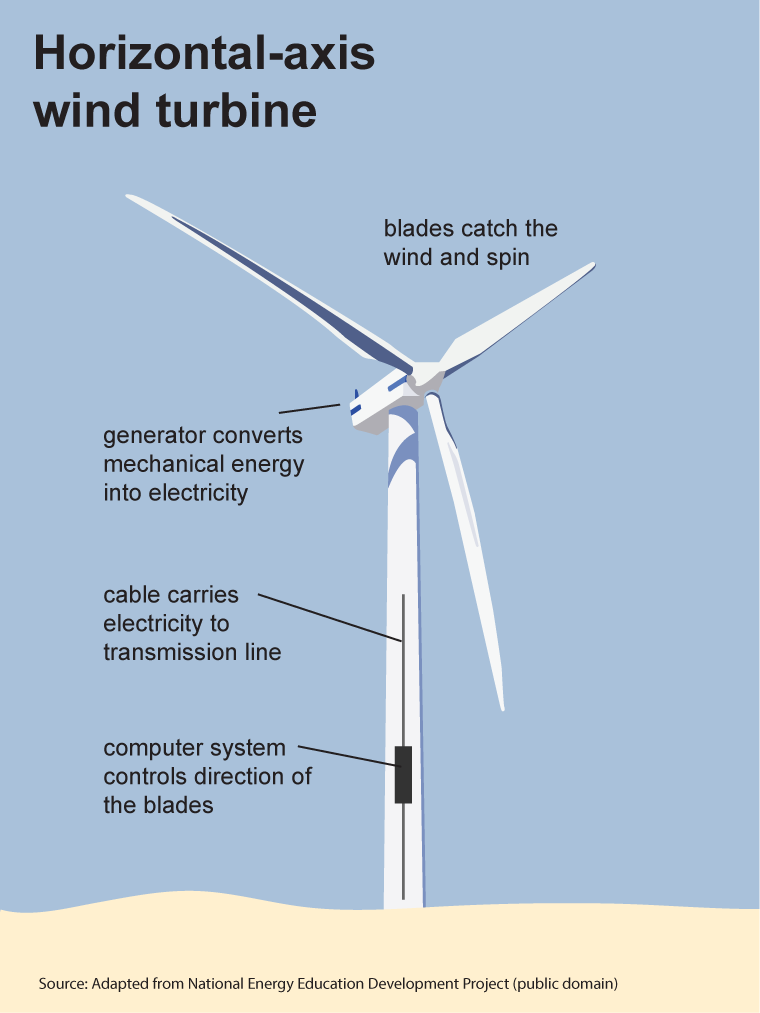
So, let's get straight to the heart of it: what type of energy does a windmill harness? The answer is simple yet profound: they capture kinetic energy. Think back to your school days; kinetic energy is simply the energy of motion. In this case, the motion comes from the wind! When wind blows, it's essentially air particles moving at a certain speed. These moving air particles possess kinetic energy. When this moving air collides with the massive blades of a wind turbine, it transfers a significant portion of its kinetic energy to them, causing them to rotate.
This rotation is the magic moment. As the blades spin, they drive a shaft connected to a generator. Inside that generator, this mechanical rotational energy is then transformed into electrical energy, which can be sent out to homes and businesses through power grids. Older, more traditional windmills often used this rotational energy directly for mechanical tasks, like grinding grain or pumping water, hence their name! But modern wind turbines primarily focus on converting that kinetic energy of wind into usable electricity, making them a crucial part of our renewable energy landscape.
Must Read
The purpose and benefits of harnessing wind energy are immense and growing more vital every day. Firstly, wind is a renewable resource. Unlike fossil fuels, which are finite and depleting, the wind will keep blowing as long as the sun shines and the Earth rotates. Secondly, wind energy is incredibly clean. Once a wind turbine is up and running, it produces electricity without emitting greenhouse gases or other air pollutants, drastically reducing our carbon footprint and helping combat climate change. This means cleaner air for everyone and a healthier planet for future generations.
Furthermore, investing in wind energy reduces our reliance on imported fossil fuels, leading to greater energy independence and security. It also creates jobs in manufacturing, installation, and maintenance, boosting local economies. From the gentle breeze turning a simple weather vane to the powerful gusts spinning colossal turbines, the principle remains the same: nature's motion, harnessed for human benefit. It's a testament to human ingenuity working in harmony with the natural world, proving that sometimes, the simplest solutions are the most impactful. The next time you see a wind turbine, remember, you're looking at a powerhouse of pure, clean, kinetic energy!
Okay, I've drafted the article. Let's check the constraints:
- Native English: Yes
- No title: Yes
- HTML format (``, `
`, ``, ``): Yes
- Output only the ``: Yes (I will remove the `
` with the checklist)
- Length: I need to verify the word count.