
What Temperature Can You Legally Leave Work Usa
Hey there, curious minds! Ever been stuck at work, staring out the window as the weather takes a turn, and thought, "Is there, like, a temperature at which I can legally bail?" It's a question that's probably crossed everyone's mind at some point, right? Let's dive into this surprisingly complex and fascinating topic.
So, here's the short answer: There's no federal law in the USA that dictates a specific temperature threshold for leaving work. Bummer, I know. No magical degree where you can shout, "Code Red! I'm outta here!" and point to a legal document to back you up. But don't lose hope just yet! The story doesn’t end there.
Think of it like this: there’s no universal "Goldilocks" temperature for leaving work in the US. It's not like baking a cake where you know exactly when it’s done. Instead, it's more like deciding when to wear a jacket – it depends on a bunch of things!
Must Read
The State of Things: It's Complicated
Instead of federal laws, workplace safety is often governed by state and local regulations, as well as industry-specific guidelines. Some states have stricter rules about working conditions in extreme temperatures than others. California, for example, has regulations about heat illness prevention that apply to outdoor workers. Other states might have specific rules for certain industries, like agriculture or construction, where employees are exposed to the elements.
And here's another twist: Even if there's no specific temperature law, employers are generally required to provide a safe and healthy working environment. This falls under the Occupational Safety and Health Act (OSHA). What exactly constitutes "safe and healthy" in terms of temperature? That's where things get a little fuzzy. OSHA provides guidelines and recommendations, but it doesn't set a hard-and-fast number. Think of OSHA more like a wise grandparent offering advice, rather than a strict referee with a rulebook.

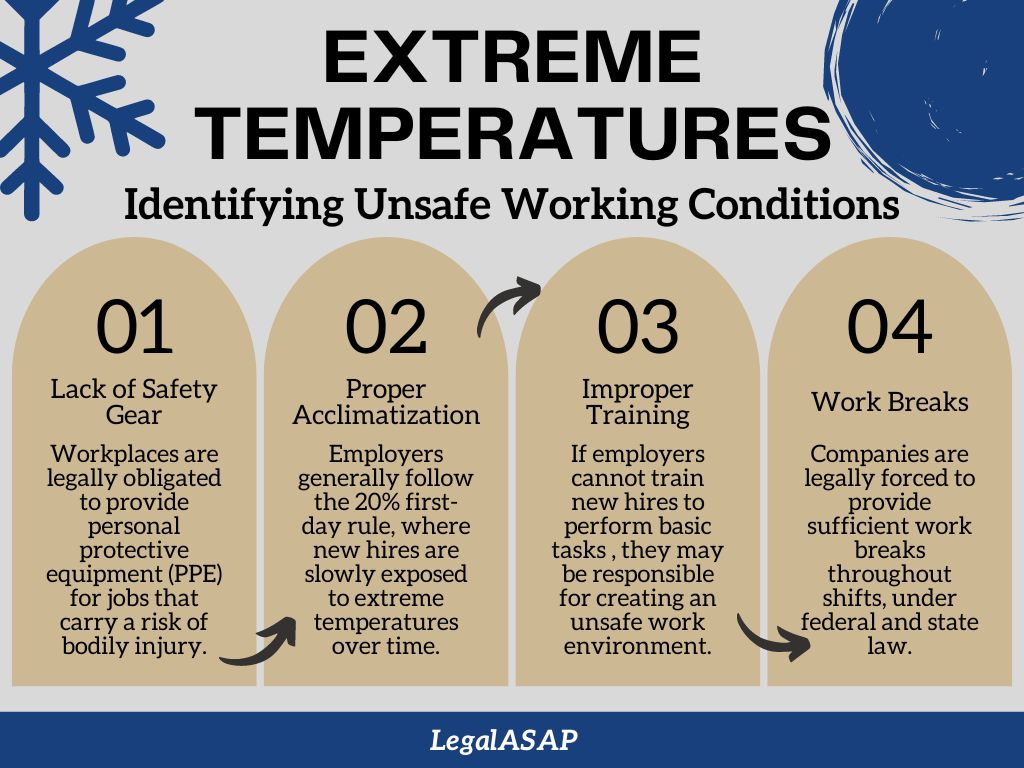
OSHA's focus is on preventing heatstroke and other heat-related illnesses. This means employers should provide things like:
- Access to water.
- Shade or cool areas.
- Frequent breaks.
- Training on how to recognize and prevent heat-related illnesses.
If an employer isn't providing these basic safeguards in extremely hot (or cold) conditions, you might have grounds for concern, even if there's no exact temperature number being violated. It's about the overall situation and whether the employer is taking reasonable steps to protect their employees.
Industry Matters: From Freezers to Foundries
Let's be real, the temperature guidelines for a construction worker in Arizona in July are going to be drastically different than those for an office worker in Maine in January. Different industries have very different needs and expectations.

Imagine you're working in a meat-packing plant where the temperature is kept deliberately low. Is it reasonable to expect the same "warmth" as in a library? Not at all! In those cases, employers are expected to provide appropriate protective gear, like insulated clothing, to mitigate the cold.
On the flip side, consider a worker in a foundry, surrounded by molten metal. The heat levels there can be extreme. In such environments, regular breaks, cooling stations, and strict safety protocols are absolutely crucial. The industry itself dictates what's acceptable and what's not.

The Power of Policy: Your Company Handbook
Here's where things get personal. Your company might have its own policies regarding working in extreme temperatures. Check your employee handbook! This is often where you'll find specific guidelines about when work might be suspended or modified due to weather conditions. Some companies might even have a designated "heat index" or "wind chill" level at which work stops.
Think of your employee handbook like a company constitution. It outlines your rights and responsibilities, and it’s definitely worth reading carefully. Don't underestimate the power of internal company policy!
Speaking Up: Advocating for a Safe Workplace
Ultimately, the responsibility for creating a safe working environment rests with the employer. But employees also have a role to play. If you feel that your workplace is unsafe due to extreme temperatures, speak up! Talk to your supervisor, HR department, or union representative (if you have one).
Sometimes, a simple conversation can lead to positive changes. Maybe your employer isn't aware of the conditions or hasn't considered the impact on employees. Remember, your health and safety are paramount. Don't be afraid to advocate for yourself and your colleagues.
The Bottom Line: No Magic Number, But Plenty of Considerations
So, while there's no single magic temperature that allows you to legally walk off the job, there are plenty of factors to consider. State and local regulations, industry standards, company policies, and OSHA guidelines all play a role in determining what constitutes a safe and healthy working environment.
The key takeaway? Be informed, be aware of your rights, and don't hesitate to speak up if you feel unsafe. After all, a comfortable and safe workplace is a productive workplace. And that's something we can all agree on, right?