
What Solar Generator Can Power A Window Ac Unit
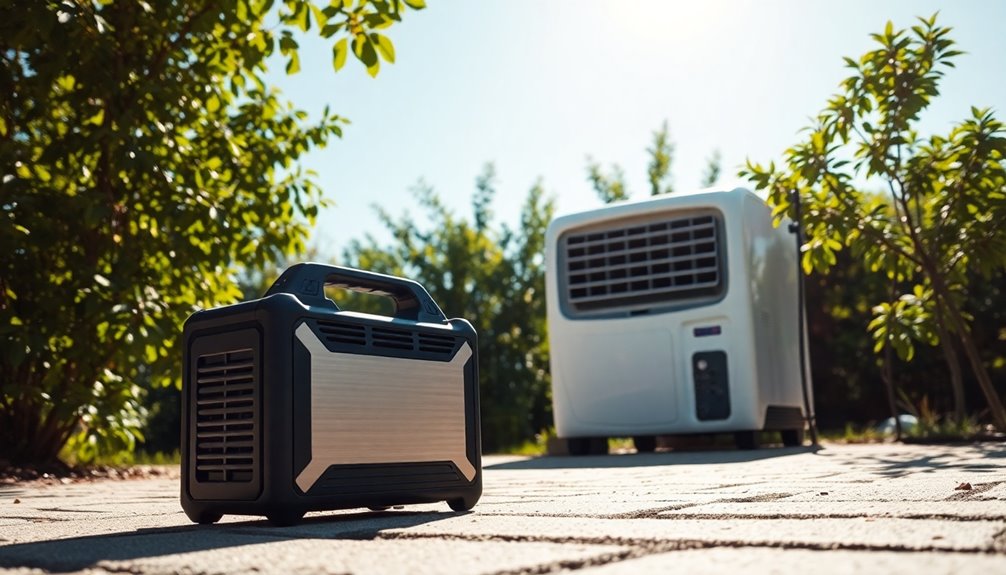
Okay, let's talk about conquering summer's scorching heat with the power of the sun! Imagine chilling in your perfectly air-conditioned room, powered entirely by sunshine. Sounds like a futuristic dream, right? Well, it's more achievable than you might think!
The Quest for Solar-Powered Cool
We're diving into the world of solar generators and window AC units. The goal? To find the perfect match that keeps you cool without sending your electricity bill into orbit. It’s like finding the Cinderella slipper of eco-friendly comfort!
Understanding the Players: Window AC Units
First, let's break down your trusty window AC unit. These cool cats come in various sizes, measured in BTUs (British Thermal Units). BTUs essentially tell you how much heat the unit can remove from a room per hour. The higher the BTU, the more powerful the cooling, and the more energy it slurps!
Must Read
Think of it like this: a tiny 5,000 BTU unit is like a gentle breeze, perfect for a small office. A beefy 12,000 BTU monster is more like a polar vortex, ideal for a larger living room but also a bigger energy hog.
Understanding the Players: Solar Generators
Now, let's meet the eco-warriors: solar generators! These aren't your grandpa's noisy, gas-guzzling generators. They're sleek, silent powerhouses that store energy from the sun using solar panels. They then dish out that stored energy to power your devices.
Solar generators are measured in watt-hours (Wh) and wattage (W). Watt-hours tell you how much total energy the generator can store. Wattage tells you how much power the generator can supply at any given moment. Think of watt-hours as the size of the gas tank, and wattage as the horsepower of the engine.
A generator with 500Wh is like a scooter – zippy but limited range. A 2000Wh generator is more like an SUV – ready for a long haul and tackling bigger loads.
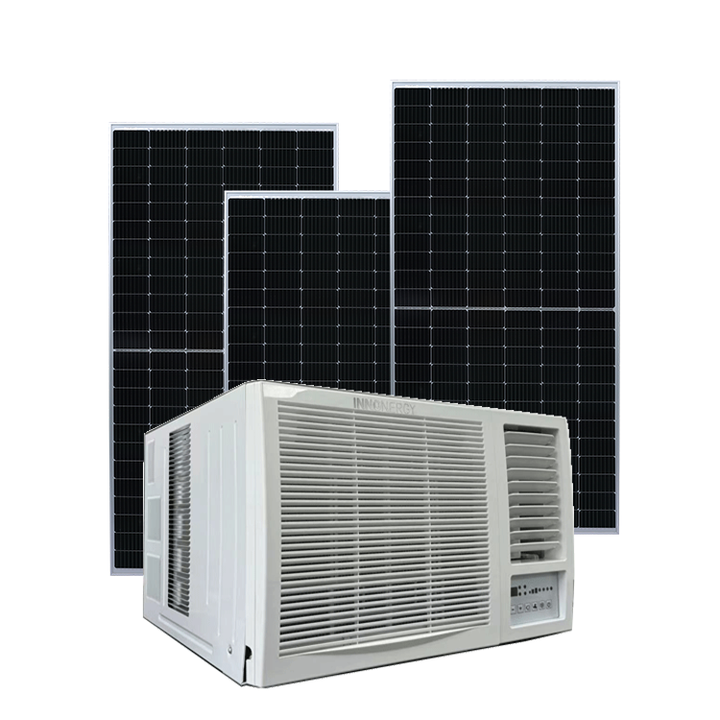
The Match Game: Finding the Right Solar Generator
Here's where the fun begins! To figure out what solar generator can power your window AC, we need to do a little math. Don't worry, it's easier than balancing your checkbook. I promise!
First, find the wattage of your AC unit. This is usually listed on the unit itself or in the user manual. Let’s say your unit is a common 5,000 BTU model, which might draw around 450 watts while running.
Next, estimate how many hours a day you'll be running the AC. Let's assume a conservative 6 hours on a hot day. Multiply the wattage by the hours: 450 watts * 6 hours = 2700 watt-hours.
This means you need a solar generator that can provide at least 2700 watt-hours of energy to run your AC for 6 hours. But here's the kicker: that's just the running wattage.
The Startup Surge: A Hidden Villain
Many appliances, including AC units, have a "startup surge." This is a brief burst of extra power they need to kick on. This surge can be 2-3 times the running wattage. So, your 450-watt AC might need a 1350-watt surge to start.
This means your solar generator needs to handle that initial surge without tripping its overload protection. You'll want a generator with a peak wattage rating significantly higher than your AC's surge requirement.
The Reality Check: Solar Panel Power
Now, here’s a crucial point. The solar generator is just the storage part. You still need solar panels to recharge it. The size of your solar panel array determines how quickly you can replenish the energy you use.
Let's say you have a 200-watt solar panel. In ideal conditions (full sun, perfect angle), it might generate 200 watt-hours of energy per hour. But real-world conditions aren't always ideal! Clouds, shading, and panel efficiency can significantly reduce output.
So, to fully recharge a 2700Wh generator with a 200W panel, you’d need at least 13.5 hours of peak sunlight. Realistically, it’ll take longer. That means you need a bigger panel or accepting that you only run the AC unit for a limited time, or recharge for multiple days.

So, What Solar Generator Do I Need?
Okay, let's put it all together. For a 5,000 BTU window AC (450 running watts, 1350 peak watts) running for 6 hours a day, you'll need a solar generator with:
- At least 2700Wh capacity (preferably more, for cloudy days or other devices).
- A peak wattage of at least 1500 watts (to handle the startup surge).
- A solar panel array of at least 400 watts (for faster recharging – more is always better!).
This is a minimum recommendation. Consider a larger generator and more solar panels for added flexibility and peace of mind.
Real-World Scenarios and Examples
Let's look at some hypothetical situations to drive this home. Imagine you're using a popular portable power station. The Jackery 1000. It's a great option! It boasts 1002Wh capacity and a 2000W peak output.
This could theoretically run our 5,000 BTU AC unit for about 2 hours and 15 minutes (1002Wh / 450W = 2.23 hours). But that's without any energy loss, which is never true. And you'd need more panels to recharge than Jackery provides.

Or consider the Bluetti AC200P. This beast packs a 2000Wh battery and a 2000W inverter. It could run the same AC unit for roughly 4.4 hours. Again, the solar panel input and real-world conditions will dictate actual runtime.
Beyond the Numbers: Other Considerations
Don't forget these crucial factors before you open your wallet!
- Efficiency: Solar generators and AC units aren't 100% efficient. Some energy is always lost in the conversion process.
- Weather: Cloudy days will drastically reduce solar panel output, impacting recharge times.
- Location: Your geographical location and the amount of sunlight you receive will significantly affect solar panel performance.
- Panel Placement: The angle and orientation of your solar panels are critical for maximizing energy capture.
The Verdict: Is Solar-Powered AC Realistic?
The short answer? Absolutely! But it requires careful planning, realistic expectations, and a bit of investment. It's not as simple as slapping a solar panel on your roof and plugging in your AC.
However, the benefits are enormous: reduced electricity bills, environmental responsibility, and the satisfaction of knowing you're cooling your home with the power of the sun!
So, ditch the guilt of blasting the AC. Embrace the sun, and get ready to chill! Just remember to do your homework and size your system appropriately. After all, a little planning can lead to a whole lot of cool, eco-friendly comfort.