
What Size Of Wire For 50 Amp

Okay, picture this: You’ve just gotten your hands on some shiny new power tool, an EV charger for your sweet ride, or maybe you’re finally setting up that dream workshop with a beast of a welder. You plug it in, brimming with anticipation, and then… thunk. The breaker trips. Or worse, you smell something vaguely toasty, and it’s definitely not dinner.
Sound familiar? We’ve all been there, pushing the limits of what our existing wiring can handle. It’s a classic DIY lesson, often learned the hard (and sometimes slightly smoky) way. And it usually boils down to one crucial, often overlooked, detail: the size of your wire.
When you’re talking about something drawing a hefty 50 amps, you're not messing around with lamp cords anymore. This is serious juice, and getting the wire size wrong isn't just an inconvenience; it can be downright dangerous. Think melting insulation, potential fires, and a whole lot of head-scratching when things just aren't working right. So, let's untangle this wire sizing mystery, shall we?
Must Read
The Big Question: What Size Wire for 50 Amps?
Alright, cut to the chase. For most standard residential applications, when you're dealing with a 50-amp circuit, you're typically looking at:
- 6 AWG copper wire
- 4 AWG aluminum wire
Yes, you read that right. The number is smaller for copper. And no, that's not a typo! In the wonderful world of American Wire Gauge (AWG), a smaller number means a thicker wire. It's a bit counterintuitive, I know, but you’ll get used to it. Think of it like a golf score – lower is better (or in this case, bigger!).
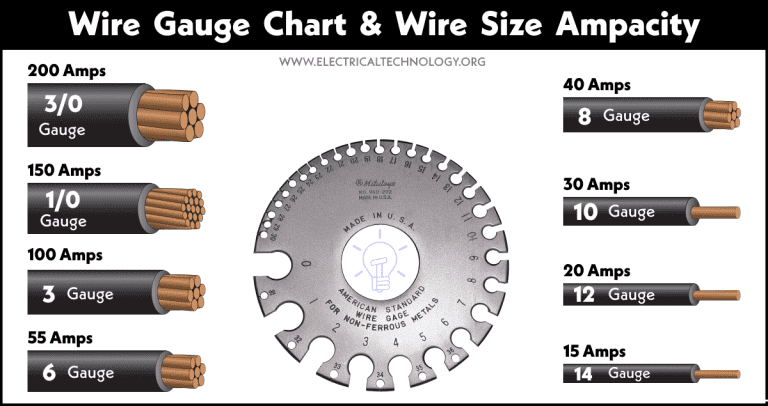
Why the difference between copper and aluminum, you ask? Good question! Copper is a better conductor than aluminum. That means for the same amount of electricity (amps), copper can be a slightly thinner wire. Aluminum is often cheaper and lighter, but it needs to be thicker to carry the same current safely. Plus, installing aluminum wiring requires a bit more care and specific connectors, so if you're not sure, copper is often the safer and more common choice for DIYers.
But Wait, There's More! (Because Electricity Never Makes It Easy)
While 6 AWG copper or 4 AWG aluminum is your general starting point, there are some very important factors that can, and often do, change things. Ignoring these is like trying to bake a cake without flour – it just won't work out!
1. Distance, Distance, Distance! (Hello, Voltage Drop)
This is a biggie. Are you running that 50-amp circuit across your garage, or are you trying to power an RV hookup 100 feet down the driveway? The longer the run, the more resistance the wire encounters, and the more "voltage drop" you'll experience. Think of it like water pressure in a long hose: the further it goes, the weaker it gets. If your voltage drops too much, your appliances won't get enough juice and might not run efficiently, or worse, could be damaged. For long runs, you'll need to go up a size (e.g., from 6 AWG to 4 AWG copper) to compensate. Don't skimp on this one!

2. Temperature Rating and Insulation Type
Wires aren't just bare copper strands; they're insulated! The type of insulation (like THHN, NM-B, etc.) affects how much heat the wire can safely handle. While the standard 6 AWG copper is rated for 55 amps at 75°C (which covers 50 amps nicely), extreme temperatures or certain installation methods might require a different approach. For most home use, Romex (NM-B) is common, but if you're in conduit, you'll use individual wires with different insulation ratings. It’s worth a quick peek at the wire's jacket for its specs.
3. Continuous vs. Non-Continuous Loads (The 80% Rule)
Is your 50-amp appliance going to be running for 3 hours or more at a time? Things like EV chargers, electric ranges, or some industrial equipment are considered "continuous loads." For these, the electrical code usually requires you to size your circuit to 125% of the continuous load. So, for a true 50-amp continuous load, you might technically need a circuit capable of 62.5 amps (50 * 1.25), which means going up a wire size again. Usually, though, a 50-amp breaker is paired with wire sized for 50 amps for a "nominal" 50-amp load (which might be 40 amps continuous with a 10 amp non-continuous load).

4. Your Local Electrical Code! (Seriously, Folks)
I cannot stress this enough: always consult your local electrical codes! The National Electrical Code (NEC) sets the baseline, but local jurisdictions can (and often do) have their own amendments and requirements. What’s perfectly fine in one town might be a no-go in another. A quick call to your local building department can save you a world of headaches (and potential fines, yikes!).
When in Doubt, Don't DIY
Look, I love a good DIY project as much as the next person. There's a certain satisfaction in getting something done yourself. But when it comes to high-amperage electrical work, if you're not 100% confident in what you're doing, please, please call a qualified electrician. They know the codes, they have the right tools, and they understand the nuances that an online article (even a friendly one like this!) can only scratch the surface of. Your safety, and the safety of your home, is absolutely paramount.
So, for your 50-amp needs, remember the golden rule: 6 AWG copper or 4 AWG aluminum as your starting point. Then, consider distance, load type, and always, always check your local codes. Stay safe out there, and may your breakers remain happily untripped!
