What Size Breaker For Welder
Alright, let’s chat about something that can either be super smooth or a total headache: powering up your welder. We’ve all been there, right? You’re in the zone, maybe trying to make a killer breakfast, and suddenly – poof – the kitchen goes dark because you dared to run the toaster and the microwave at the same time. Classic. It’s like your house is giving you a stern talking-to about exceeding its hospitality limits.
Now, imagine that same scenario, but instead of a mere toaster, you’re plugging in something that drinks electricity like a thirsty teenager at a soda fountain: your welder. These beautiful metal-munching beasts are power-hungry, and getting the breaker size right is like choosing the perfect pair of shoes for a marathon – crucial for success and preventing painful blisters (or, you know, a tripped breaker every five minutes).
Why Can't I Just Plug It In Like a Lamp?
Oh, if only it were that simple! Your everyday wall outlet (the one your phone charger uses) is usually on a 15-amp or 20-amp circuit. That’s enough for your TV, your gaming console, and maybe even a small vacuum. But a welder? That’s like trying to fuel a monster truck with a coffee straw. Welders, especially those buzzing MIG and stick machines, demand a serious gulp of juice. They’re not just drawing power; they’re chugging it.
Must Read
The breaker, bless its little heart, is the bouncer for your electrical system. Its job is to say, “Whoa there, buddy, that’s enough!” if too much power tries to flow through the wires, preventing them from getting hot enough to start an impromptu fire dance. So, we need to make sure our bouncer is adequately sized for the guest list.
The Golden Rule: Check the Manual (Seriously!)
Before you even think about playing electrical detective, grab that manual your welder came with. Yes, the one you probably tossed in a drawer somewhere. It’s got the answers! Look for the section on input power requirements or circuit breaker size. There's also usually a data plate right on the welder itself, often tucked away, that will tell you its voltage and amperage draw. This is your bible, folks. Don't guess. Don't assume. Read it.

Think of it like this: trying to figure out your welder's breaker size without its manual is like trying to bake a cake without a recipe. You might end up with something vaguely edible, or you might set off the smoke alarm. Stick to the recipe!
Amps, Amps, Amps: What Your Welder Really Wants
Welders are rated by their input amperage. This is how many amps they pull from your wall when they’re working their hardest. You’ll often see numbers like 20A, 30A, 50A, or even 60A.
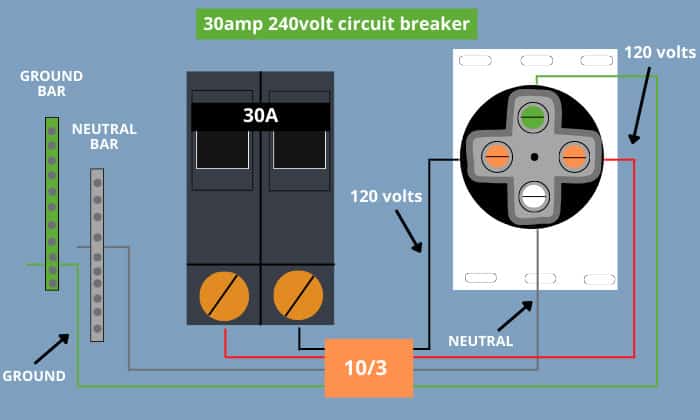
- 20-30 Amp Breaker: This is often for smaller, hobby-grade 120V welders. These are your "weekend warrior" machines, perfect for light repairs or learning the ropes. If you've got a little cracker-box MIG, this might be your sweet spot. It's like the equivalent of a heavy-duty shop vac.
- 50 Amp Breaker: Ah, the workhorse! Many popular 240V welders (think bigger MIGs, TIGs, and stick welders designed for garage use) comfortably sit here. This is a very common requirement. If you’re getting serious about your fabrication projects, you’ll likely be looking at a 50A circuit. It’s the SUV of welder circuits – versatile and capable.
- 60 Amp Breaker and Up: Now we’re talking about the big guns! If you’ve got a heavy-duty industrial welder, or something that boasts serious output, it might demand 60 amps or even more. This is less common for the average home garage, unless you’re running a serious mini-fabrication shop. This is the semi-truck of welder circuits, meant for heavy loads.
The "Just Right" Principle: Not Too Small, Not Too Big
We’re aiming for Goldilocks here.

If your breaker is too small for your welder, it’ll be like that perpetually tripped kitchen breaker. You’ll weld for a few seconds, click, lights out. Annoying, inefficient, and puts a damper on your flow. It’s trying to tell you something!
If your breaker is too big for the wire gauge feeding it, that’s where things get genuinely scary. The breaker won’t trip even when the wire is getting dangerously hot, potentially melting insulation and causing a fire. That’s why you never just slap in a bigger breaker without knowing the wire can handle it. It's like putting a massive fuse in a circuit designed for a tiny one – goodbye, safety!
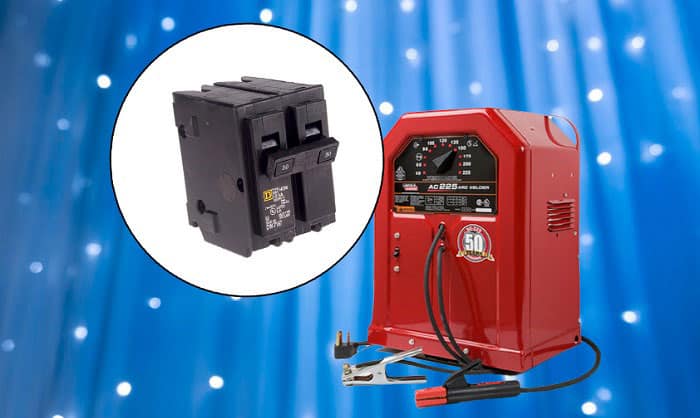
The general rule of thumb is to size the breaker slightly above the welder’s maximum input amperage, but never higher than what your wiring can safely handle. Your welder manual will typically recommend a specific breaker size that considers both the welder's draw and typical wiring practices.
When in Doubt, Call a Pro (Seriously!)
Look, we love a good DIY project. But when it comes to electricity, being a hero isn’t worth it. If you’re unsure about your panel’s capacity, the correct wire gauge, or how to safely install a new circuit, please, for the love of all things metal, call a qualified electrician. They’ll get it done right, safely, and probably faster than you could figure out which end of the wire goes where. It’s an investment in your safety and your peace of mind.
Getting the right breaker size for your welder doesn’t have to be a mystery. A little common sense, a glance at the manual, and knowing when to call in the experts will ensure your welding adventures are sparky and productive, not smoky and stressful. Happy welding!