
What Size Air Conditioner For A 2400 Sq Ft House

So, you're staring down the barrel of a 2400 square foot house, and the heat is ON! Not just outside, but the internal debate about what size air conditioner you need is probably making you sweat too. Fear not, my friend! Let's tackle this AC sizing beast with a smile and maybe a sprinkle of humor.
Imagine your house is a giant ice cream sundae. You want to keep it perfectly chilled, right? Too little AC is like a tiny scoop of ice cream on a massive waffle cone – utterly inadequate. Too much AC? Well, that's like drowning your sundae in dry ice! We want that "just right" Goldilocks zone.
The Magic Number: BTUs
BTU, or British Thermal Unit, is the name of the game. Think of it as the unit of cooling power. It's basically how much heat your AC can remove from your house in an hour. More BTUs equal more cooling power!
Must Read
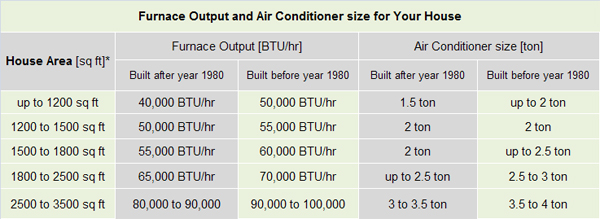
The general rule of thumb is 20 BTU per square foot. So, for your 2400 sq ft palace, we're looking at 2400 x 20 = 48,000 BTUs. Bingo! That's your baseline. But hold your horses, it's not quite that simple.
Factors That Throw a Wrench in the Works
Just like baking a cake, there are always variables that can affect the outcome. Your house isn't just a square footage number; it's a living, breathing, energy-using entity. Let's look at some of the things that can change our cooling equation.
First up, the climate. Are you living in the Sahara Desert, I mean Arizona? Or a cooler, more temperate zone like Maine? The hotter it is, the more BTUs you'll likely need. Think of it like this: a marathon runner needs more fuel than someone strolling to the mailbox.
Next is the sun. If your house is constantly bathed in sunlight, you'll need a more powerful AC to combat that solar radiation. Imagine trying to keep an ice cube frozen under a magnifying glass – not easy! Lots of windows facing south or west are a big hint you need more cooling power.
Then there's insulation. Is your house wrapped in a cozy blanket of insulation, or is it more like a leaky sieve? Poor insulation means your AC has to work harder to maintain a constant temperature. Imagine trying to keep a drink cold in a paper cup versus a Yeti cooler. It makes a HUGE difference!
Consider your ceiling height. High ceilings mean more air volume to cool. It's like trying to fill a swimming pool versus a bathtub. More volume, more BTUs needed!
Finally, the number of people living in your house matters. Every person emits heat! Think of it as a mini-heater factory operating 24/7. A house full of people will need more cooling power than a house with just one or two occupants.
Estimating Your BTU Needs: A More Refined Approach
Okay, so we know 48,000 BTU is a good starting point. But let's get a little more precise. This isn't an exact science, but a few adjustments can get you closer to the perfect AC size.
For hot climates, you might bump that up to 25 BTU per square foot, putting you at 60,000 BTUs. For milder climates, you might stick closer to the 20 BTU mark, or even slightly below, depending on the other factors.
For poorly insulated homes, add 10-15% to your BTU estimate. For well-insulated homes, you can subtract 10-15%. Think of it as a little insulation bonus!
:max_bytes(150000):strip_icc()/air-conditioning-chart-1152654_final-02-c37c8b4fdf08432baf378e8f0cb9d8e0.jpg)
If your home is very sunny, add another 5-10%. If it's mostly shaded, subtract 5-10%. It's all about compensating for those environmental factors.
For every person living in the house (besides the first two), add 400 BTUs. So, a family of five would need an extra 1200 BTUs.
Example: Let's say you live in a moderately hot climate, have decent insulation, a fair amount of sun, and a family of four. You might start with 50,000 BTUs (a slight increase for the climate), subtract 5% for decent insulation (bringing you to 47,500), add 5% for sun (bringing you back up to around 49,875), and then add 800 BTUs for the two extra people (bringing you to 50,675 BTUs). Round that up to 51,000 BTUs. See? It's like detective work!
Oversizing vs. Undersizing: The Great Debate
It might seem like "bigger is always better" when it comes to AC, but that's not necessarily true. An oversized AC can actually be less efficient and less comfortable!
An oversized AC will cool your house too quickly and then shut off. This means it won't properly dehumidify the air, leaving you feeling clammy and uncomfortable. It's like taking a shower with freezing cold water – quick, but not enjoyable.
It also leads to short cycling, where the AC turns on and off frequently, which wears down the components faster and wastes energy. Think of it like constantly slamming on the brakes in your car – it's not good for the engine or your fuel economy!
An undersized AC, on the other hand, will struggle to keep your house cool on the hottest days. It will run constantly, wasting energy and potentially overheating. Imagine trying to bail out a sinking boat with a teaspoon – frustrating and ineffective.
The goal is to find that sweet spot where the AC runs efficiently and keeps your house comfortably cool and dry. It's all about balance!
Professional Help is Your Friend
This article is a great starting point, but it's no substitute for a professional assessment. A qualified HVAC technician can come to your home, evaluate your specific needs, and recommend the perfect AC size. They'll consider all the factors we've discussed, plus things like ductwork efficiency and the layout of your house.
Think of it like going to a doctor. You can read about symptoms online, but a doctor can give you a proper diagnosis and treatment plan. An HVAC professional is your house's doctor!
/air-conditioning-chart-1152654_final-01-5c522db7c9e77c0001d7671e.jpg)
They can also help you choose the right type of AC system for your home, whether it's a central AC unit, a ductless mini-split system, or something else entirely. There are lots of options out there, and a pro can help you navigate them all.
Don't Forget Efficiency Ratings
Once you've determined the right AC size, don't forget to consider the efficiency rating. This is measured by SEER (Seasonal Energy Efficiency Ratio). The higher the SEER rating, the more efficient the AC unit.
A higher SEER rating means you'll save money on your energy bills over the long run. It's like buying a fuel-efficient car – you might pay a little more upfront, but you'll save money on gas in the long run.
Look for Energy Star certified models to ensure you're getting a high-efficiency AC unit. These models meet strict energy efficiency guidelines set by the EPA.
In Conclusion: Stay Cool (Literally!)
Choosing the right size AC for your 2400 sq ft house might seem daunting, but it doesn't have to be. By understanding the factors that influence BTU needs and getting professional help when needed, you can find the perfect AC unit to keep your home cool and comfortable all summer long.
Remember, it's all about finding that "just right" balance between cooling power, efficiency, and comfort. So, do your research, consult with a professional, and get ready to enjoy a refreshingly cool home! Stay cool, my friend!