
What Size Air Conditioner For 1800 Square Feet
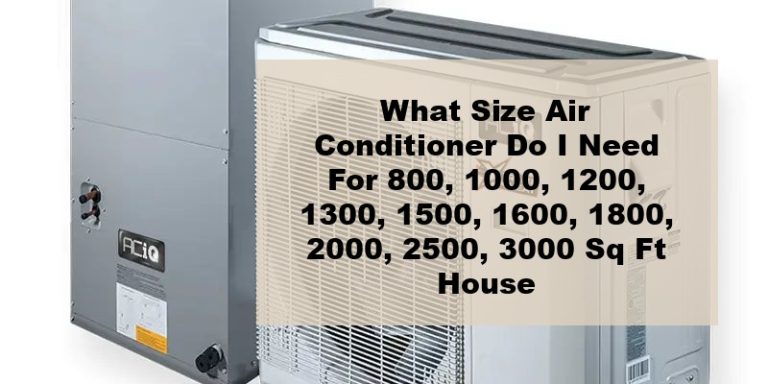
Okay, let's talk about staying cool. We're diving headfirst into the world of air conditioners, specifically for those of us wrestling with the age-old question: "What size AC do I need for my 1800 square foot palace?" Or, you know, regular house. Whatever. The point is, it needs to be COLD.
Think of it like this: buying an AC that's too small for your space is like trying to dry yourself off with a postage stamp. You'll be flapping that thing around forever, still dripping, and utterly miserable. On the flip side, an AC that's too big? It's like blasting a firehose to water a tiny houseplant. Overkill, inefficient, and likely to scare the cat.
The Magic Number: BTUs
So, how do we find that Goldilocks zone – the AC that's just right? That's where BTUs come in. BTU stands for British Thermal Unit, and honestly, the name is about as helpful as a screen door on a submarine. But basically, BTUs measure how much heat an AC unit can remove from a room per hour. More square footage? More BTUs needed. Simple, right?
Must Read
As a super general rule of thumb, you usually need about 20 BTUs per square foot. So for our 1800 square foot home, you'd be looking at around 36,000 BTUs (1800 x 20 = 36,000). Ta-da! Case closed... almost.
Hold your horses! Before you sprint off to the store to grab that 36,000 BTU beast, let's consider a few extra factors. Because life is never that simple, is it?
:max_bytes(150000):strip_icc()/air-conditioning-chart-1152654_final-02-c37c8b4fdf08432baf378e8f0cb9d8e0.jpg)
Things That Make You Go Hmmm... (And Affect Your BTU Needs)
Imagine two identical 1800 sq ft houses. One is a breezy, beach-side bungalow with great insulation. The other is a poorly insulated brick behemoth baking under the scorching desert sun. You think they need the same AC? Nope!
Here's a quick rundown of things that'll bump up your BTU requirements:

- Sun Exposure: Got a south-facing house that soaks up the sun all day? Add about 10% to your BTU calculation.
- Insulation: Drafty windows and poorly insulated walls? Add another 10%. You're basically air conditioning the great outdoors!
- Ceiling Height: Got cathedral ceilings that make your house feel like a gothic cathedral? You'll need more BTUs to cool all that extra air.
- Number of Occupants: Every person is basically a little furnace putting out heat. If you've got a big family, factor that in. Think of it as adding a tiny light bulb to the room with each person!
- Appliances: All those computers, TVs, and ovens are constantly generating heat. Especially that old fridge that sounds like a jet engine taking off...
Basically, use that 36,000 BTU as a starting point. If your house is extra sunny, poorly insulated, or packed with heat-generating humans and appliances, you might need to bump it up a bit. If your house is super well-insulated and shaded, you might be able to get away with slightly less.
Window Units vs. Central Air
So, now you know how much cooling power you need. The next big question: how are you going to deliver that sweet, sweet relief? Window units or central air? Central air is like having a personal blizzard on demand – expensive, but glorious. Window units are more affordable upfront but can be noisier and less efficient for cooling a whole house. If you have ductwork already installed, central air is probably the way to go. Otherwise, you're looking at a much more complex (and expensive) installation.
/air-conditioning-chart-1152654_final-01-5c522db7c9e77c0001d7671e.jpg)
Maybe you can even get away with a multi-zone system, or multiple mini-split systems? These can be great for only cooling specific areas of the home at specific times. It all boils down to the specific needs of your home and family.
Don't Be Afraid to Ask for Help!
Honestly, figuring out the right AC size can feel like trying to solve a Rubik's Cube while blindfolded. If you're feeling overwhelmed, don't hesitate to call in a professional. An HVAC (Heating, Ventilation, and Air Conditioning) technician can assess your specific needs and recommend the perfect AC for your home. They'll make sure you don't end up with an underpowered unit that leaves you sweating, or an overpowered unit that makes you feel like you're living in an igloo. It's worth it to get it right!
In the end, finding the right AC is all about striking that perfect balance between comfort, efficiency, and your budget. Good luck in your quest for coolness, my friend! May your summers be sweat-free and your energy bills manageable.
