What Size Air Conditioner Do I Need For My House
Okay, let's talk about air conditioning. Not the stuffy, technical manual kind of talk, but the "keeping-your-cool-when-it's-hotter-than-a-jalapeno-in-July" kind of talk. Figuring out the right size AC unit for your house can feel like deciphering ancient hieroglyphics, but trust me, it's simpler than assembling IKEA furniture (and arguably more rewarding!).
Why should you even care? Well, imagine wearing shoes that are two sizes too big. You'd be tripping all over the place, right? That's kind of what happens with an oversized AC. It cools your house too quickly, leading to short cycles – basically, it turns on and off constantly. This not only wastes energy (and your hard-earned money!), but it also doesn't dehumidify properly, leaving you with that sticky, uncomfortable feeling. Think swamp cooler, not cool oasis.
On the flip side, an undersized AC is like trying to bail out a sinking boat with a teacup. It'll run constantly, working its little compressor heart out, but never quite reaching that sweet spot of comfortable coolness. You'll be stuck cranking it up, watching your electricity bill soar, and still sweating through your favorite sitcom.
Must Read
So, How Do We Find Goldilocks' AC?
The key is finding the "just right" size. We measure AC capacity in something called BTUs (British Thermal Units). It's basically a measure of how much heat the unit can remove from your home per hour. Think of it like this: BTUs are like the horsepower of your AC. The more BTUs, the more cooling power.
There are a few ways to estimate the right BTU level for your house. The most common is the square footage method. A general rule of thumb is to multiply your home's square footage by 25. For example, if you have a 1,000-square-foot apartment, you'd likely need an AC unit with around 25,000 BTUs.
Important Note: This is just a starting point! There are other factors that can influence the ideal AC size.
Beyond Square Footage: The Realities of Real Life
Imagine two identical houses, side-by-side. One is shaded by majestic oak trees, while the other bakes in the full afternoon sun. The sun-drenched house will obviously need more cooling power! That's where these other factors come in.
Here's a quick rundown of things to consider:
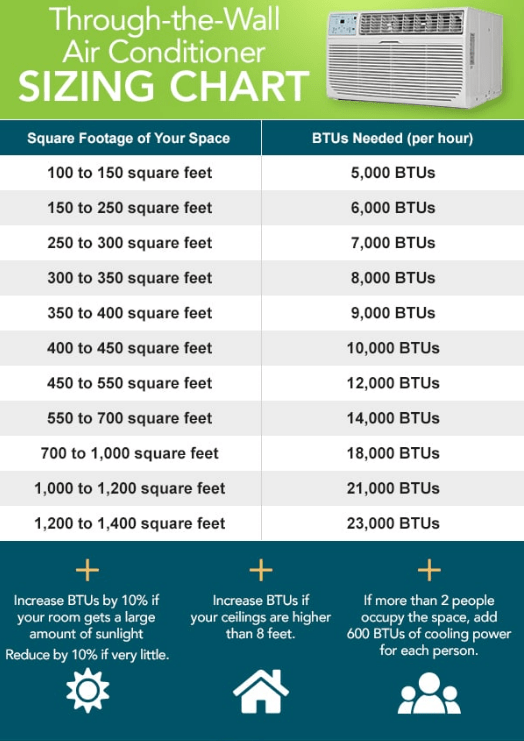
- Climate: Are you in a scorching desert or a mild coastal region? The hotter your climate, the more BTUs you'll need.
- Sun Exposure: Does your house get blasted by direct sunlight all day? Add some extra BTUs!
- Insulation: Is your house well-insulated? Good insulation helps keep the cool air in and the hot air out, meaning you might need fewer BTUs. Think of it as a cozy blanket for your home.
- Windows: Are you rocking single-pane windows from the disco era? They leak heat like a sieve! Consider upgrading to energy-efficient windows, or at least factor in the extra heat gain.
- Number of People: More people equal more body heat. If you have a large family or frequently host parties, you might need to bump up the BTU level.
- Kitchen: Kitchens tend to generate a lot of heat, especially when you're cooking.
Let’s say that 1,000 sq ft apartment is in Phoenix and gets blasted by sun all afternoon. It probably needs closer to 30,000 BTUs.
The Smartest Move: Get a Professional Opinion
While the square footage method and these other factors can give you a good estimate, the best way to determine the right AC size is to consult with a qualified HVAC (Heating, Ventilation, and Air Conditioning) technician. They can perform a load calculation, which takes all these factors into account to give you a precise recommendation.

Think of it like getting a tailored suit instead of buying something off the rack. It will fit better, look better, and ultimately, be more comfortable.
In a Nutshell: Don't Sweat It (Too Much!)
Choosing the right size AC unit might seem daunting, but it doesn't have to be. By understanding the basics of BTUs, considering the unique characteristics of your home, and consulting with a professional, you can find the perfect AC unit to keep you cool and comfortable all summer long – without breaking the bank or turning your house into a tropical rainforest.
So, go forth and conquer the heat! And remember, a little bit of knowledge goes a long way in the quest for the perfect indoor climate.