
What Should Car Battery Voltage Be When Off
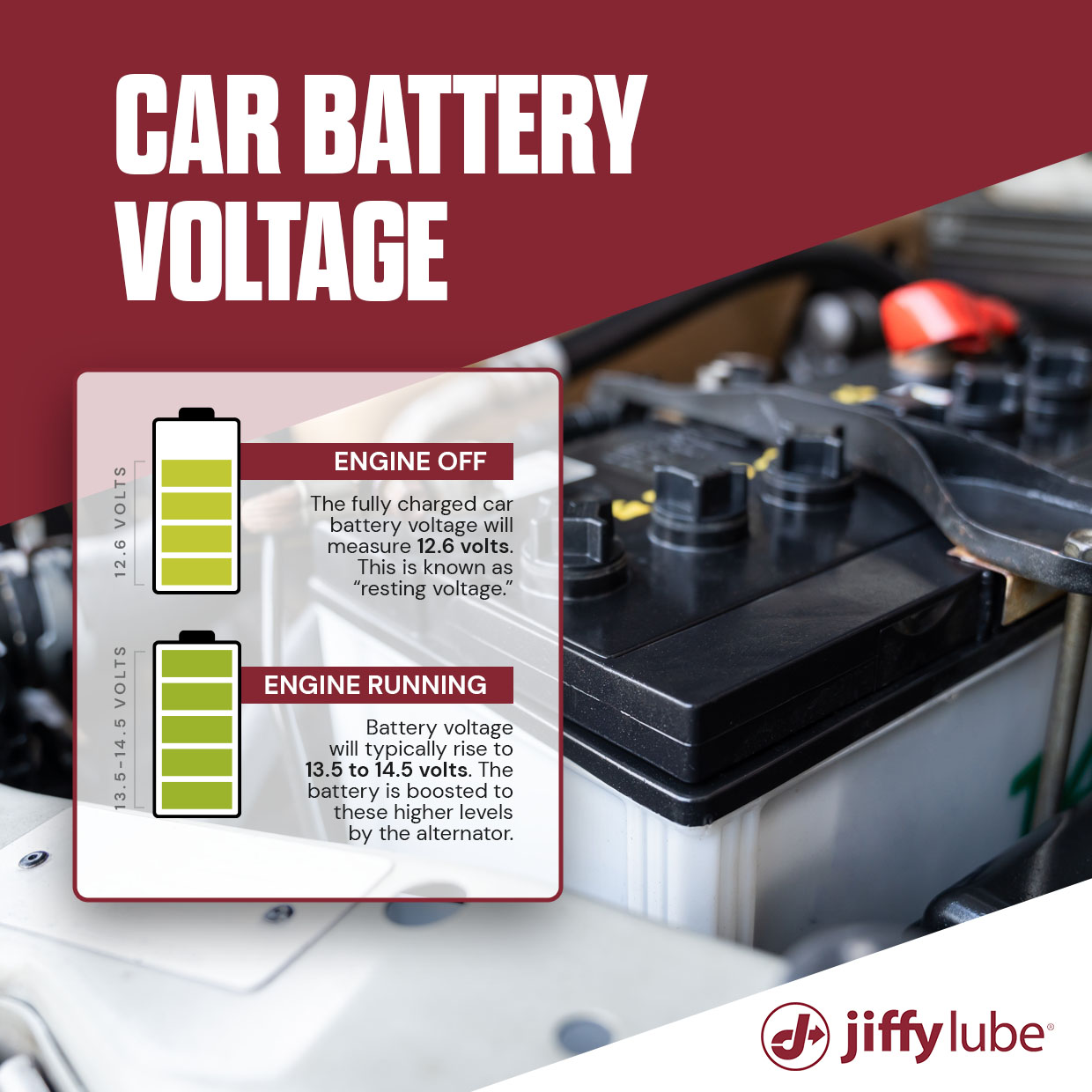
Have you ever wondered what your car battery does when you're not driving? It's kind of like a superhero in disguise, quietly holding back power for when you need it most. But what's the ideal "resting" voltage for this superhero?
The Secret Life of Car Batteries
Think of your car battery as a rechargeable pet hamster, except instead of sunflower seeds, it feeds on electrons. When your car's off, it's like the hamster is sleeping, conserving its energy for the next big run on its wheel (starting your engine!).
So, what voltage should that "sleeping" hamster be showing? Ideally, you want to see a reading of around 12.6 volts. That's like the hamster having a full belly and being ready for anything!
Must Read
Why 12.6 Volts is the Magic Number
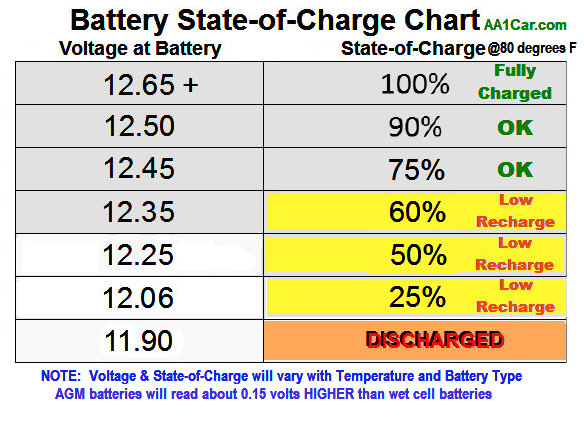
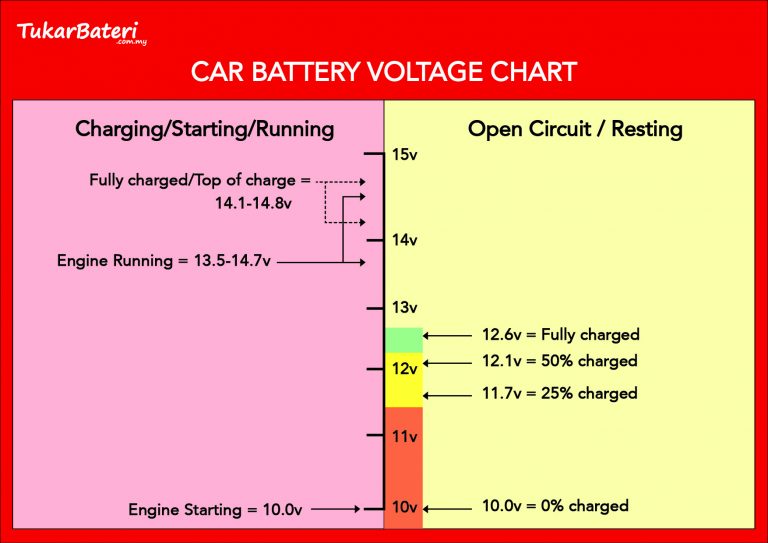
A healthy car battery, at rest, should be hovering around 12.6 volts. This indicates a fully charged state. It's like the battery is saying, "Bring it on, I'm ready to start that engine!"
If you see something lower, like 12.4 volts, your battery is at about 75% charge. Think of it as the hamster starting to get a little peckish.
And if it dips even lower, say around 12.2 volts (or less!), your battery is only at 50% charge or lower. Uh oh, time to get the hamster some more seeds… or in this case, charge the battery!
The Curious Case of the Disappearing Voltage
Sometimes, you might check your battery voltage and find it lower than expected. It's like the hamster's been sneaking snacks in the middle of the night!
One culprit could be a parasitic draw. This is when something in your car is still using power even when the car is off. It could be anything from a faulty alarm system to a glove box light that refuses to turn off.
Parasitic draws can slowly drain your battery over time. They are like tiny vampires sucking the life out of your voltage. Detecting and fixing them can be tricky, sometimes requiring a professional mechanic's help.
Voltage Drop: The Environmental Factor
Temperature can also play a role. Cold weather makes it harder for batteries to hold a charge. It is like the hamster not wanting to get out of bed during winter.
Heat, on the other hand, can accelerate battery degradation. The hamster becomes super active in the summer but ends up tiring faster.
Extreme temperatures can wreak havoc on your battery. So, if you live in a place with harsh winters or scorching summers, pay extra attention to your battery's health.
Checking Your Battery's Voltage: A Simple DIY Task
Checking your battery voltage is surprisingly easy. You just need a multimeter, which you can pick up at most auto parts stores or online.
Set the multimeter to read DC voltage. Then, connect the red lead to the positive (+) terminal on your battery and the black lead to the negative (-) terminal.
Voila! The multimeter will display your battery's voltage. It is like checking the hamster's food bowl to see how much energy it has.
Safety First!
Always wear safety glasses when working with car batteries. They contain corrosive acid that can cause serious eye damage. Think of safety glasses as hamster-proof armor for your eyes!
Disconnect any accessories that might be drawing power before taking the reading. You want to measure the battery's resting voltage, not the voltage under load. This is like making sure the hamster isn't running on its wheel while you're checking its food bowl.
If you are unsure about anything, consult a professional mechanic. It's always better to be safe than sorry when dealing with electricity.
When to Say Goodbye to Your Battery
Even with the best care, car batteries don't last forever. They eventually wear out and need to be replaced. It's like the hamster reaching the end of its natural lifespan (a little morbid, but true!).
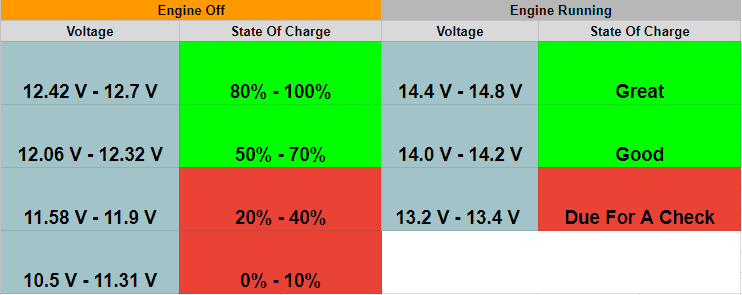
If your battery consistently shows a low voltage, even after charging, it might be time for a new one. Other signs of a failing battery include slow engine cranking and dim headlights.
Don't wait until your battery dies completely before replacing it. Being stranded with a dead battery is never fun. It's like the hamster suddenly collapsing from exhaustion in the middle of its run.
Extending Your Battery's Life: A Few Simple Tips
There are a few things you can do to extend the life of your car battery. One is to avoid short trips, which don't give the alternator enough time to fully recharge the battery.
Another tip is to turn off all lights and accessories before turning off the engine. This prevents unnecessary drain on the battery. This is like giving the hamster a gentle massage to relax its muscles.
Regularly clean the battery terminals to prevent corrosion. Corrosion can interfere with the flow of electricity and shorten battery life. Think of it as cleaning the hamster's cage to keep it healthy and happy.
The Unexpected Benefits of Knowing Your Battery Voltage
Knowing what your car battery voltage should be when off isn't just about avoiding breakdowns. It's about taking control of your car's health. It gives you power to foresee, diagnose and maintain.

It's also about peace of mind. Knowing that your battery is in good condition can reduce stress and anxiety, especially on long road trips. This is like knowing your hamster is well-fed and ready for anything, even a cross-country adventure in its tiny hamster car!
So, the next time you're thinking about your car battery, remember the sleeping hamster and its crucial voltage level. It's a small detail that can make a big difference in your driving experience.
Beyond the Voltage: A World of Automotive Wonder
Understanding your car battery voltage is just the tip of the iceberg when it comes to car care. There's a whole world of automotive knowledge out there waiting to be explored.
From understanding how your engine works to diagnosing common problems, there's always something new to learn. It's like embarking on a never-ending adventure into the fascinating world of automobiles.
So, keep asking questions, keep learning, and keep enjoying the ride! Your car will thank you for it, and you'll gain a newfound appreciation for the marvels of modern engineering. The hamster will be proud!
Remember, a happy battery is a happy car. And a happy car makes for a happy driver!